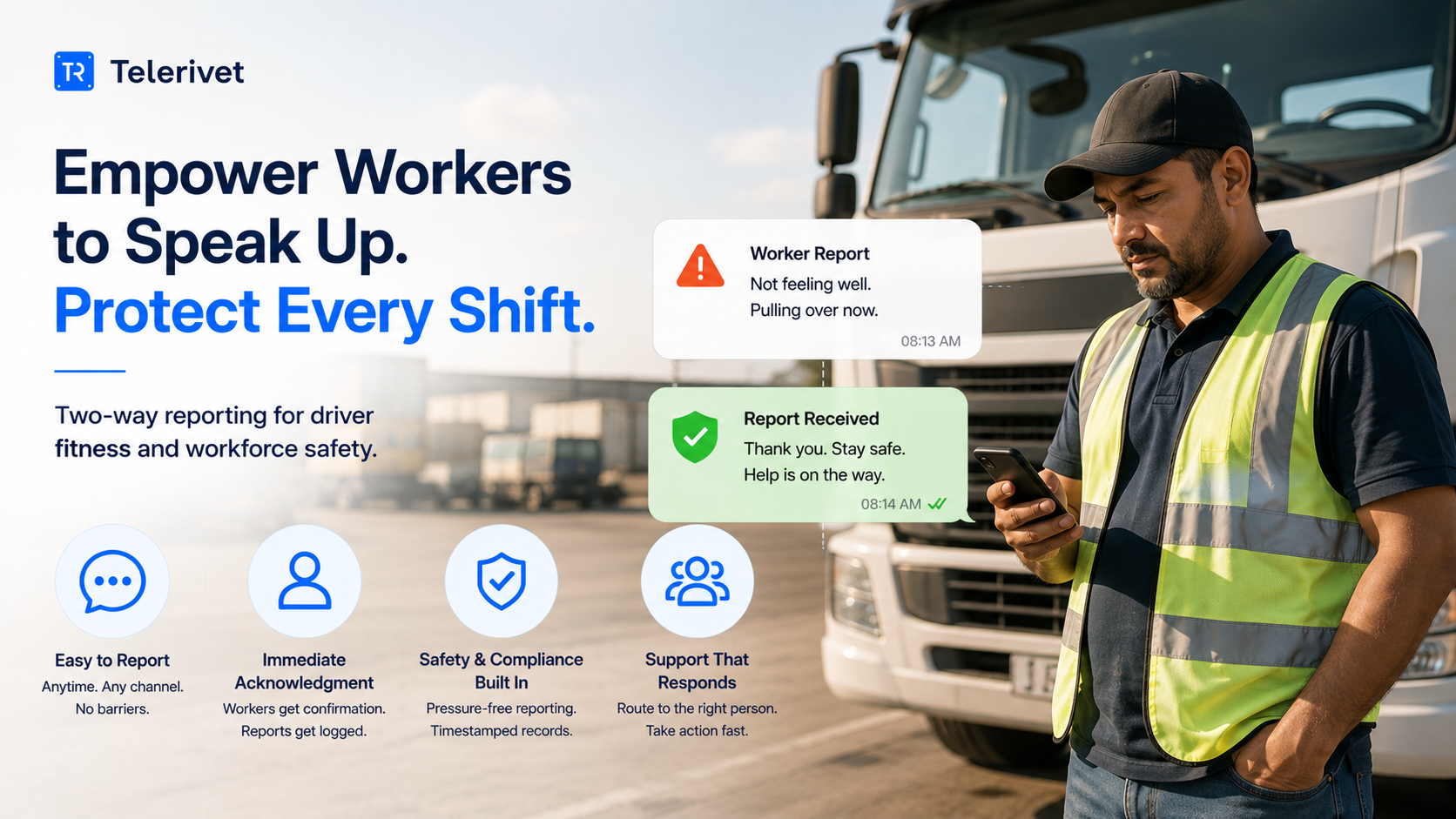
From August 1, 2026, Australian heavy vehicle drivers operate under an expanded legal duty. The NHVR's unfit to drive duty gives drivers of any heavy vehicle over 4.5 tonnes the legal standing to stop driving, and requires employers to support them in reporting fitness concerns without pressure or adverse consequences. It replaces a narrower rule that only covered fatigue, with one that covers physical illness, injury, medication side effects, and mental health.
How Civic Observation Programs Coordinate Hundreds of Volunteers in Real Time
Aug 24, 2026
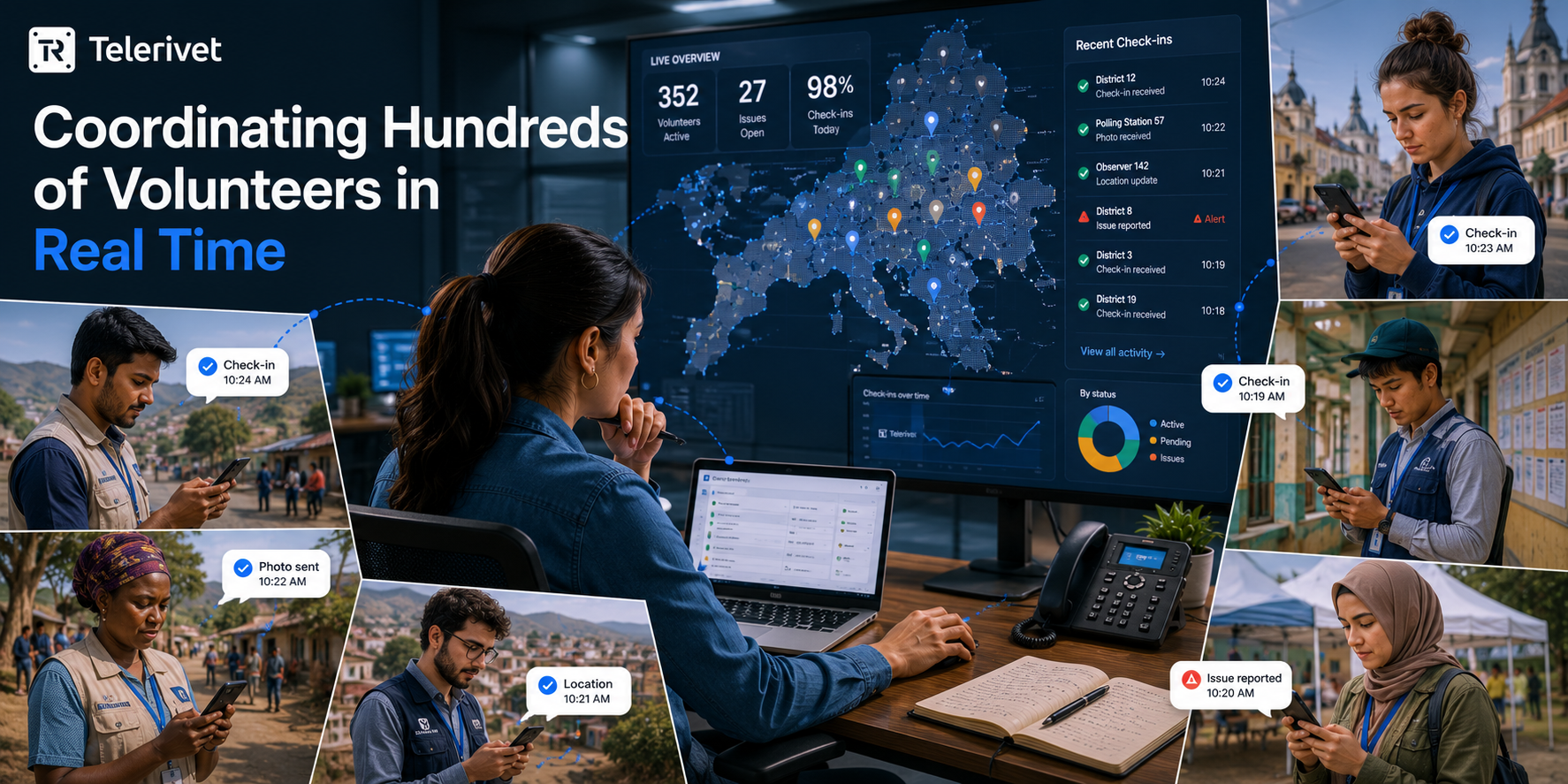
Civic observation field coordination is the real-time communication workflow that connects a central operations team with distributed volunteers across three phases: assignment dispatch before the window opens, structured status reporting during it, and escalation routing when anomalies arise. In most emerging markets, this workflow runs on SMS because SMS is the only channel that reaches every volunteer regardless of device type, data plan, or connectivity level.
Running a civic observation program is one of the more demanding field coordination problems in the public sector. You have hundreds or thousands of trained volunteers deployed across dispersed locations. The operational window is compressed and often unpredictable. Every check-in missed, every assignment unclear, every escalation that reaches the wrong person has consequences that compound quickly. And unlike most field programs, there is rarely a second window to fix what went wrong.
The Delivery Was the Easy Part: Why the Feedback Loop Is the Workflow That Gets Skipped
Aug 13, 2026
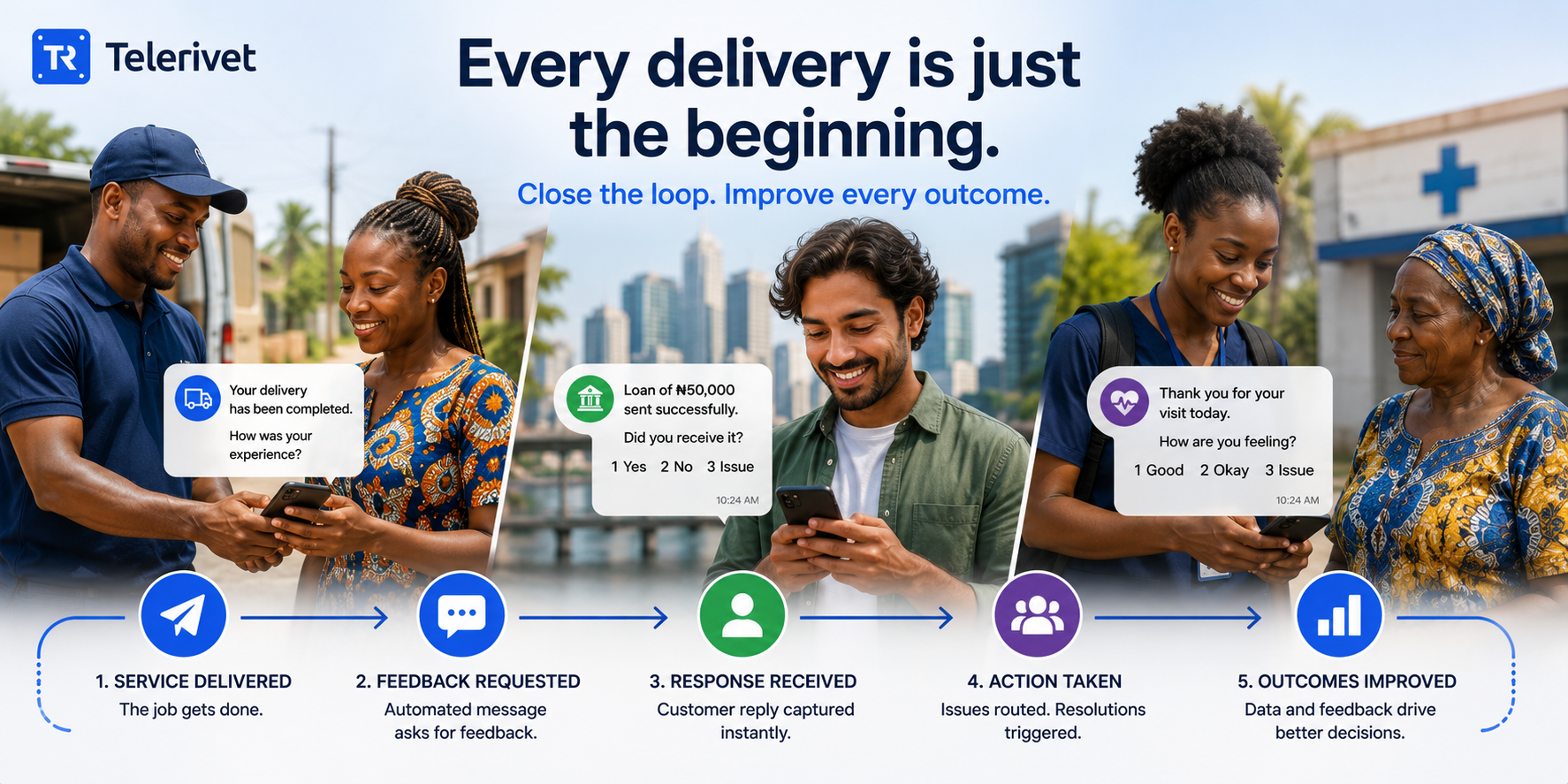
A post-service feedback workflow is the structured sequence of communication that runs after a service event to confirm delivery, capture the recipient's experience, and route any follow-up action to the right team. It is not a survey. It is not a customer experience research function. It is the final stage of the workflow itself, and in most organizations it is missing.
Consumer Code Promotions Without a Promo Management Platform
Aug 1, 2026
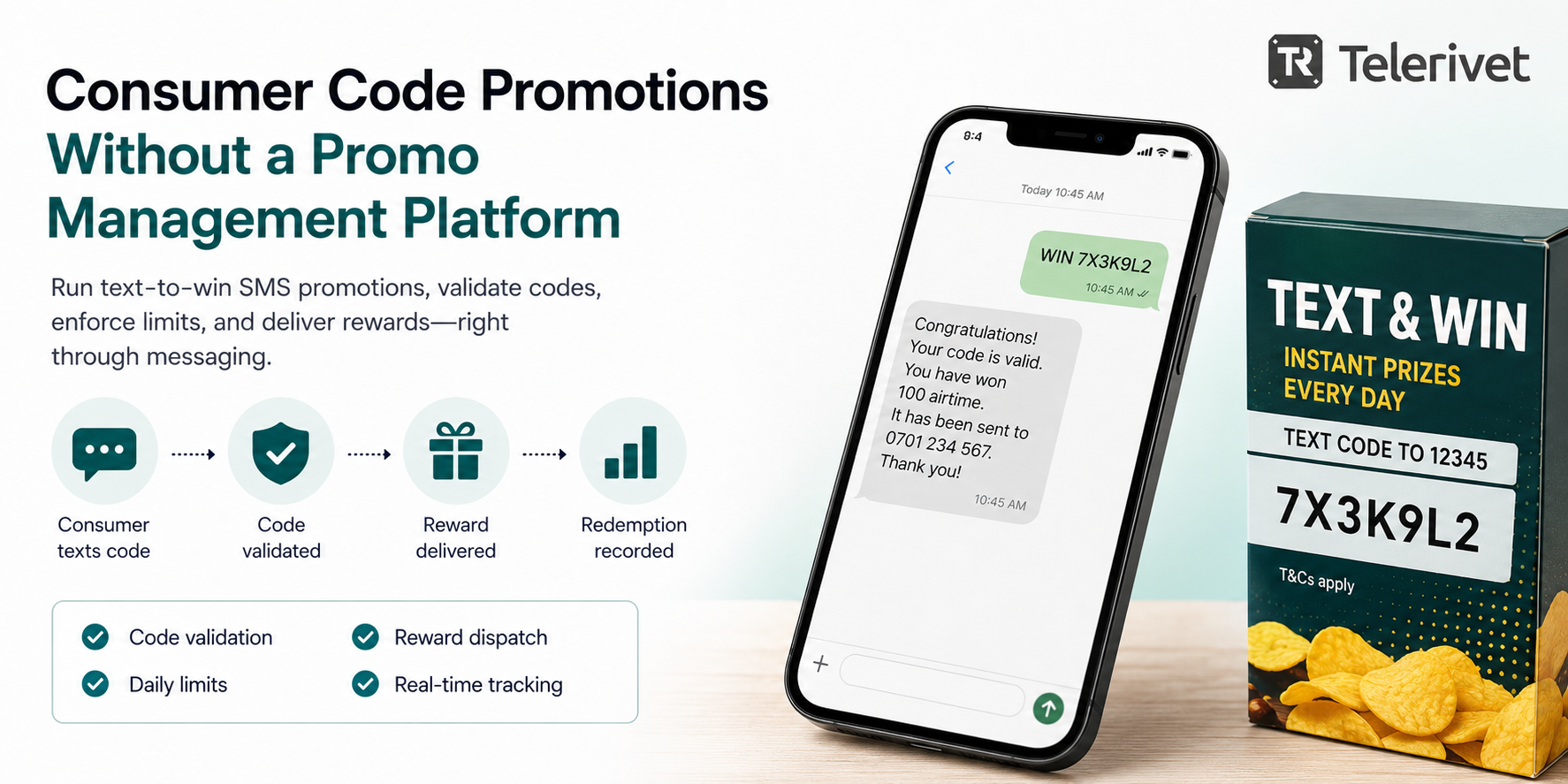
A consumer SMS code promotion is a campaign in which customers send a code (found on a product, receipt, or packaging) to a short code or long number via SMS, and receive a reward or response based on the validity and status of that code. Running one without a dedicated promotional management platform requires the same core functions to be handled somewhere: code validation, duplicate and fraud prevention, reward dispatch, and response logic for invalid or expired codes. The question is whether those functions need a standalone platform or whether they can be built into a configurable messaging workflow..

How to Capture and Qualify Leads at an Auto Show via WhatsApp
Jul 28, 2026
WhatsApp lead capture at an auto show is the use of a QR code or short number displayed at a brand stand to initiate a WhatsApp conversation with a visitor, collecting contact details, qualifying interest, and routing the lead to the right follow-up workflow, all without paper forms or manual data entry. The operational advantage is that the lead exists in a structured, actionable format before the visitor has left the floor. The most common alternative, collecting paper forms and entering them manually after the event, loses between 20% and 40% of leads to illegible handwriting, incomplete entries, or delayed follow-up..
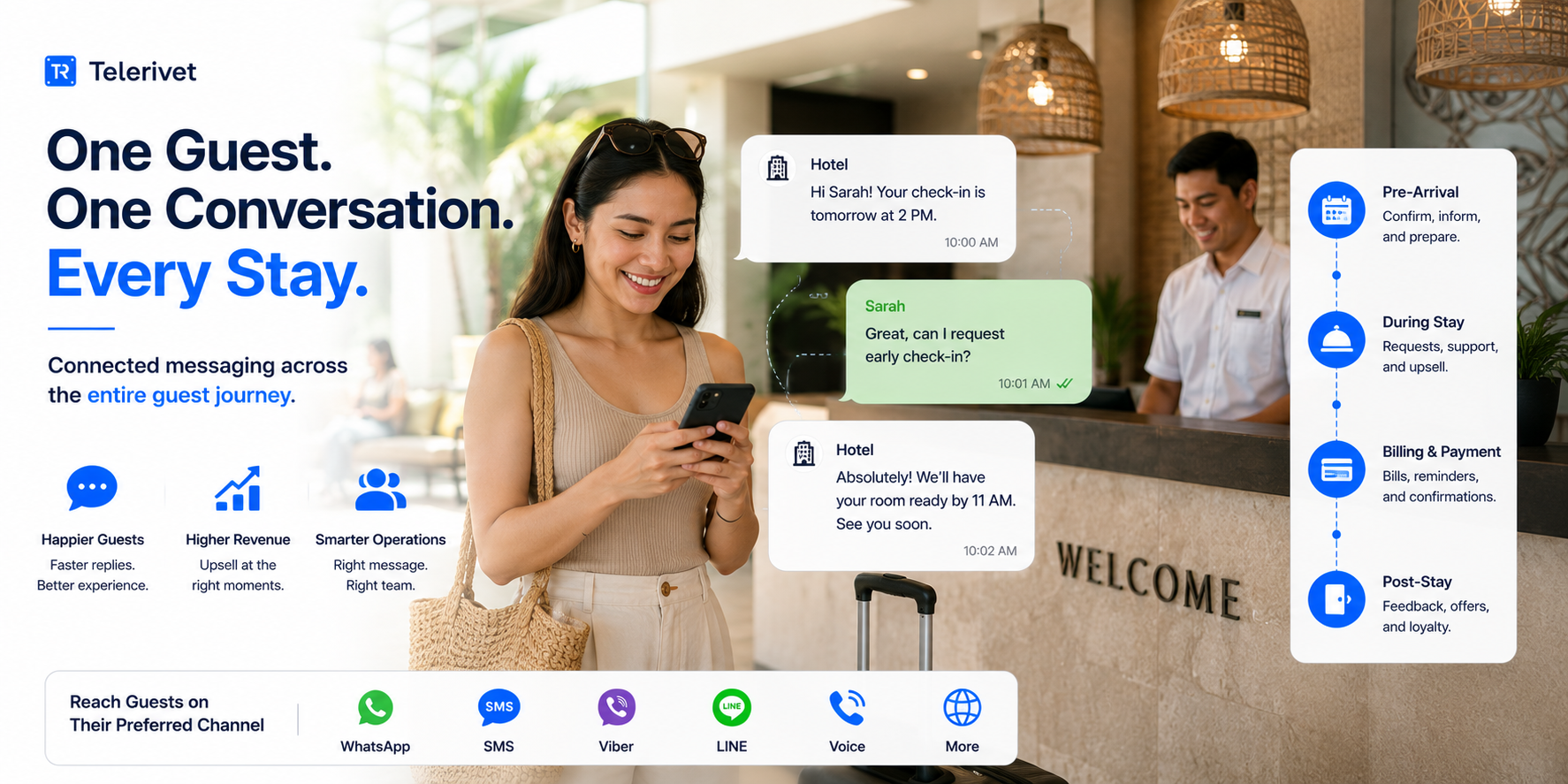
Hotel Guest Messaging: A Practical Guide for Independent and Mid-Market Properties
Jul 25, 2026
The usual setup at a mid-market hotel goes like this: reservations handles WhatsApp inquiries on one number. The front desk manages arrival coordination on another. Housekeeping works through a shared group chat. F&B takes room service requests through a fourth number entirely, saved in the personal phone of whoever is on shift.
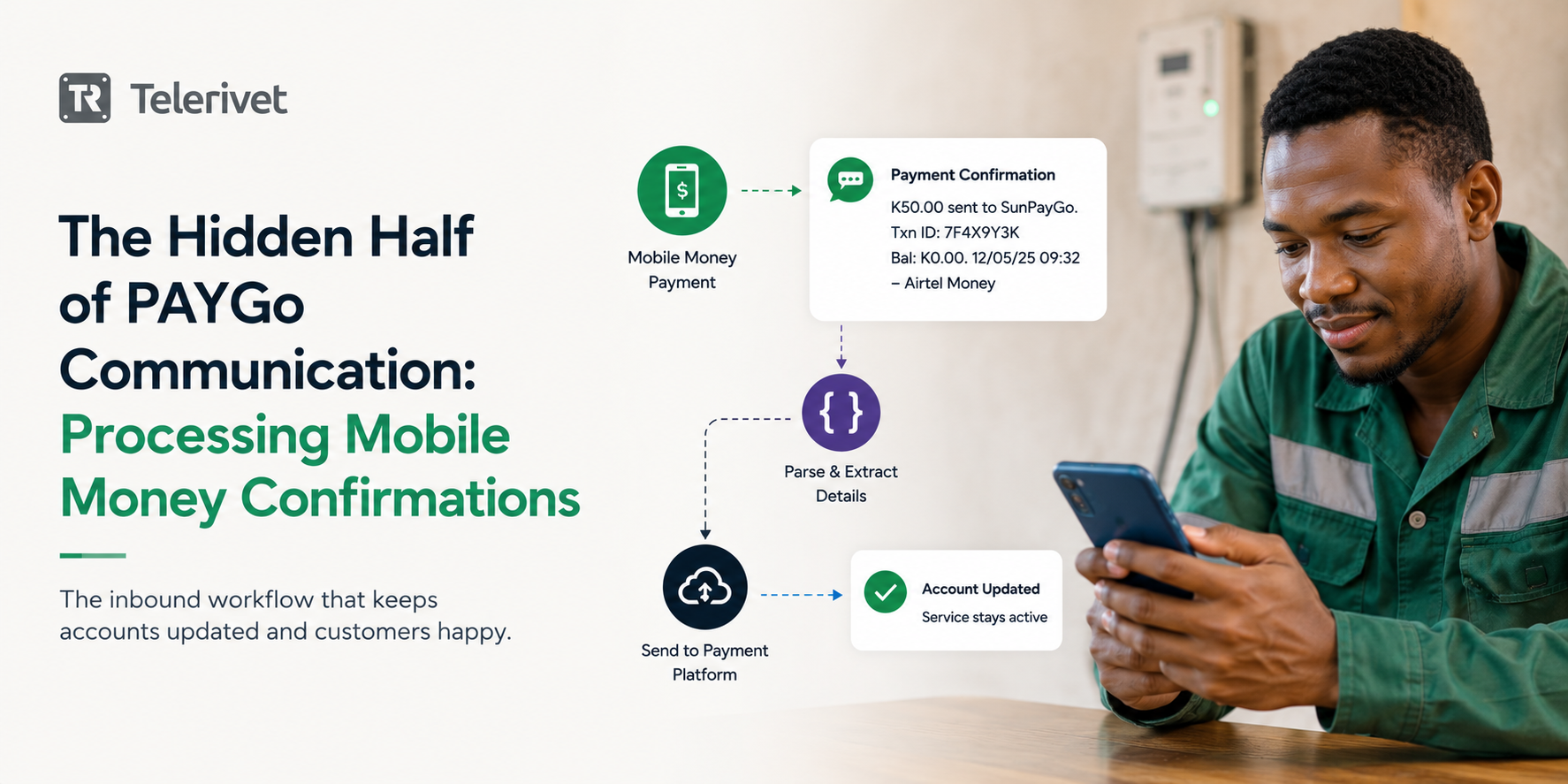
When Mobile Money Payments Arrive but Accounts Don't Update
Jul 23, 2026
When a mobile money payment arrives for a PAYGo solar account, a loan repayment, or a utility service, the payment itself is only half the workflow. The other half is the inbound confirmation: the system that detects the payment, parses the transaction details, matches it to the correct account, and triggers the downstream action, enabling the device, updating the balance, sending a customer confirmation. Most operators build the outbound half carefully and underinvest in the inbound half. That is usually when they discover what the inbound half costs when it fails.
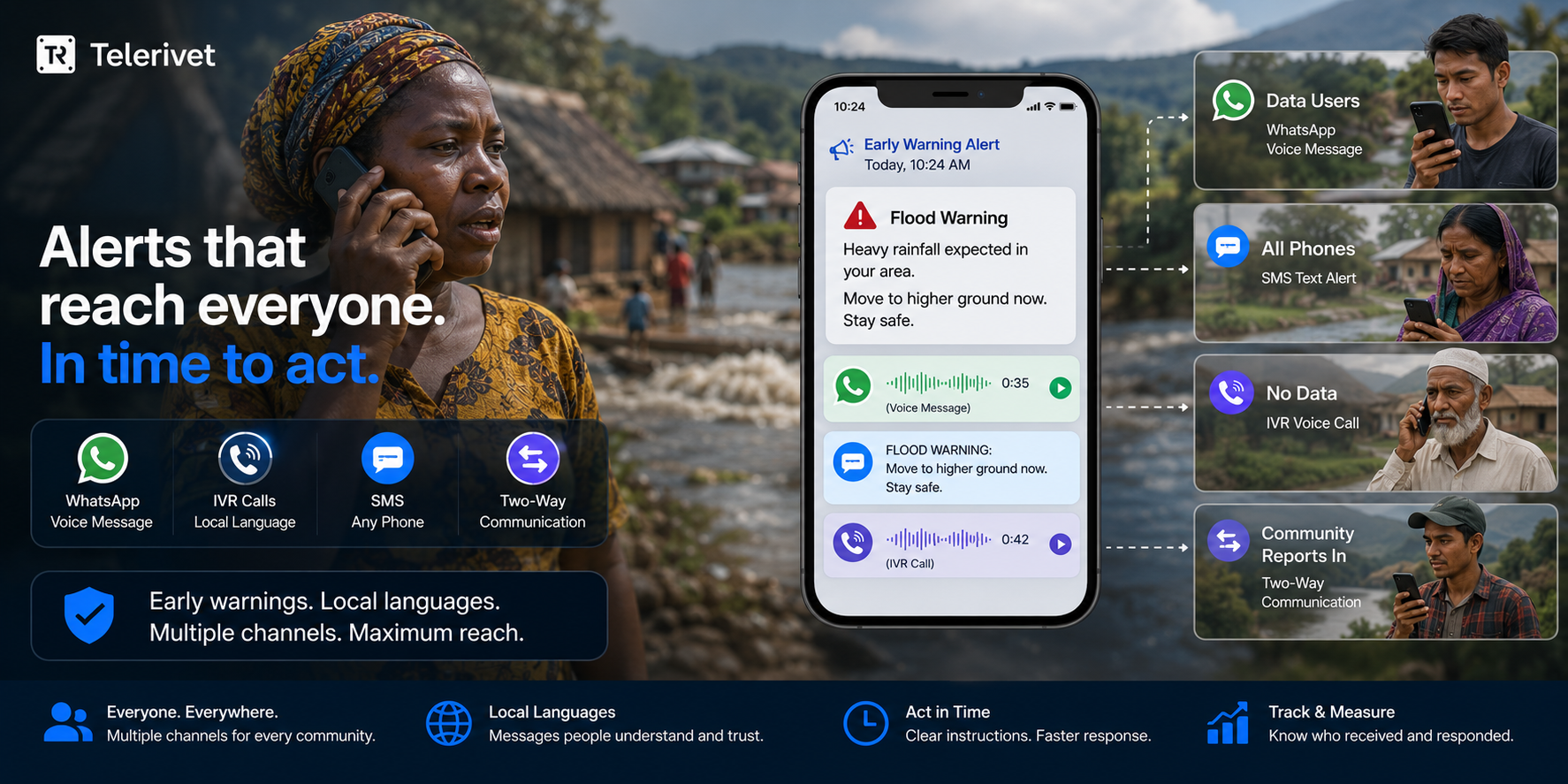
Reaching the People at Risk: How Mobile Communication Closes the Last Mile Gap in Multi-Hazard Early Warning Systems
Jul 22, 2026
An early warning system (EWS) that successfully alerts a dispatch team but fails to reach the community at risk has not completed its job. In disaster risk reduction (DRR) practice, the difference between a warning sent and a warning received, understood, and acted upon is often where lives are lost.
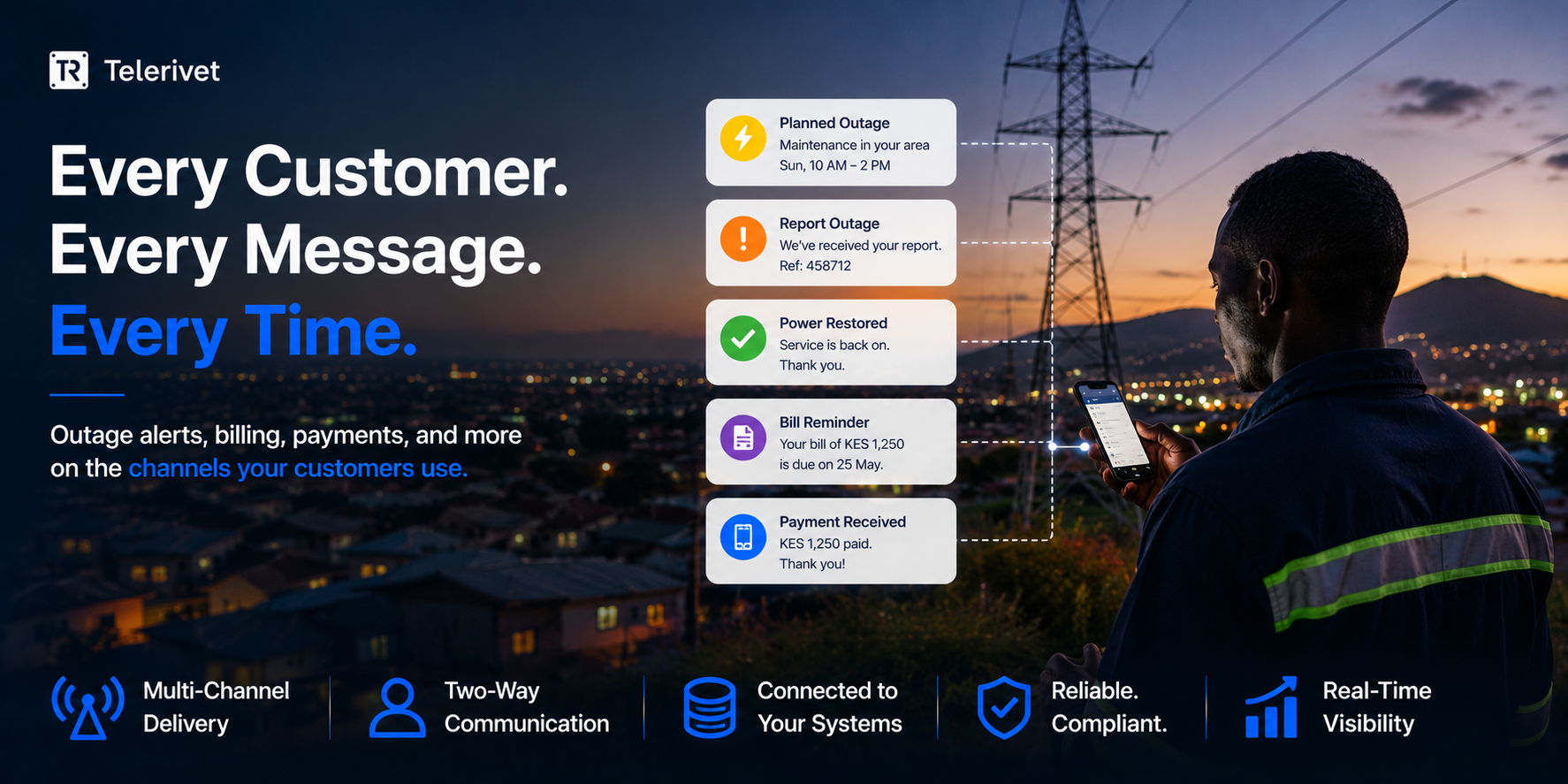
When a Third-Party App Knows About the Outage Before Your Customers Do
Jul 21, 2026
In Kenya, planned power interruptions are published as formal notices listing affected markets, schools, and villages by name, and customers are directed to the website, social media, or the newspaper to find them. The gap is real enough that independent apps exist purely to convert those notices into phone alerts. The utility holds the meter records and the phone numbers. Someone else does the notifying.
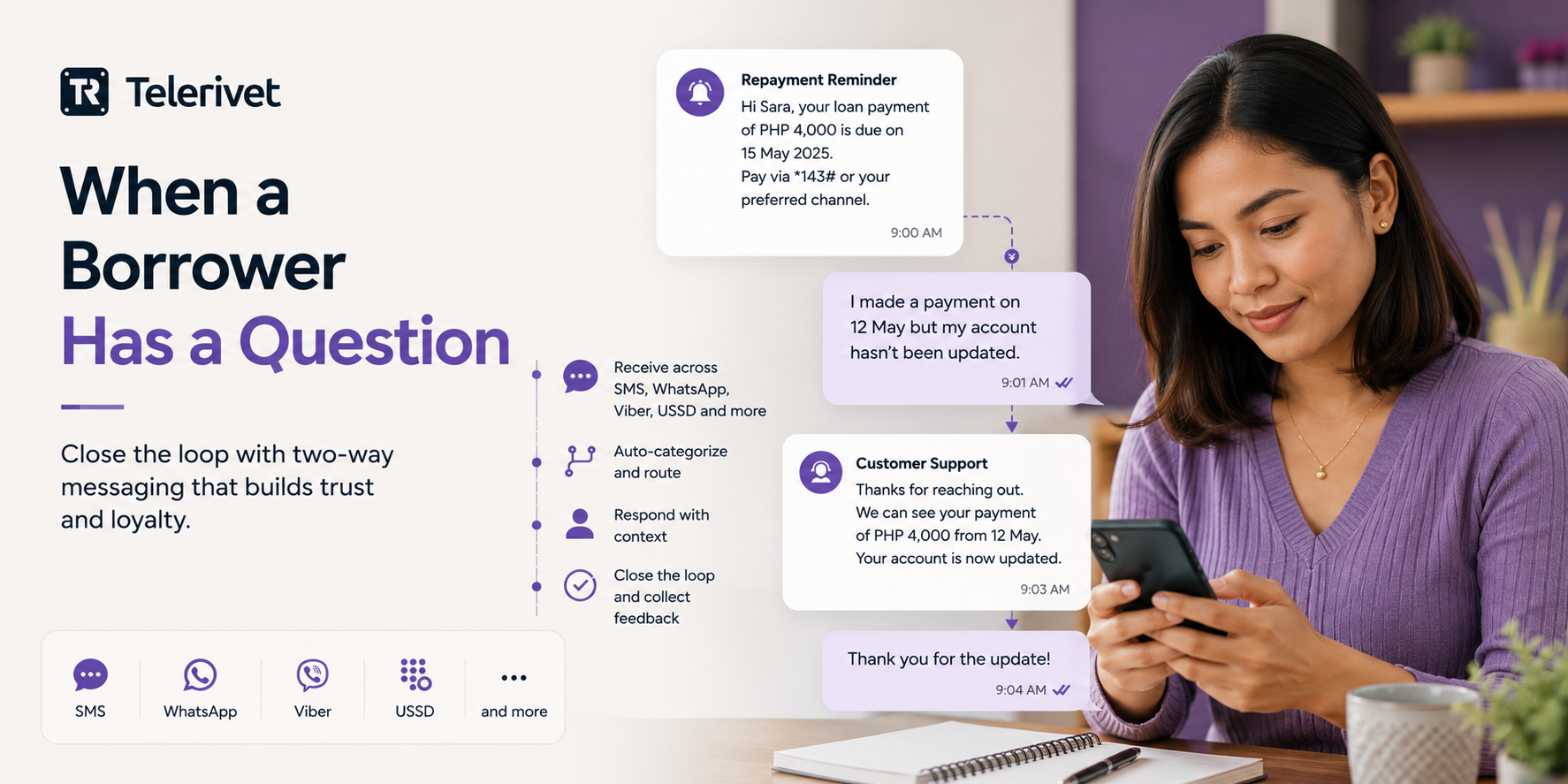
When a Borrower Has a Question: Building Two-Way Communication Into Your Fintech Operation
Jul 20, 2026
Most fintech communication systems are built for one direction: outbound. Repayment reminders go out. Disbursement confirmations go out. Overdue alerts go out. The workflow is automated and the timing is configured. Then a borrower replies.
They have a question about their balance, a dispute about a charge, or a request to reschedule a payment. In most setups, that reply goes nowhere useful, and the borrower's next interaction is with a collections call they did not expect. Two-way communication in fintech is not a feature. It is what separates a communication system from a one-way broadcast pipe.
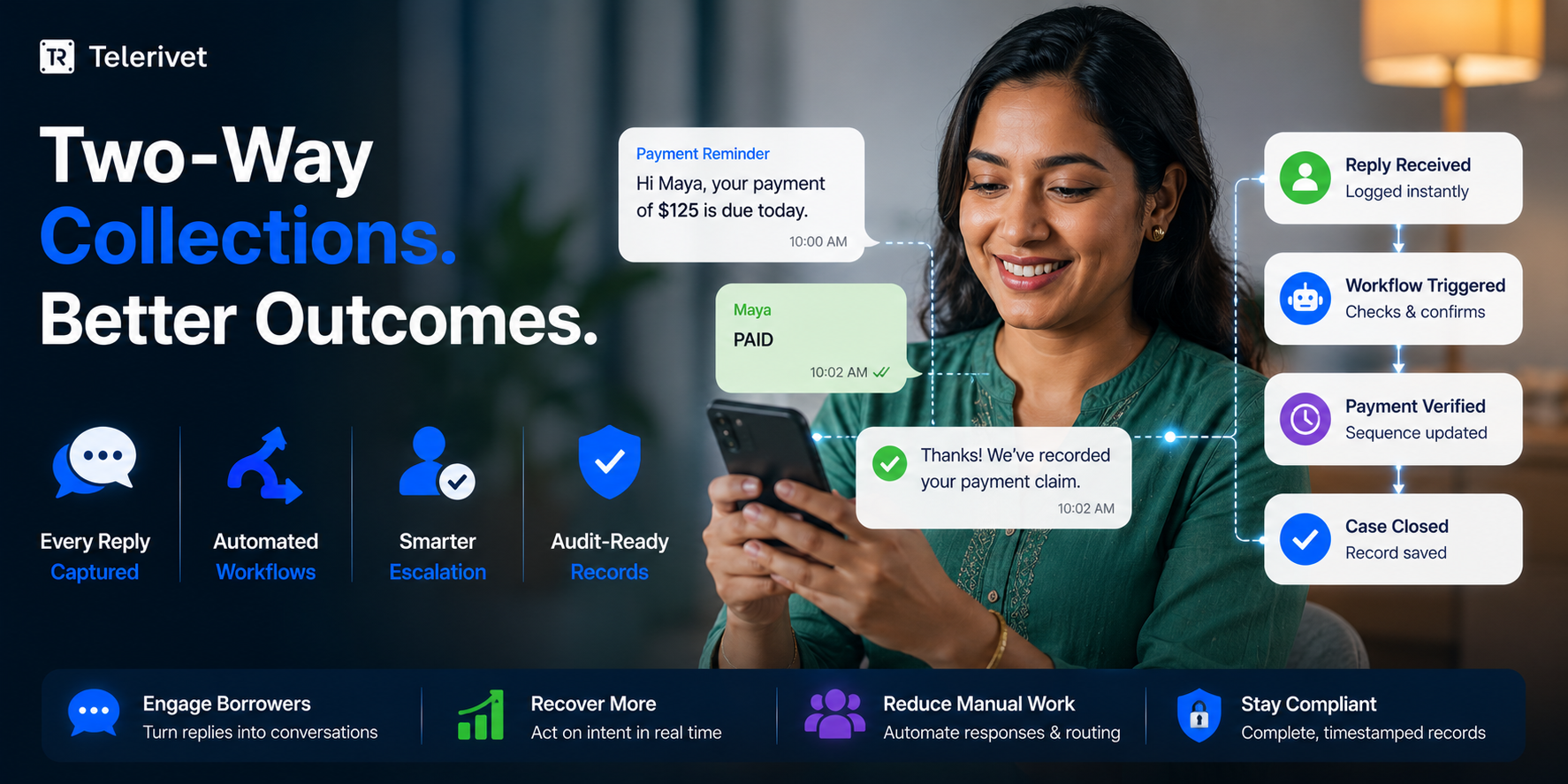
Beyond the Reminder: How Two-Way Messaging Changes the Collections Conversation
Jul 19, 2026
There is a specific moment when a lending operation discovers the ceiling of its messaging setup. It is not a deliverability failure. The reminders go out on time, at volume, month after month. The moment comes when a borrower replies to one of those reminders and nothing happens, because nothing was ever built to happen. We are seeing this play out right now with high-volume lenders sending millions of messages a month through providers they are otherwise satisfied with. They are not leaving because messages fail to arrive. They are leaving because the conversation only goes one direction.