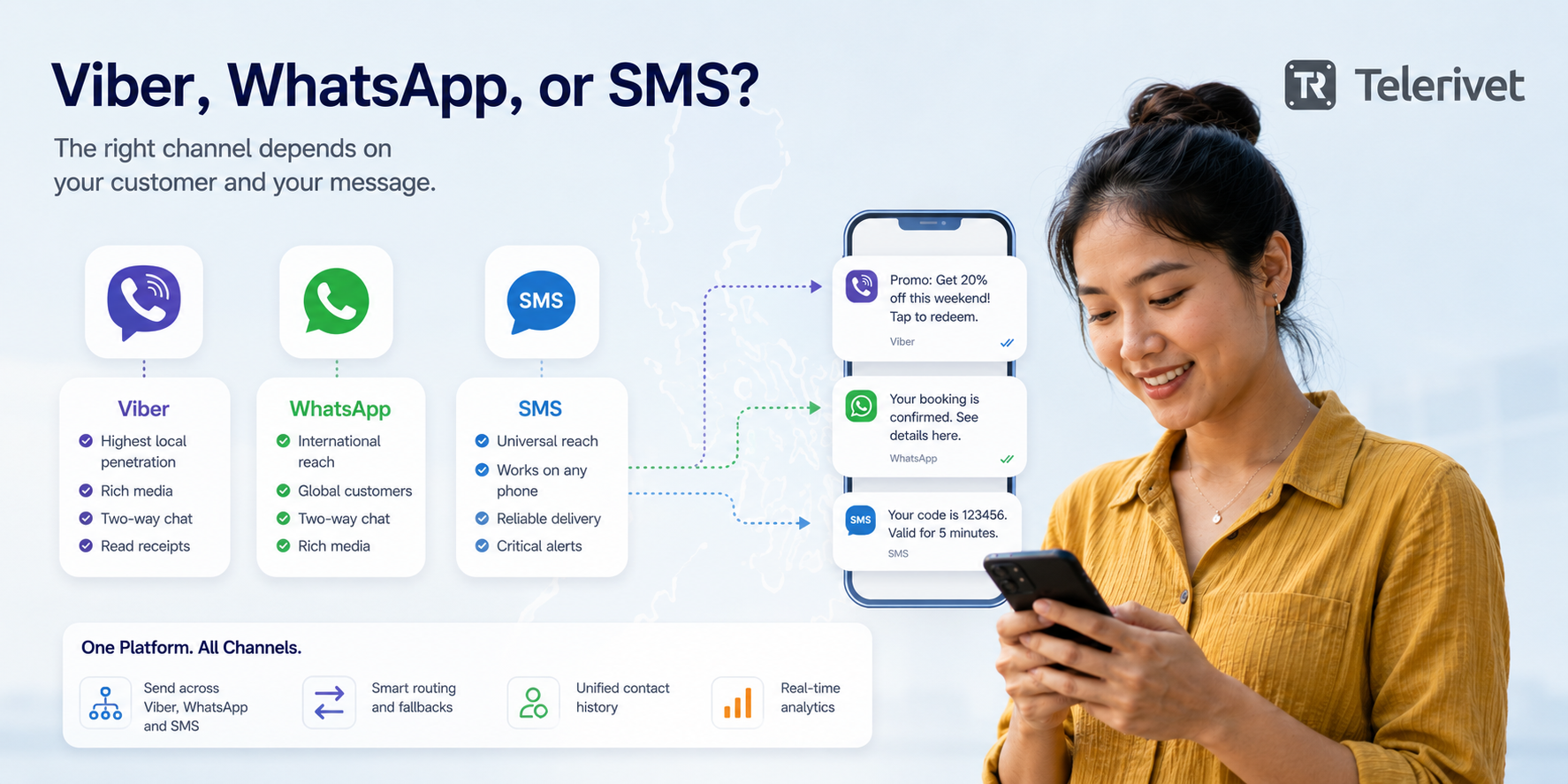
The right answer to which channel a Philippine business should use is: it depends on who you are reaching, what kind of message you are sending, and what happens if that message does not get through. This guide covers the practical differences between Viber, WhatsApp, and SMS in the Philippine context, and explains why most businesses end up running all three.
Blog
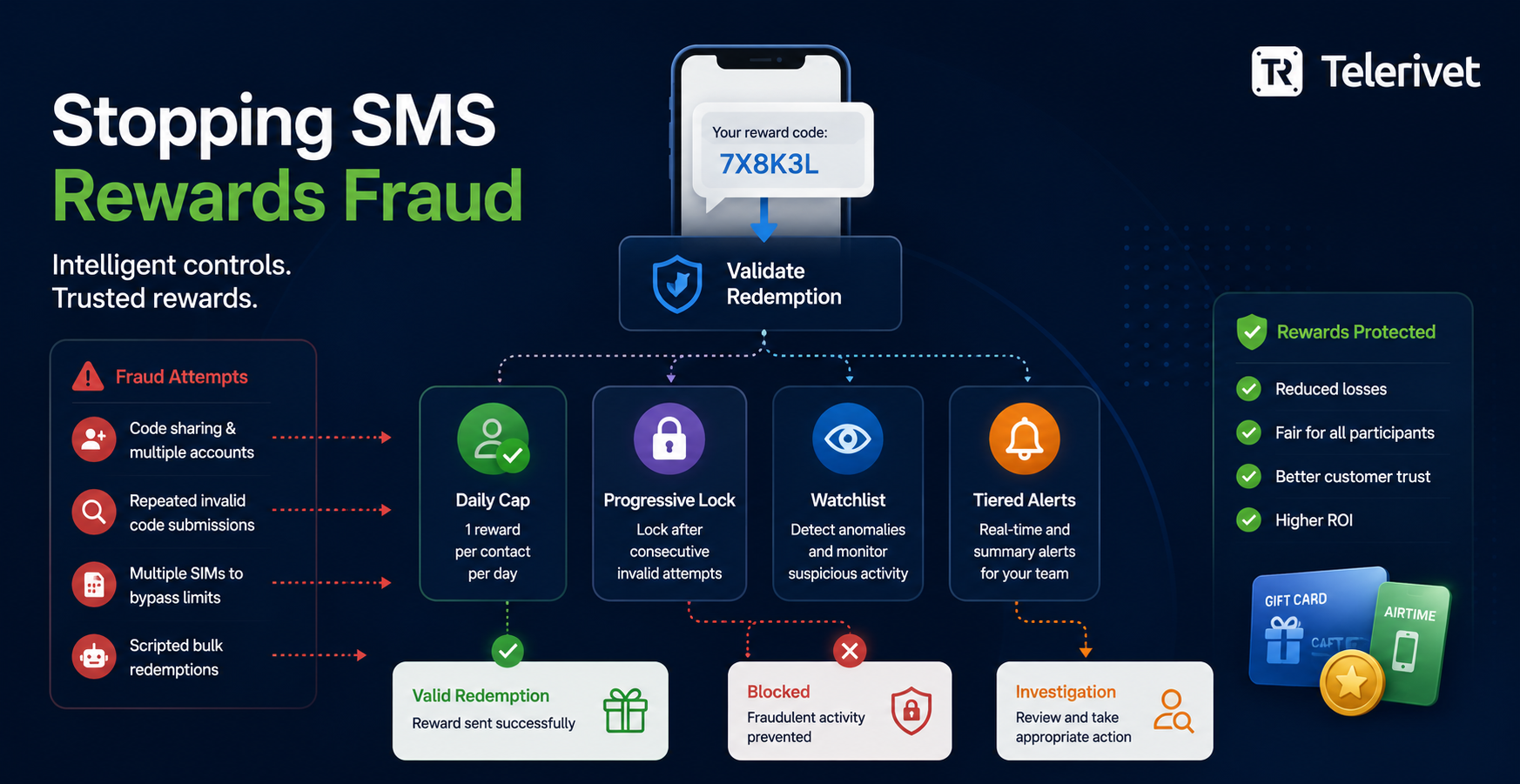
How to Protect an SMS Rewards Program From Abuse Without a Fraud Platform
Jun 5, 2026
SMS rewards program fraud is the systematic exploitation of a consumer promotion by participants using code sharing, multiple accounts, scripted bulk redemptions, or coordinated abuse to claim rewards beyond the program's intended limits. Every organization that runs a consumer rewards program via SMS creates this abuse surface the moment the first message goes out. Most discover it after the damage is done.

Telerivet Adds Instagram & Messenger as Official Meta Business Partner
Jun 1, 2026
Telerivet is now an official Meta Business Partner, recognizing our experience helping organizations scale customer communication on WhatsApp.
We’re also expanding our Meta messaging support beyond WhatsApp. Businesses can now connect Instagram professional accounts and Facebook pages directly to Telerivet to manage Instagram DMs, Messenger conversations, WhatsApp, and SMS from one platform.
Business SMS in the UK: PECR, the B2B Exemption, and What the DUAA 2025 Changed
May 29, 2026
There is a compliance assumption embedded in most UK business SMS programs that the law does not support. It goes like this: we are messaging businesses, not consumers, so the stricter consent rules do not apply to us. For some recipients that is correct. For a meaningful portion of any commercial contact list, including sole traders, certain partnerships, and individuals at corporate addresses, it is wrong in ways that now carry penalties of up to £17.5 million.
Business SMS in the Netherlands: ACM, Mandatory Opt-In, and a Market Moving Toward Germany's Consent Standard
May 27, 2026
The Netherlands made a deliberate choice in 2021 that most EU markets have not made. Where most countries operating under the ePrivacy Directive chose to maintain a national do-not-call registry alongside opt-out rights, the Netherlands abolished its Bel-me-niet Register entirely and replaced its opt-out telemarketing model with a mandatory opt-in. For SMS marketing, explicit consent has long been the standard under GDPR and the Dutch Telecommunications Act. The registry is gone, and the obligation to document consent before sending applies regardless of channel.
Business SMS in Germany: UWG, the Double Opt-In Requirement, and Why a Single Message Can Trigger Legal Action
May 25, 2026
Every other market in this compliance series treats non-compliant marketing SMS as a regulatory matter: the regulator investigates, the regulator fines. Germany has an additional mechanism that most markets do not. Under the Gesetz gegen den unlauteren Wettbewerb, Germany's Act Against Unfair Competition, competitors can bring their own legal action against organizations sending marketing messages without valid consent. An unsolicited marketing SMS may trigger an Abmahnung, a formal cease-and-desist letter from a competing business, with associated legal costs and an injunction demand that must be resolved before the next campaign runs. Regulators are not the only enforcement risk. Competitors are.
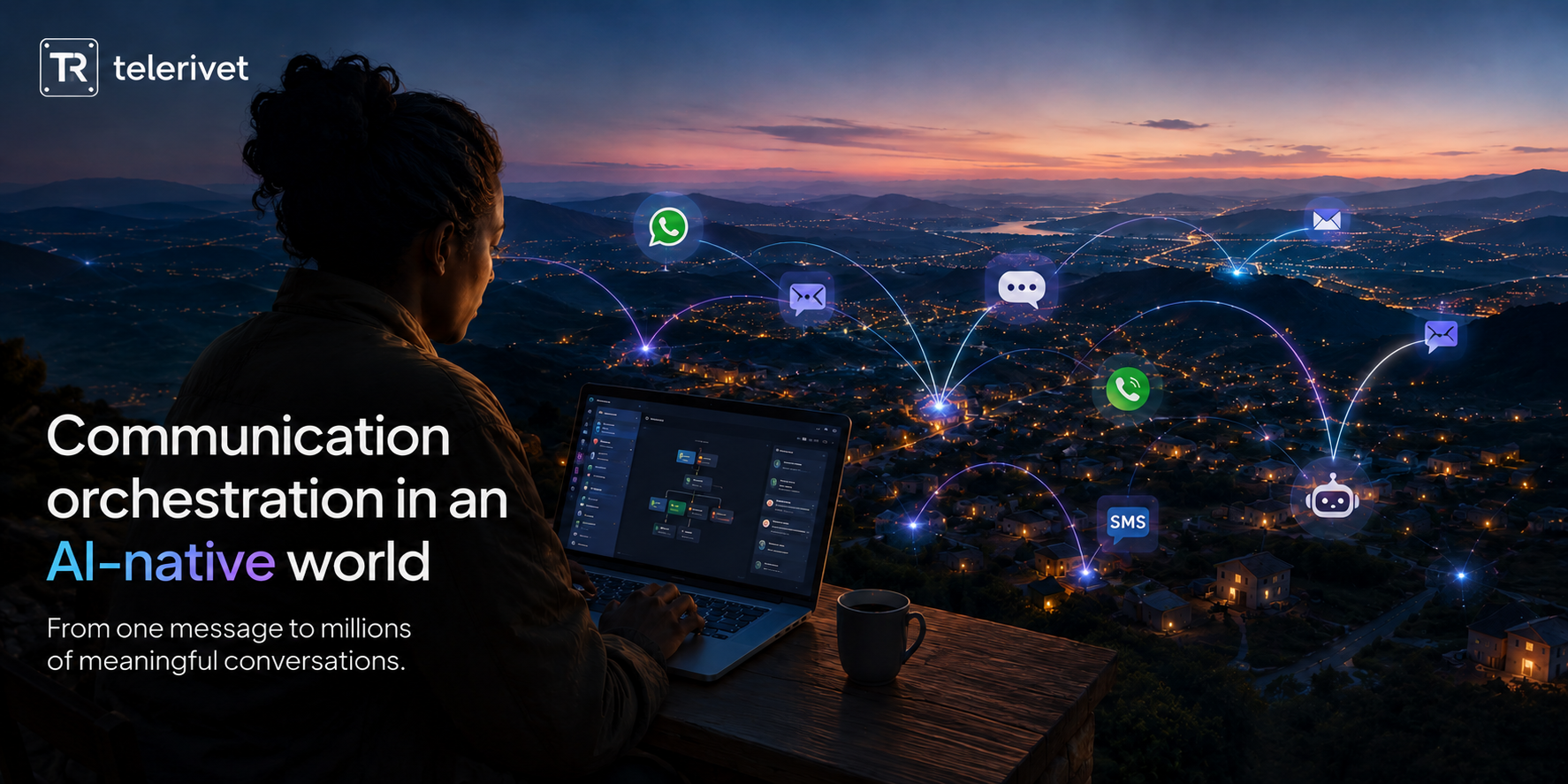
Communication Orchestration in an AI-Native World
May 21, 2026
In an AI-native environment, communication orchestration is the capacity of a platform to accept intent-level instructions from a human or an AI agent and execute multi-step messaging workflows reliably across channels, recipients, and real-world outcomes. The AI generates the workflow. The orchestration platform runs it. Neither half works without the other.
For a long time, business communication was framed as a channel question.
Which channels do we support? Which providers do we integrate with? How do we add WhatsApp, SMS, voice, or whatever comes next?
Business SMS in Japan: MIC Compliance, the URL Prohibition
May 20, 2026
Every market in this compliance series allows URLs in SMS messages. Japan does not. Japan's major carriers commonly filter or block standard SMS containing URLs on many A2P routes as part of anti-phishing measures. A message with a link to a landing page, a ticket confirmation, a tracking update, or any other web address will generally not be delivered to Japanese recipients through standard SMS channels. This single restriction, with no equivalent in any other market covered in this series, reshapes every program that was designed anywhere else and then extended to Japan without adjustment.
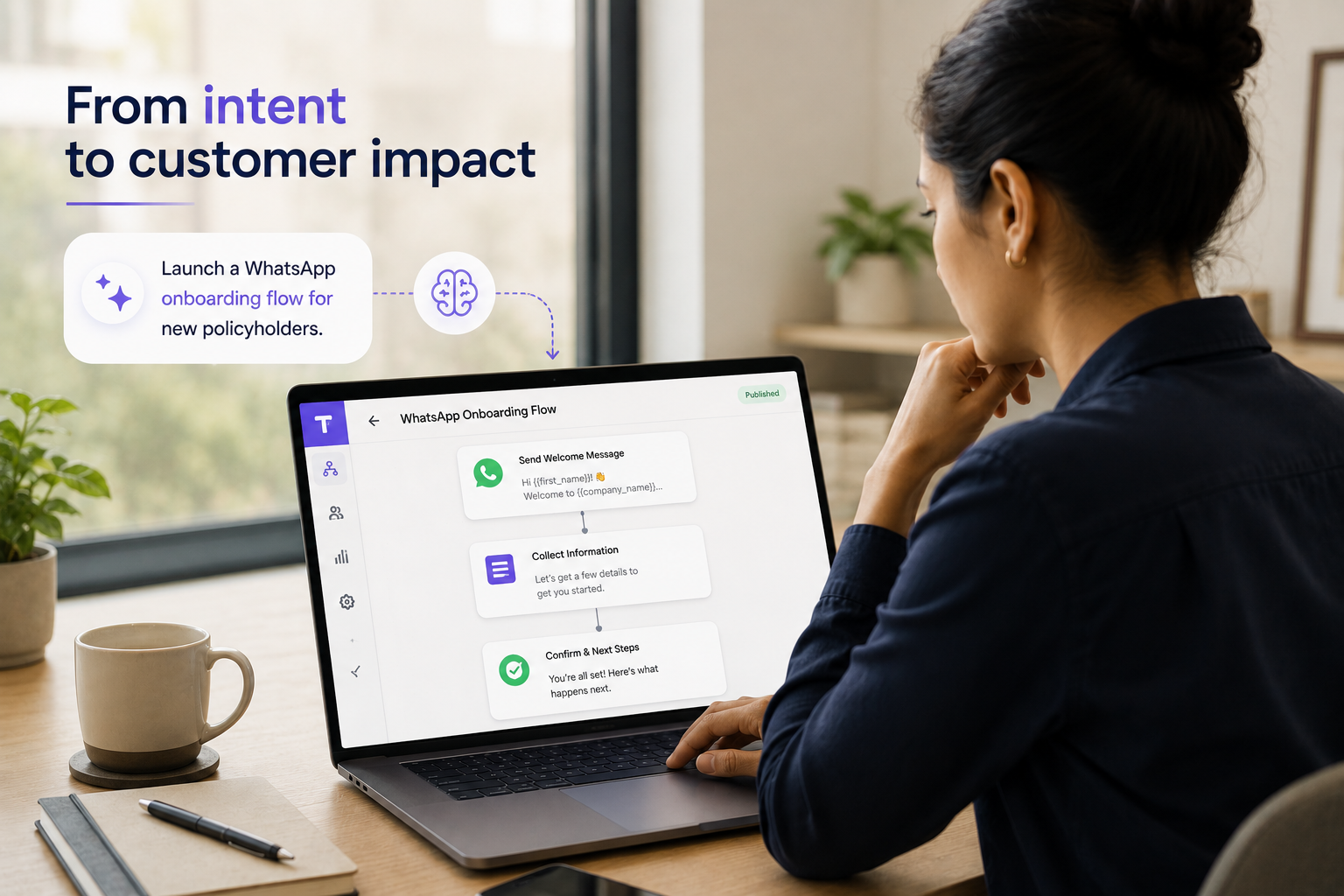
How AI is Pushing Enterprise Software Toward Intent-Driven Orchestration
May 19, 2026
Intent-driven orchestration is a model in which software accepts a description of a desired outcome in plain language or structured intent and configures itself to execute it, rather than requiring a human operator to build the workflow step by step. In communication systems, this means describing a messaging sequence to an AI agent and having the platform build, route, and run it automatically. It is the shift from configuring software to instructing it.
For the last two decades, enterprise software has followed the same basic model: businesses adapt themselves to software..
Sending SMS in Indonesia: Kominfo Registration, UU PDP, and Why Grey Routes Are Getting Shut Down
May 15, 2026
Indonesia has one of the highest A2P SMS fraud rates in Southeast Asia. That is not a background detail. It is the reason why Kominfo, Indonesia's Ministry of Communication and Digital Affairs, works alongside the country's mobile operators to actively filter, block, and shut down traffic that does not run through approved channels. If your SMS program in Indonesia is delivering today but has not been registered properly, it is operating on borrowed time.
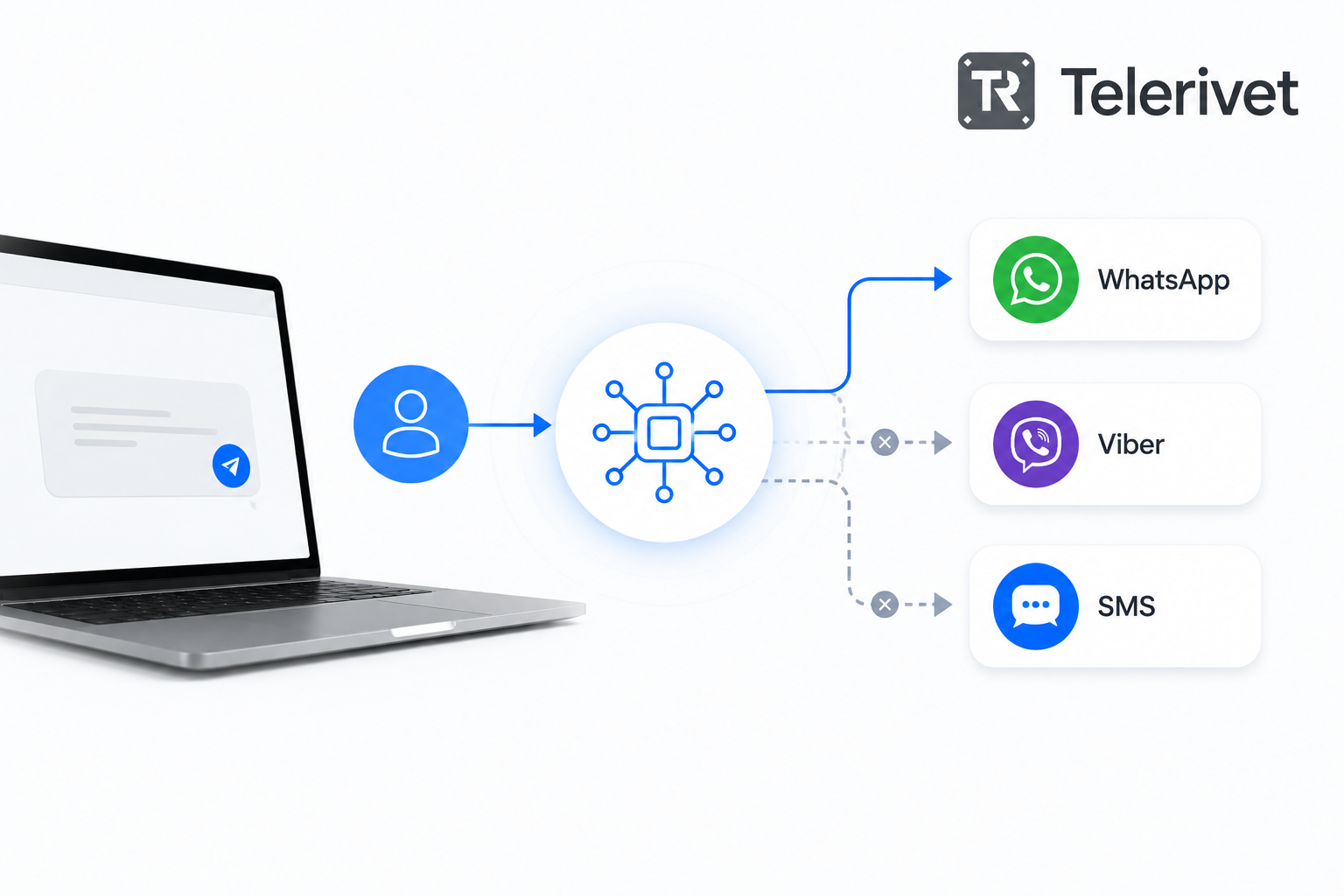
You Have a Backup Channel. That's Not the Same as a Channel Strategy.
May 11, 2026
How multichannel fallback becomes a routing layer that optimizes for cost, experience, and reliability simultaneously
Channel strategy is usually treated as a setup decision. You evaluate your markets, pick a primary channel, configure a backup, and move on.
For many organizations, that works until it doesn't.