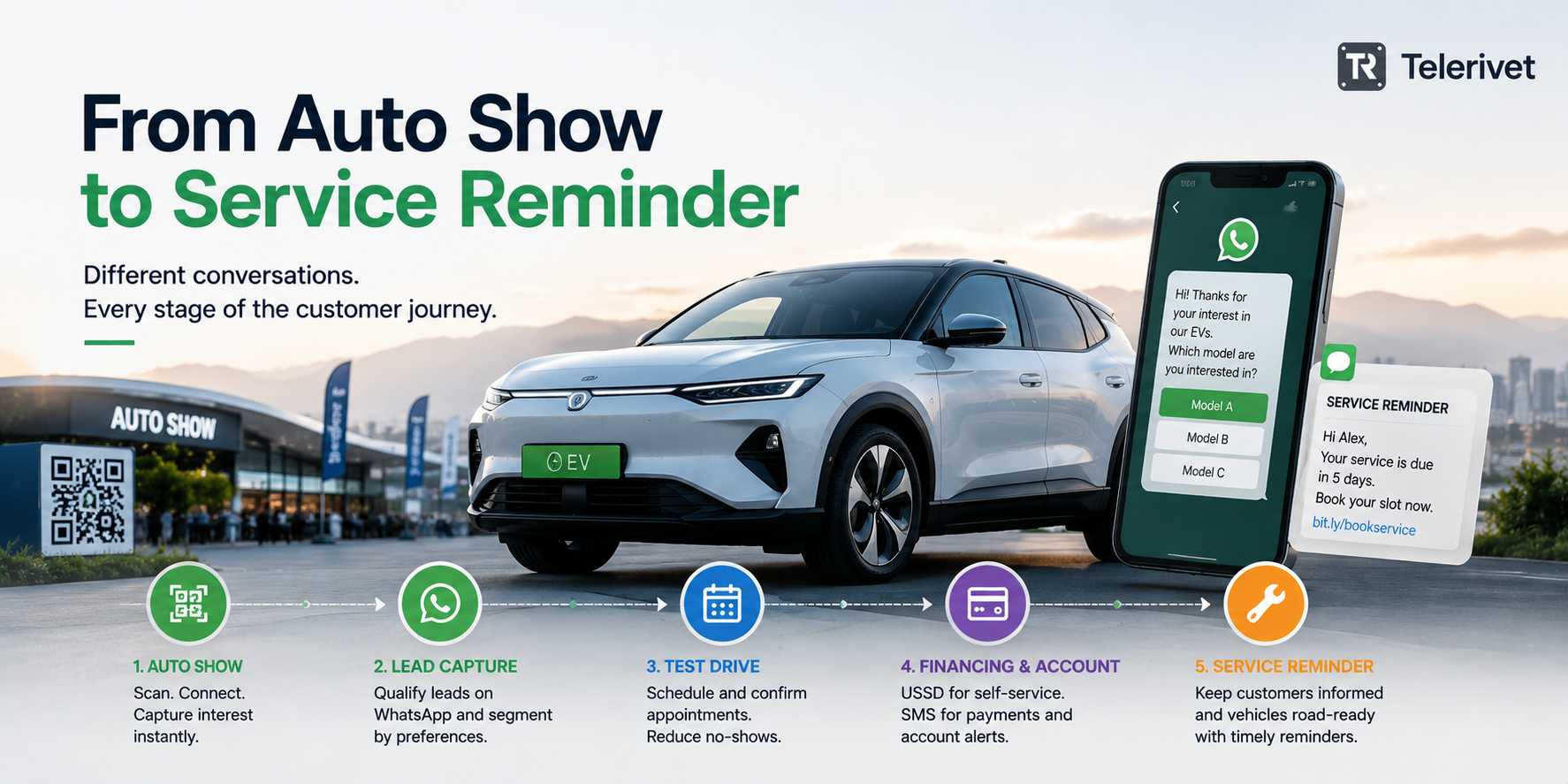
Automotive and EV brands in markets across Southeast Asia, South Asia, and Africa use WhatsApp and SMS to manage communication across a customer journey that spans months: from initial inquiry through test drive, purchase, delivery, and ongoing ownership. The communication requirement at each stage is different, lead qualification looks nothing like service reminders, and the channel mix shifts depending on where the customer is in the journey and what device and connectivity environment they are in.
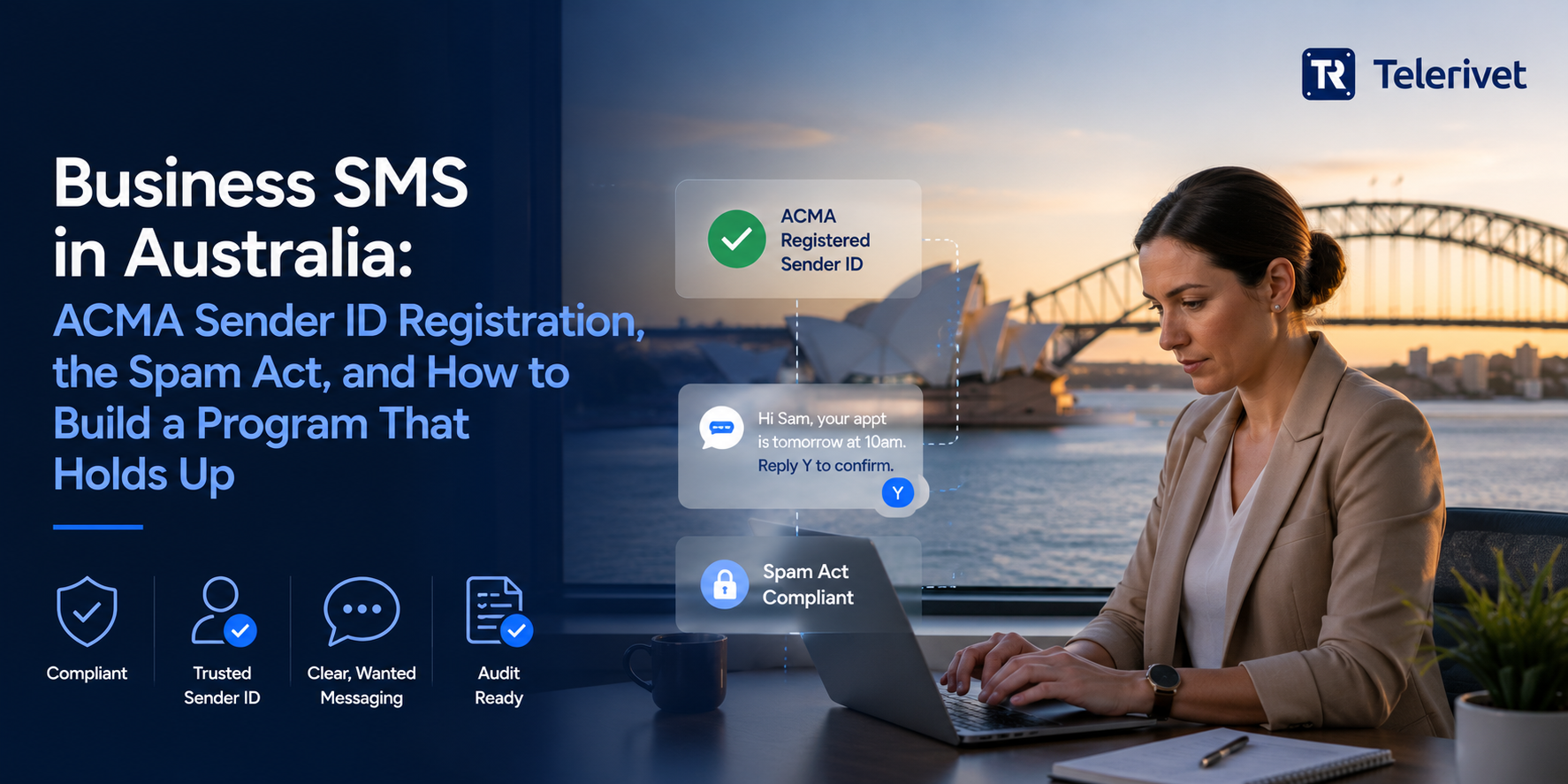
Business SMS in Australia: ACMA Sender ID Registration, the Spam Act, and How to Build a Program That Holds Up
Jul 2, 2026
From 1 July 2026, the Australian Communications and Media Authority's SMS Sender ID Register is live and in enforcement. If your organization sends SMS using a branded sender name, and that name is not registered, recipients are seeing the word "Unverified" where your business name should be. Their phone is grouping your message alongside other unregistered senders. Your delivery rate may hold, but your open rate and your customers' trust in what you send will not.
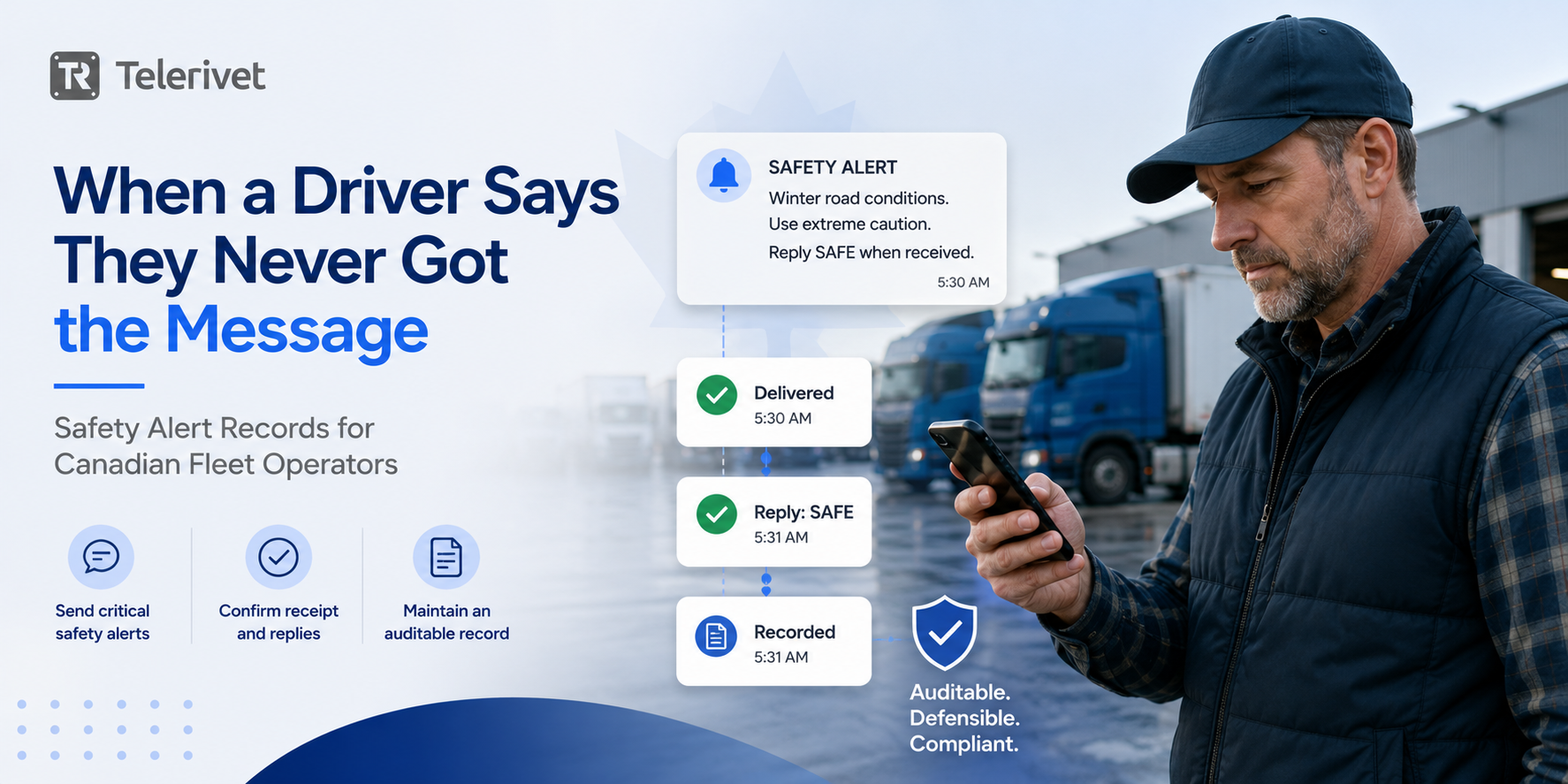
When a Driver Says They Never Got the Message: Safety Alert Records for Canadian Fleet Operators
Jul 2, 2026
It is 5:30 a.m. A dispatcher sends a route condition update to a group chat on their personal phone. Fifteen drivers are in that group. Some are already on the road. Some have not left the terminal. At least two have the chat on mute.
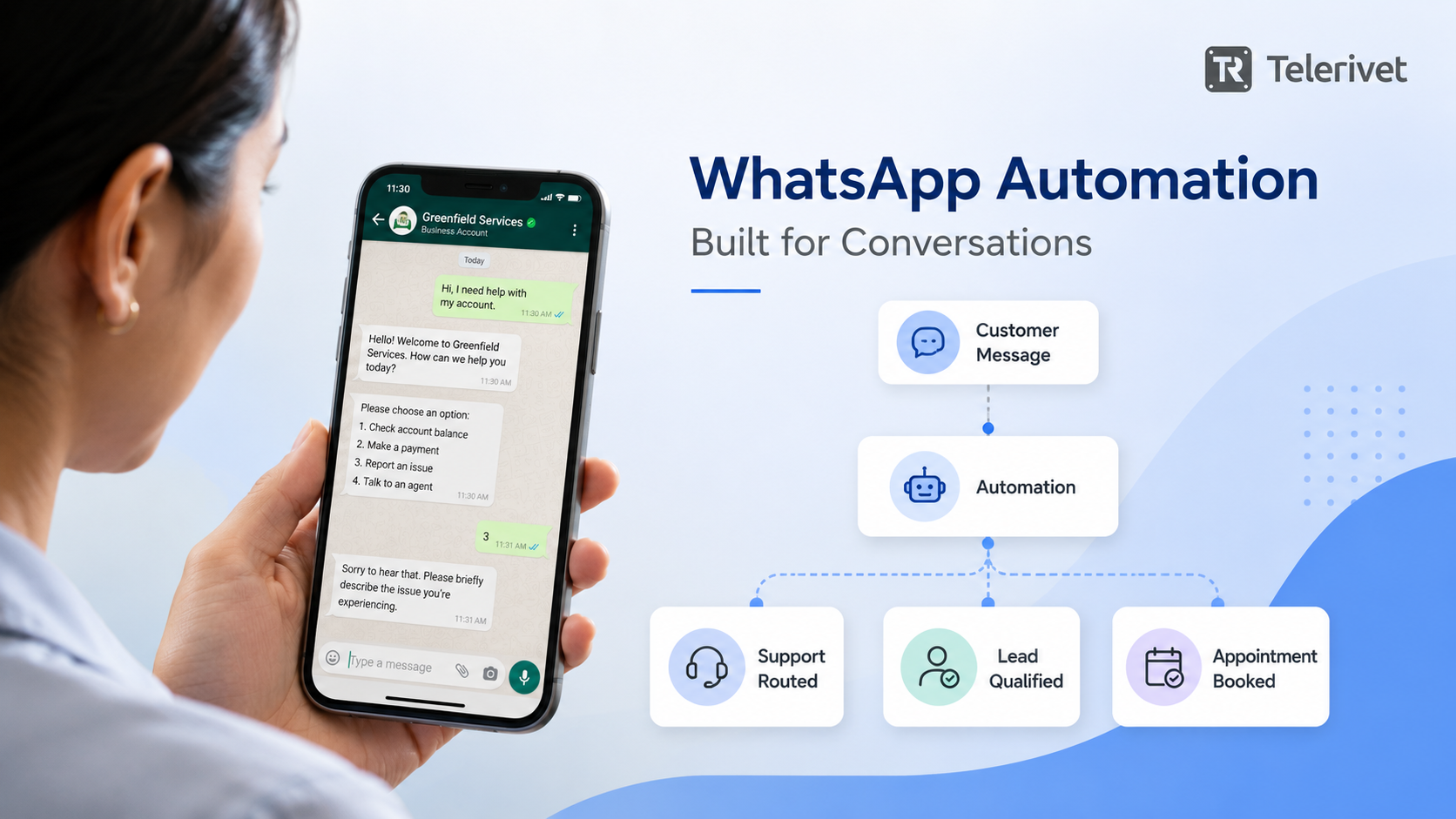
How WhatsApp Works Inside Telerivet: Activation, Architecture, and What You Can Build
Jun 29, 2026
WhatsApp business automation is the process of building automated conversation flows on WhatsApp that handle incoming messages, qualify intent, send structured responses, and route to a human when needed, without requiring a developer to configure each step. In Telerivet, this works through a combination of a connected WhatsApp route, a service you build inside the platform, and the conversation logic you define to handle what happens when a message arrives.
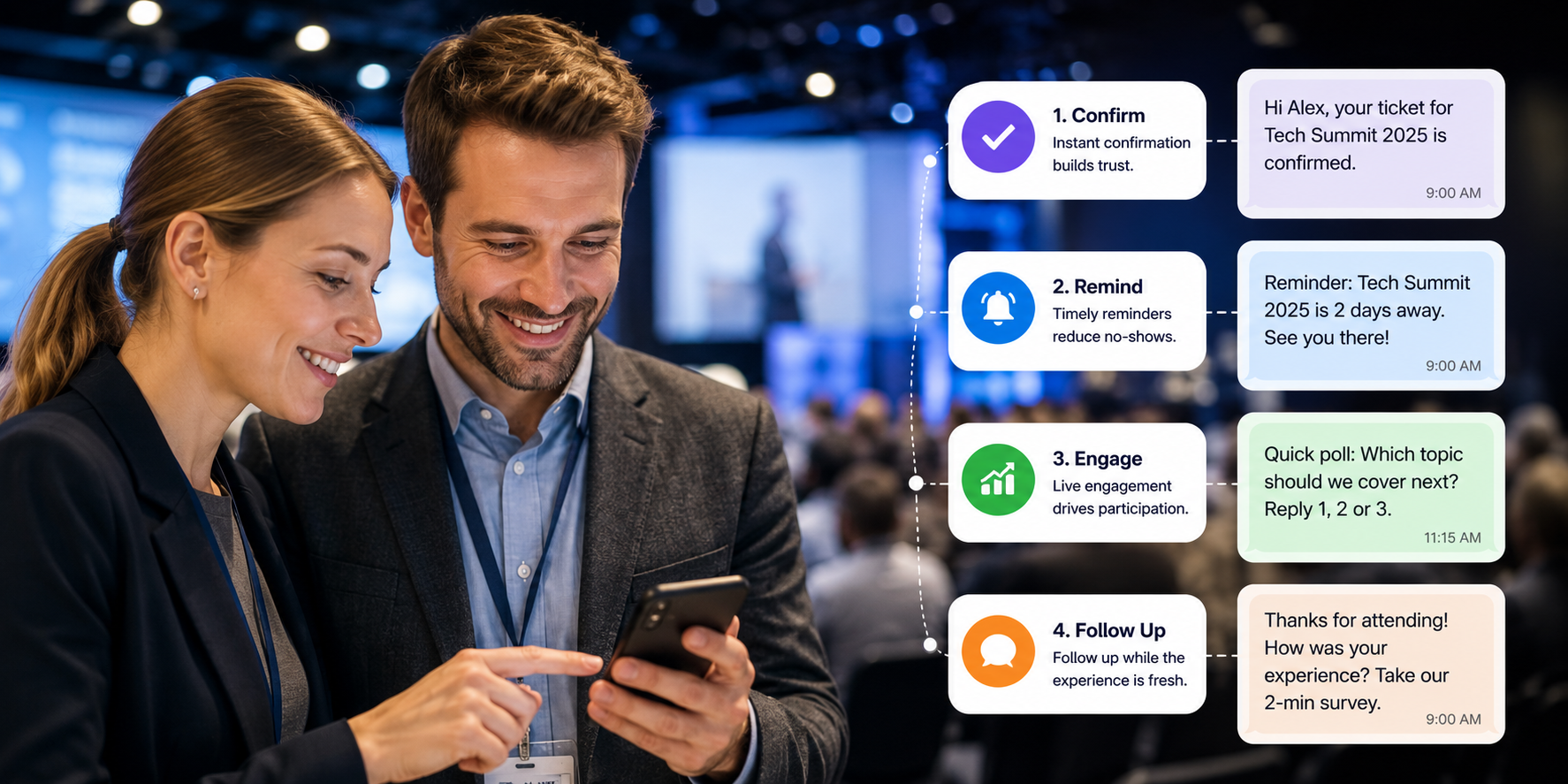
Turn Registrants into Attendees: Effective Event Messaging Strategies
Jun 28, 2026
Event messaging is the communication workflow that runs between the moment someone registers for an event and the moment they walk through the door, covering confirmation, reminder, logistics, and day-of communication. A structured messaging sequence, delivered across SMS and WhatsApp at the right intervals, is consistently the highest-leverage intervention available to close that gap without adding headcount..

You Own the Route. You're Missing the Platform
Jun 27, 2026
The operators who have what global messaging platforms spend years and hundreds of millions acquiring (direct carrier agreements, registered sender IDs, shortcodes, and trusted enterprise client relationships) are losing ground to those same platforms. Not because the platforms have better connectivity. They do not. In most markets, a local gateway operator or regional aggregator has cleaner routes, better deliverability, and stronger carrier relationships than any global platform could replicate from the outside..
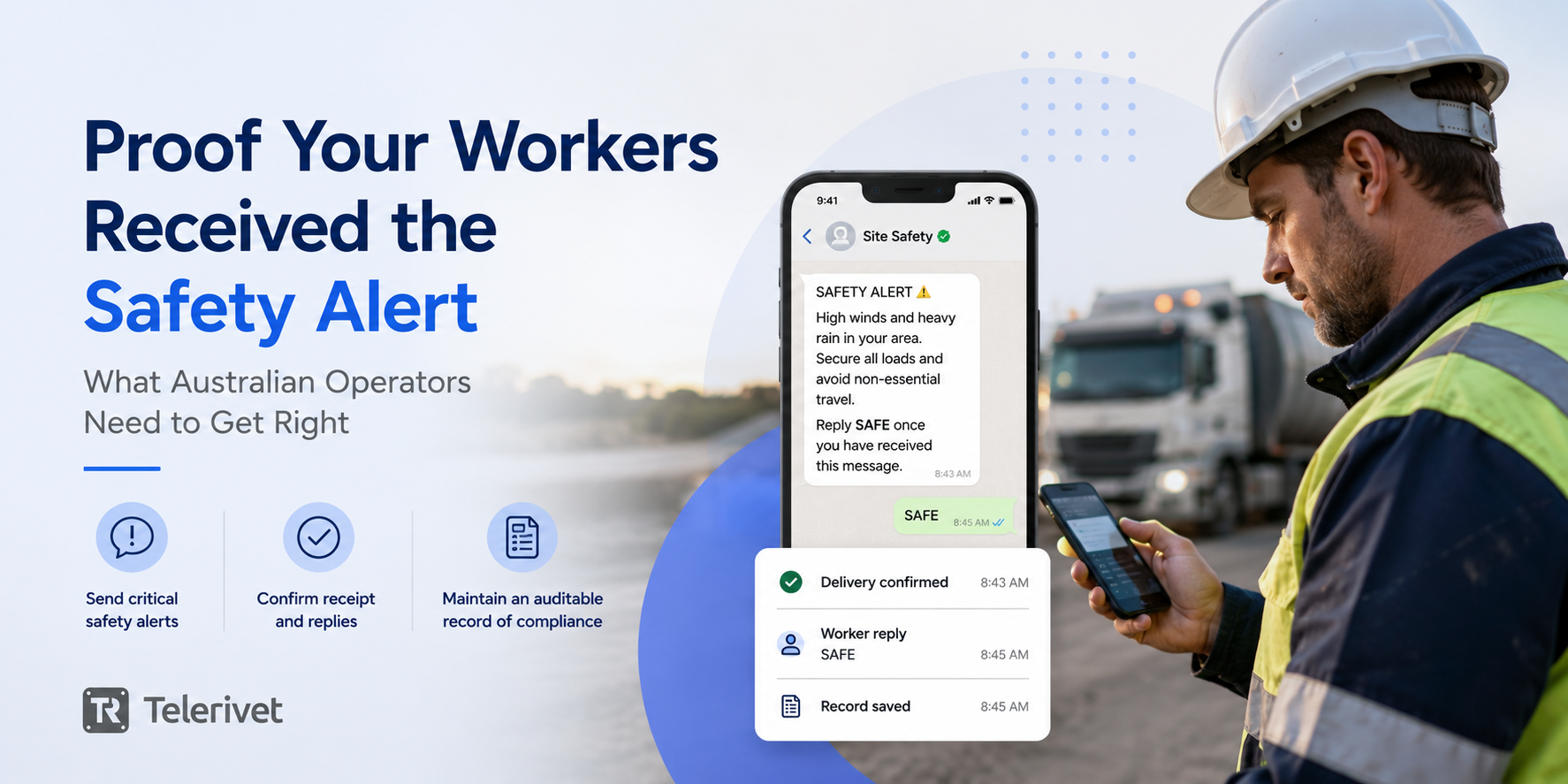
Proof Your Workers Received the Safety Alert: What Australian Operators Need to Get Right
Jun 26, 2026
Something happened at one of your sites. An investigator is sitting across from you and they want to know whether the relevant workers were notified before the incident. You tell them your Safety Manager sent a text. The investigator asks to see the record.
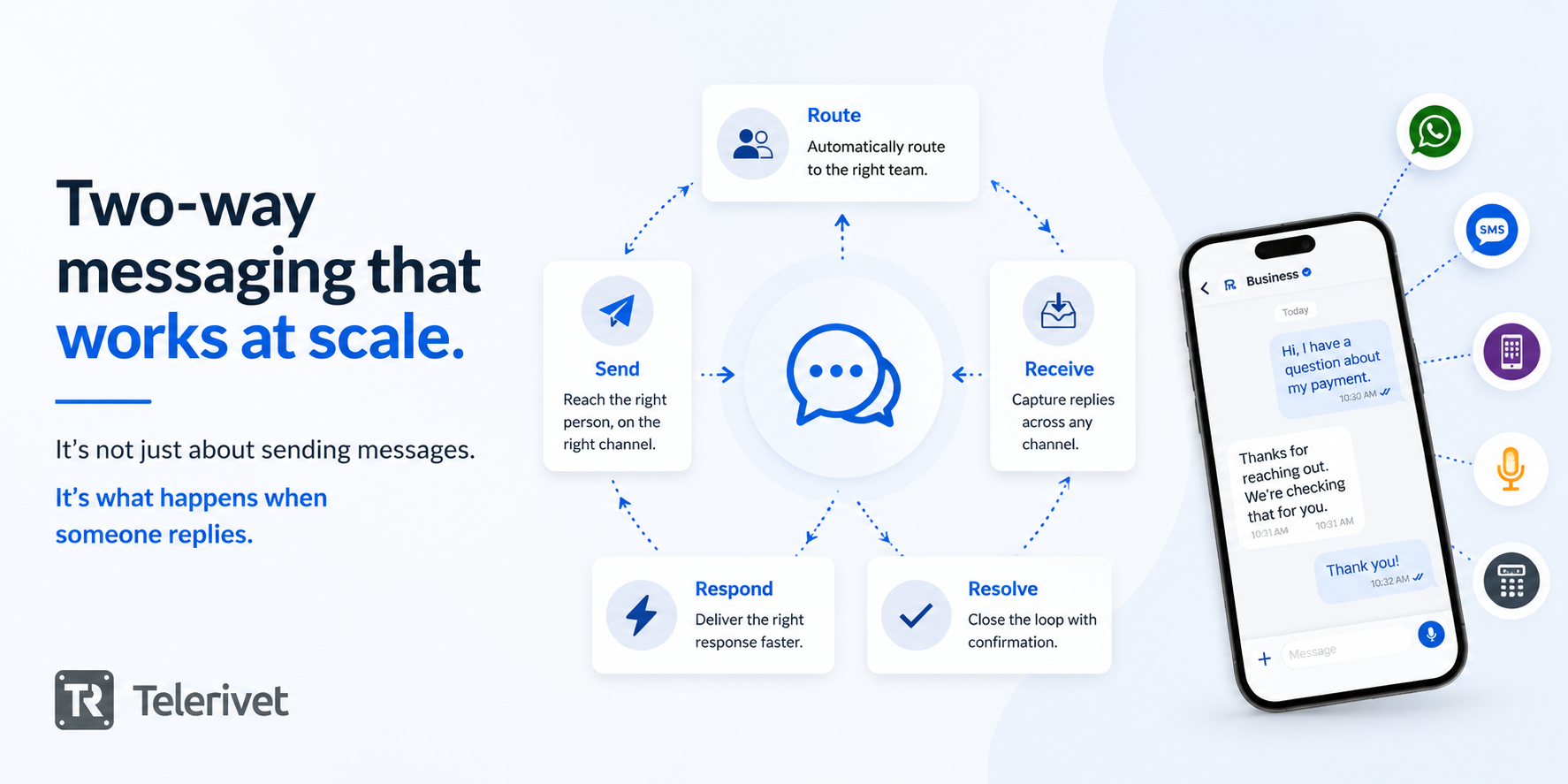
Most Messaging Platforms Are Built for Talking. Not for Listening. What Happens When Someone Replies?
Jun 25, 2026
Two-way messaging is a communication setup in which a business can both send messages to recipients and receive, route, and act on replies, automatically, at scale. It is distinct from broadcast messaging (outbound-only) in that the system is designed to handle inbound responses: parsing what was said, routing it to the right person or workflow, and triggering a follow-up action without manual intervention. Most messaging platforms are built for sending.Two-way communication requires a different architecture underneath.

Can Oracle Opera Integrate with WhatsApp, Viber, and SMS? A Guide for Hotel IT Managers
Jun 24, 2026
Every time a reservation agent copies a phone number out of Opera and sends a WhatsApp message manually, the hotel is paying a hidden operational cost. The process works at 20 arrivals per day. It breaks at 200.
Read more »
At most mid-size hotels in the Philippines, the property management system and the guest messaging operation exist in two entirely separate worlds. Oracle Opera holds the guest record. It has the name, the booking date, the check-in date, the room type, the contact number. But the moment a guest needs to be reached for a pre-arrival confirmation, a reservation reminder, an upsell offer, or an in-stay promotion then someone leaves Opera, opens WhatsApp on a phone, finds the guest's number, and writes a message manually.
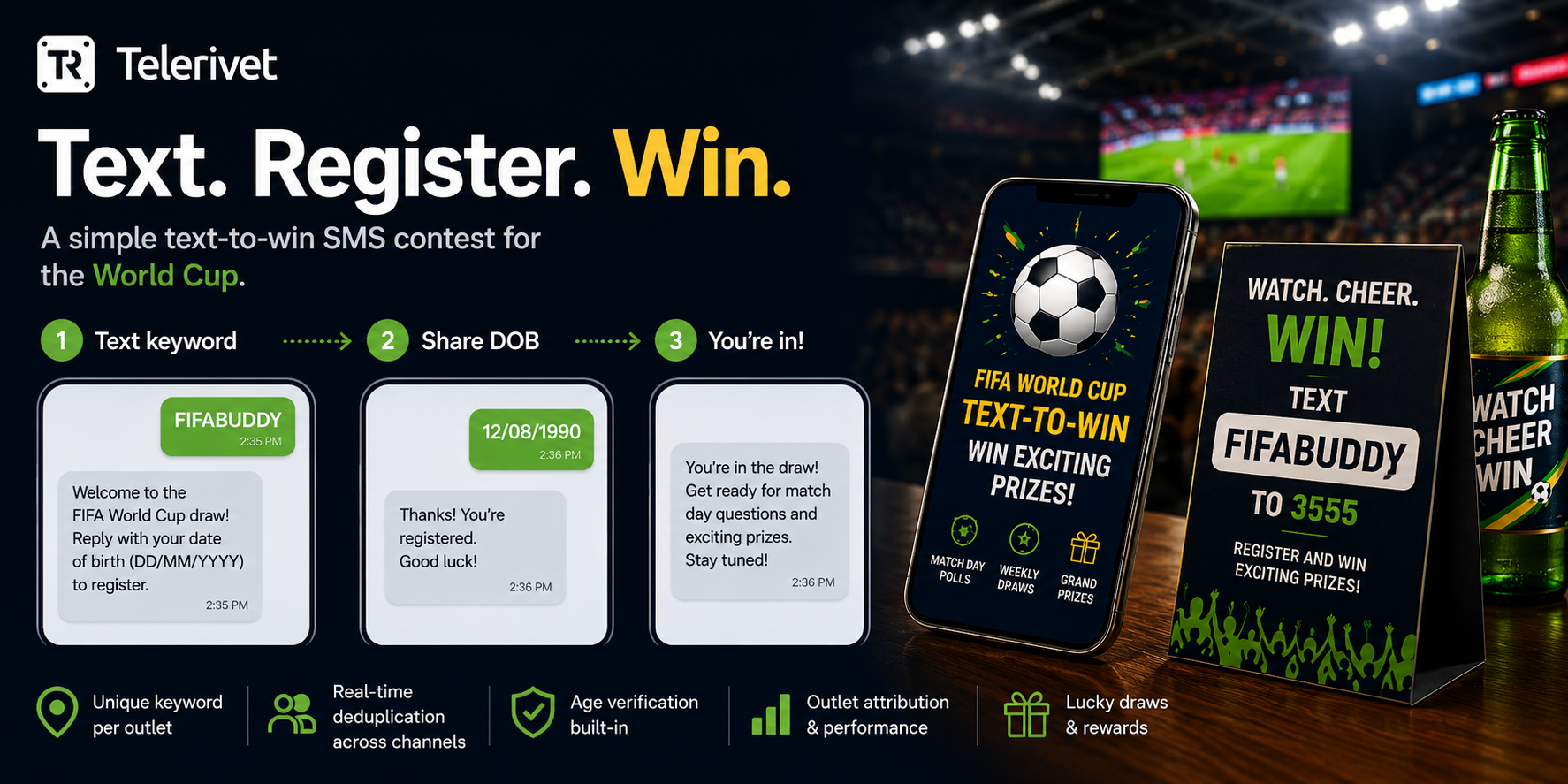
The World Cup Is On. Here's How to Run a Text-to-Win SMS Contest Before the Final Whistle.
Jun 20, 2026
A text-to-win SMS contest is a consumer promotion where participants register by sending a keyword to a number, are entered into a prize draw, and receive match-linked engagement messages until winners are announced. The entire interaction happens over SMS, with no app download, no form to fill out, and no internet connection needed at the point of entry.
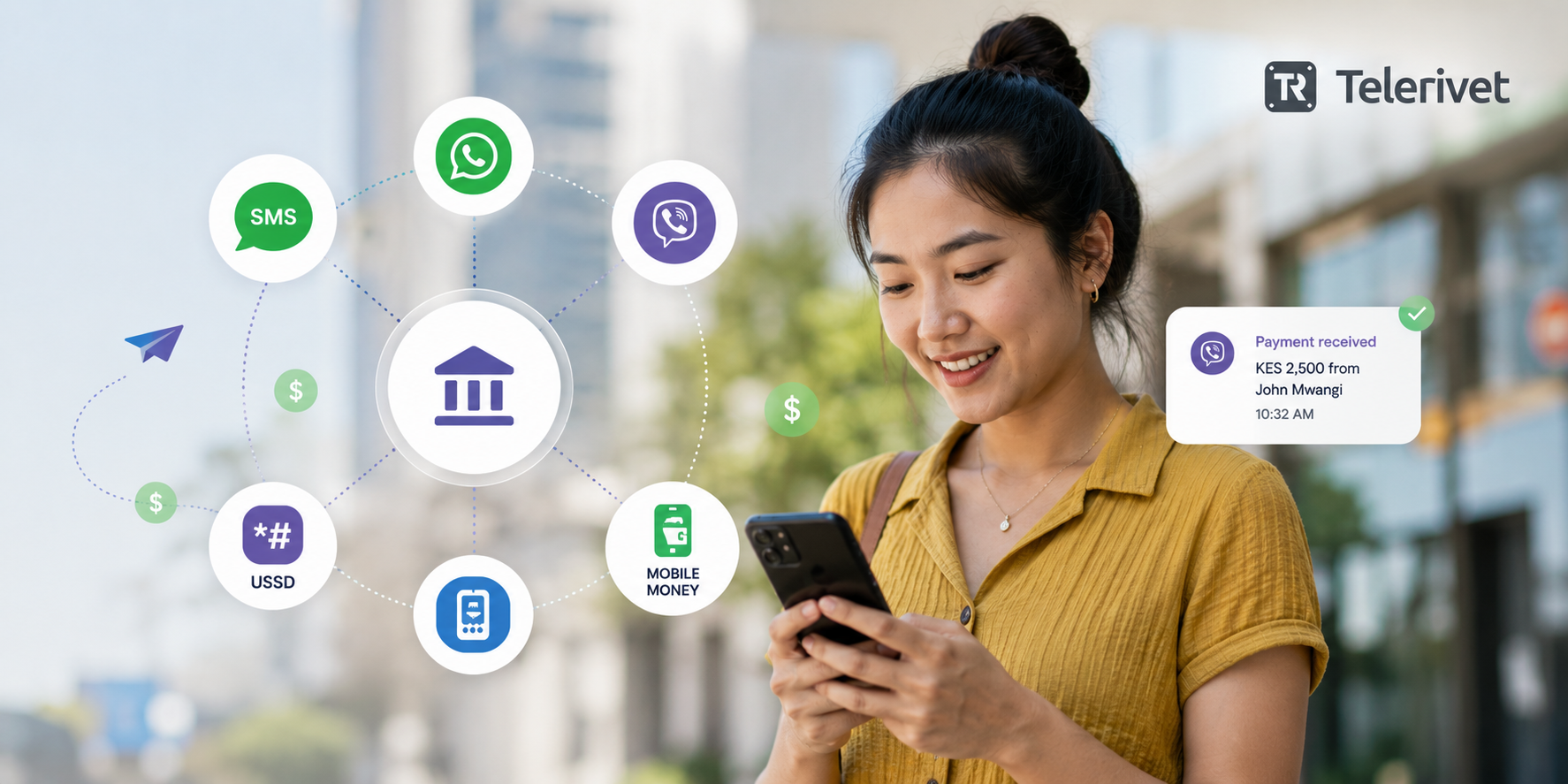
How Digital Lenders, Mobile Money Operators, and Insurers Communicate With Customers at Scale
Jun 19, 2026
Digital lenders, mobile money operators, microfinance institutions, and insurers operating across Africa, Southeast Asia and other global markets share a common communication challenge: their customers are not a uniform population. Some have smartphones and mobile data. Many use feature phones. Some are in areas with consistent network coverage. Others are not. Building a customer communication system that reaches all of them, reliably, at scale, across multiple products and markets, requires different decisions than a communication setup built for a connected, smartphone-first customer base..