Civic observation field coordination is the real-time communication workflow that connects a central operations team with distributed volunteers across three phases: assignment dispatch before the window opens, structured status reporting during it, and escalation routing when anomalies arise. In most emerging markets, this workflow runs on SMS because SMS is the only channel that reaches every volunteer regardless of device type, data plan, or connectivity level.
Running a civic observation program is one of the more demanding field coordination problems in the public sector. You have hundreds or thousands of trained volunteers deployed across dispersed locations. The operational window is compressed and often unpredictable. Every check-in missed, every assignment unclear, every escalation that reaches the wrong person has consequences that compound quickly. And unlike most field programs, there is rarely a second window to fix what went wrong.
Emerging Markets
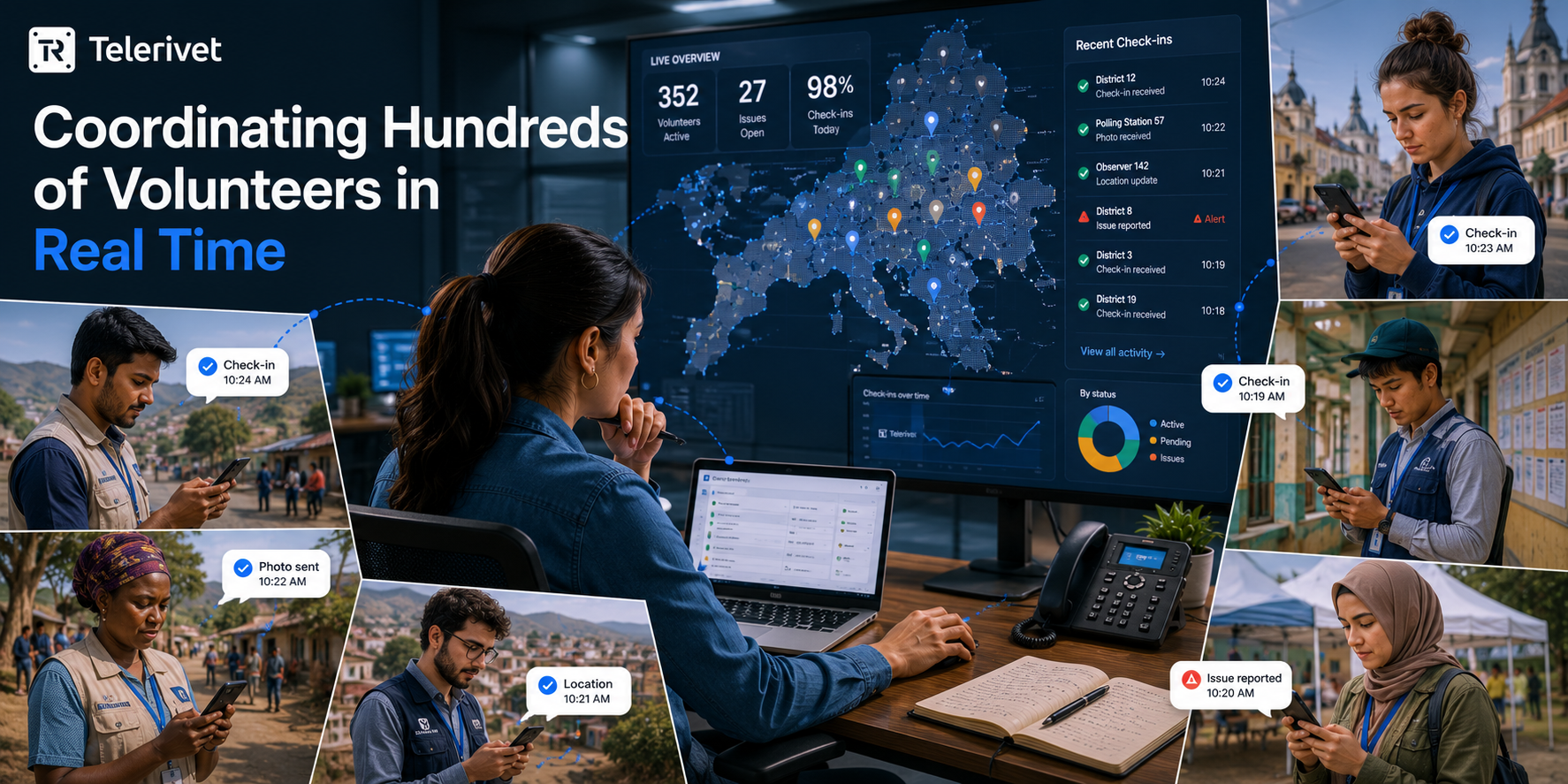
How Civic Observation Programs Coordinate Hundreds of Volunteers in Real Time
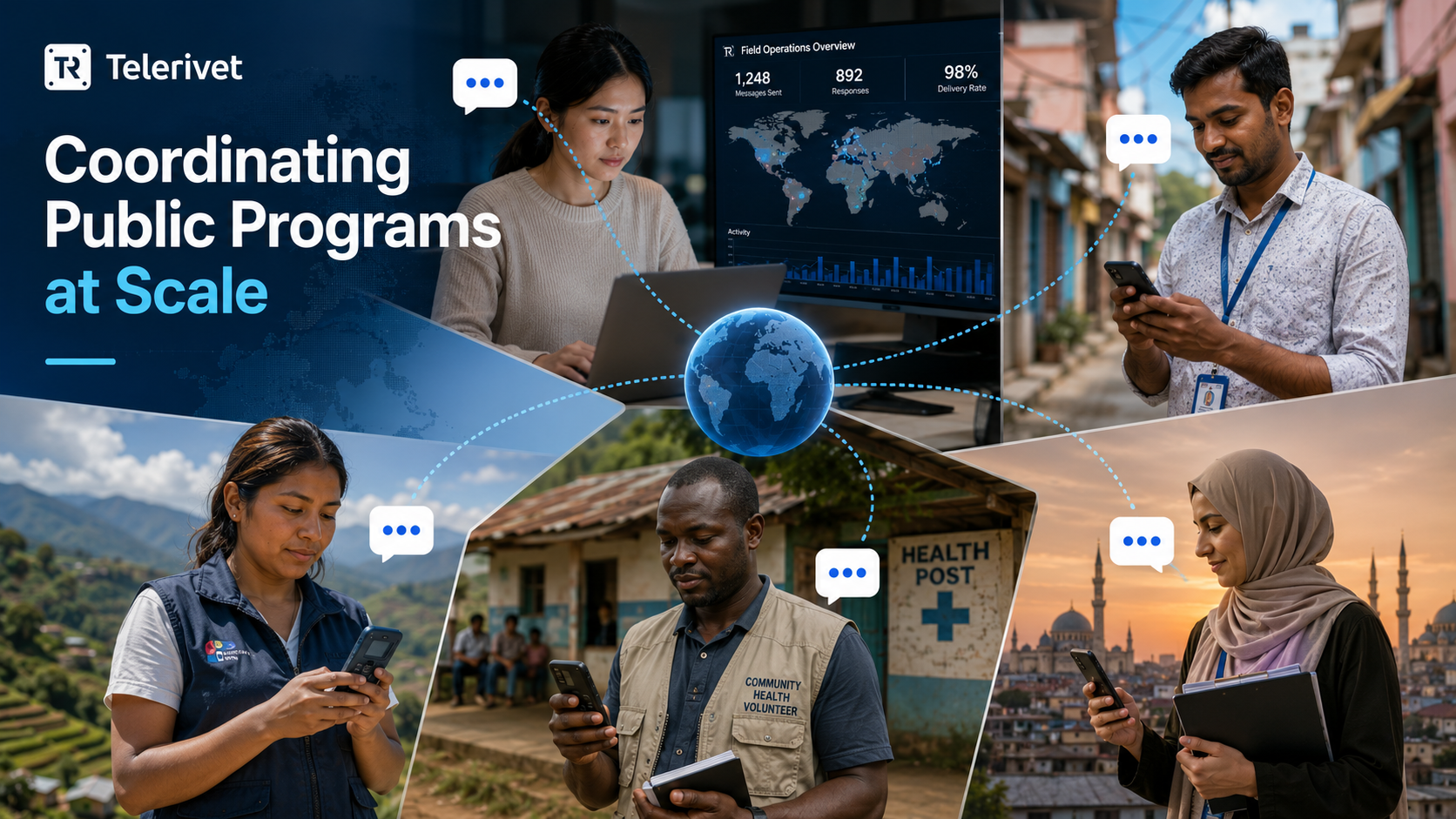
When the Work Happens Off the Grid: Coordinating Public Programs at Scale
Field coordination for public programs is the real-time exchange of instructions, status reports, and alerts between a central operations team and distributed agents or participants in the field. Across most of the world, this workflow runs on SMS because SMS is the only channel that works everywhere.
When I was a Peace Corps volunteer in Tanzania, I learned something that has shaped how I think about technology ever since. The most important work people were trying to accomplish didn't happen where the internet was. It happened in villages connected by dirt roads, in health posts with no reliable power, in community centers where a feature phone was the most sophisticated device in the room. The question was never whether people wanted to coordinate or communicate at scale. The question was what tools were actually usable in the conditions they were operating in.
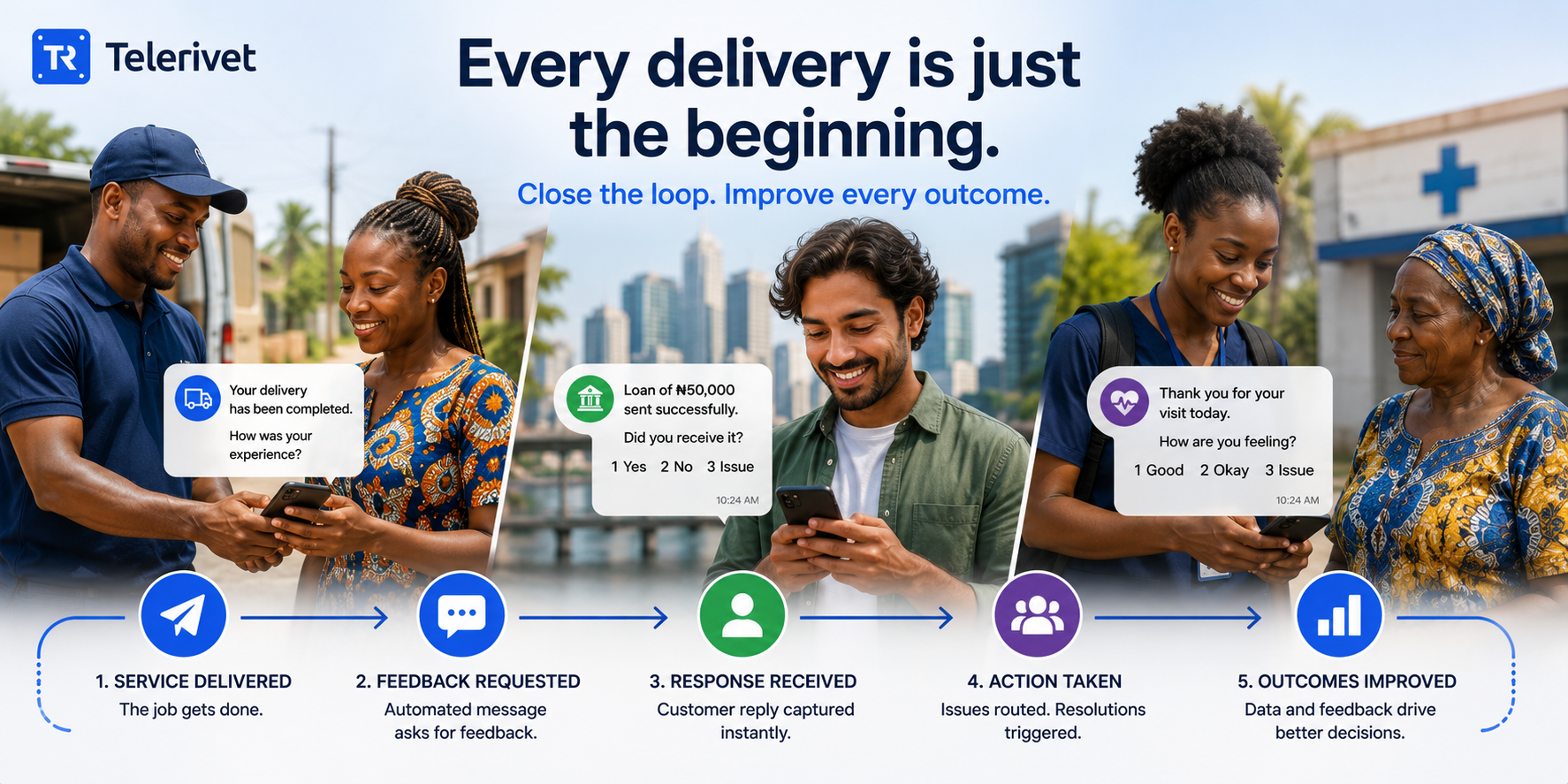
The Delivery Was the Easy Part: Why the Feedback Loop Is the Workflow That Gets Skipped
A post-service feedback workflow is the structured sequence of communication that runs after a service event to confirm delivery, capture the recipient's experience, and route any follow-up action to the right team. It is not a survey. It is not a customer experience research function. It is the final stage of the workflow itself, and in most organizations it is missing.
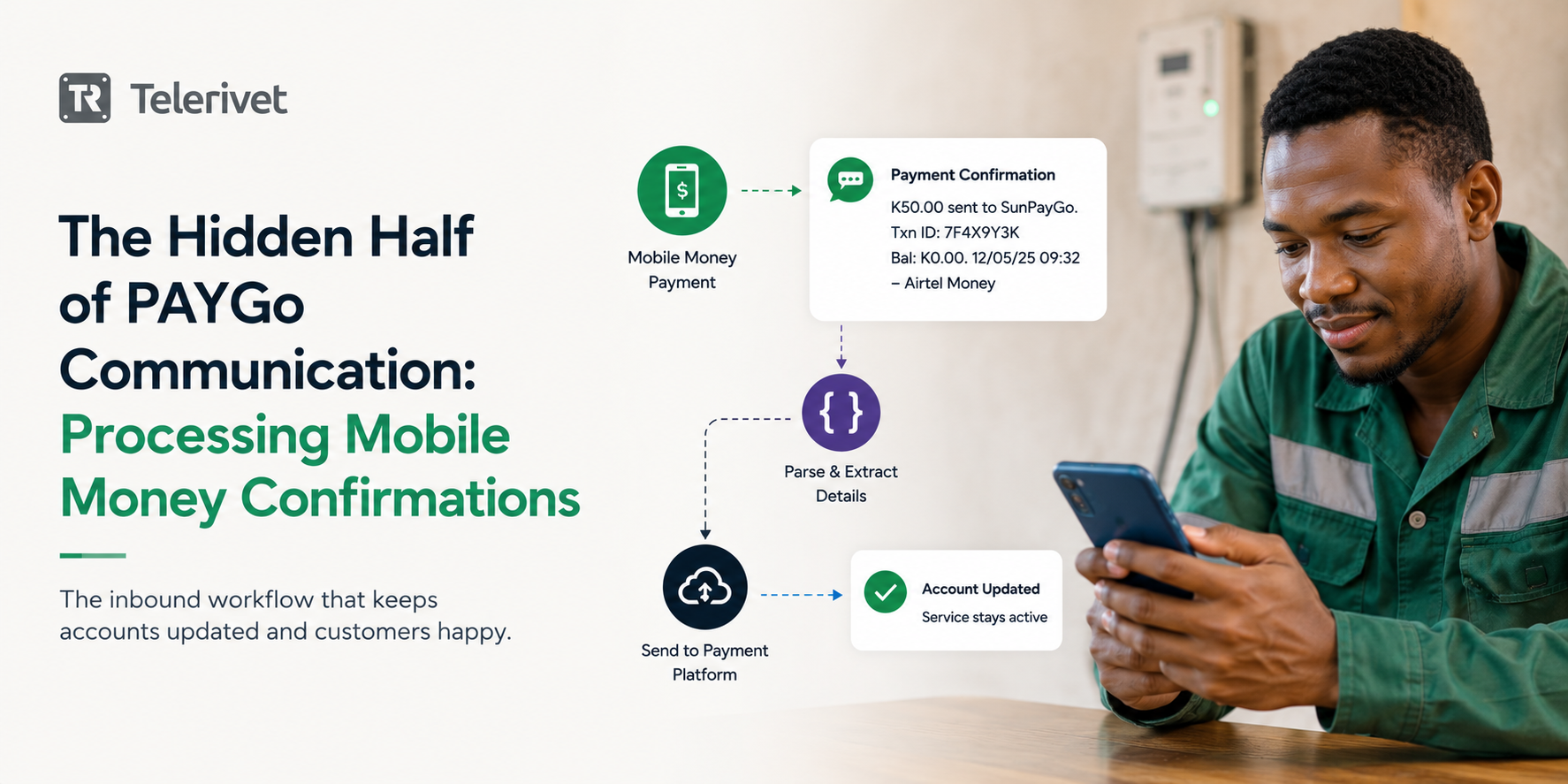
When Mobile Money Payments Arrive but Accounts Don't Update
When a mobile money payment arrives for a PAYGo solar account, a loan repayment, or a utility service, the payment itself is only half the workflow. The other half is the inbound confirmation: the system that detects the payment, parses the transaction details, matches it to the correct account, and triggers the downstream action, enabling the device, updating the balance, sending a customer confirmation. Most operators build the outbound half carefully and underinvest in the inbound half. That is usually when they discover what the inbound half costs when it fails.
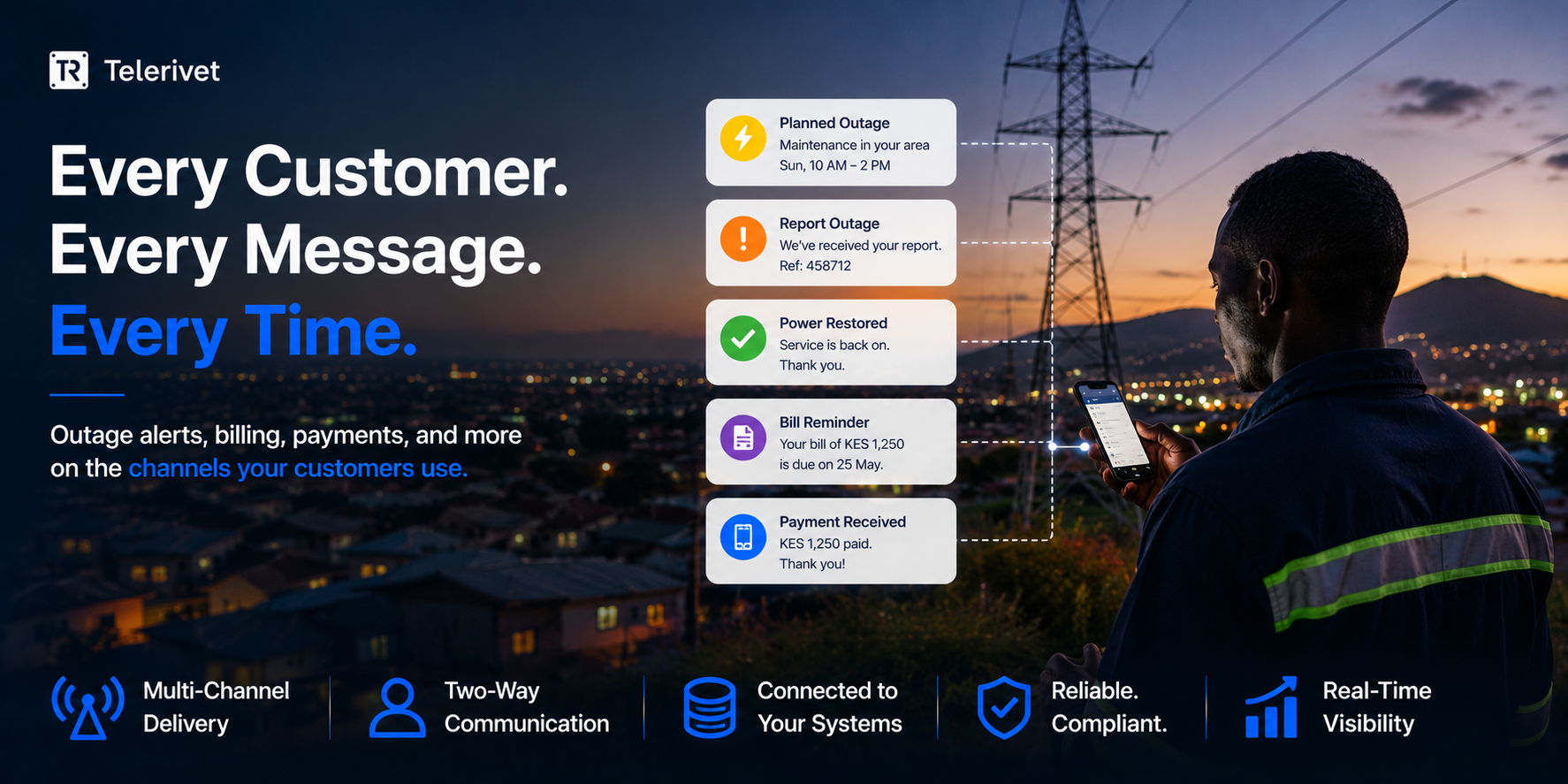
When a Third-Party App Knows About the Outage Before Your Customers Do
In Kenya, planned power interruptions are published as formal notices listing affected markets, schools, and villages by name, and customers are directed to the website, social media, or the newspaper to find them. The gap is real enough that independent apps exist purely to convert those notices into phone alerts. The utility holds the meter records and the phone numbers. Someone else does the notifying.
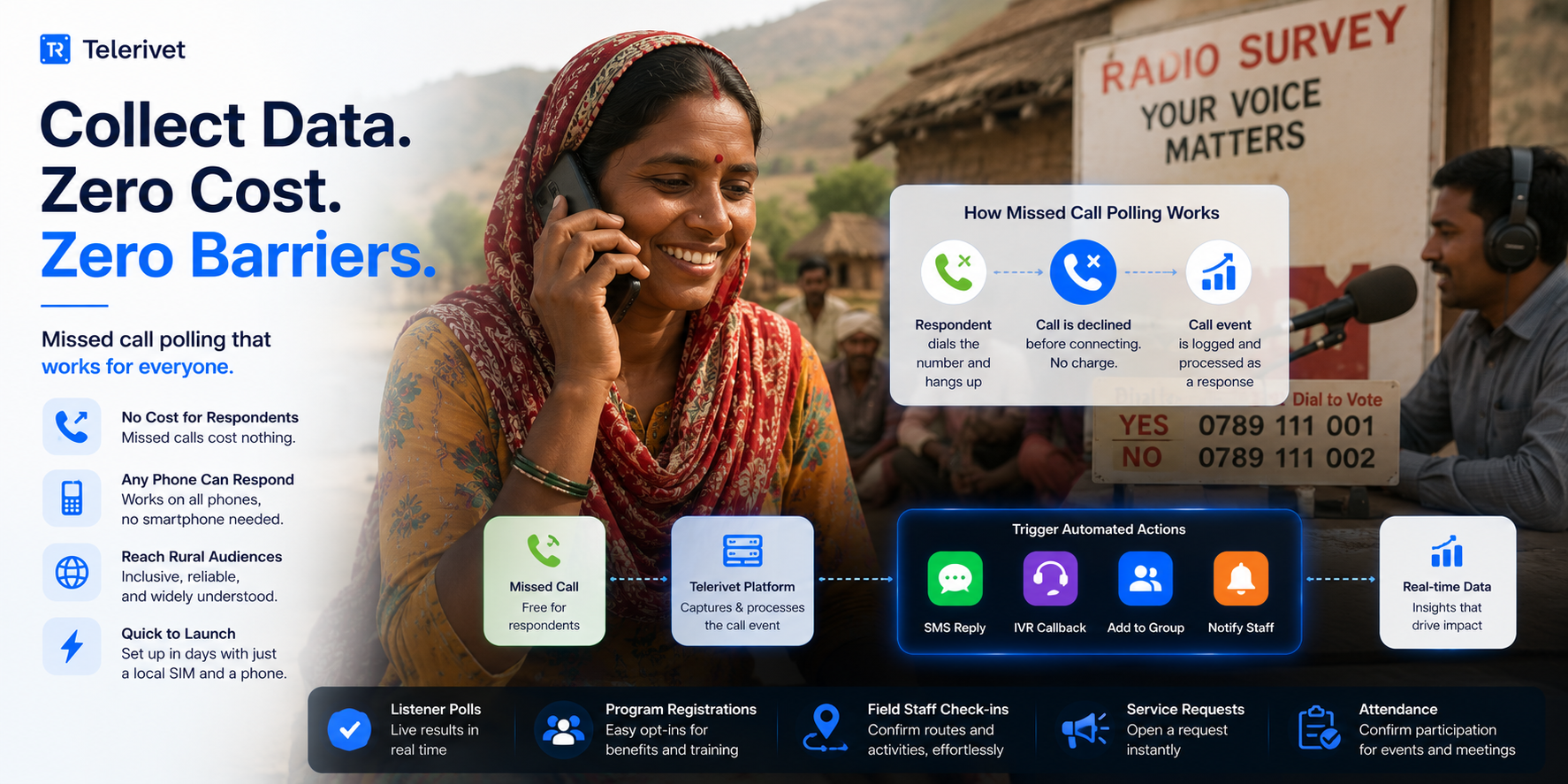
The Missed Call Is the Message: Collecting Field Data at Zero Cost to the Respondent
Every survey methodology has a hidden assumption built into it: that the person responding can afford to respond. For organizations collecting data from rural audiences across Sub-Saharan Africa, South Asia, and Southeast Asia, that assumption fails constantly. An SMS reply costs money. A data connection costs more. A survey that requires either one is not measuring what your audience thinks. It is measuring who can afford to tell you.
Multichannel Messaging Strategy: What Your Channel Assumptions Are Costing You
A multichannel messaging strategy is a plan for how a business reaches its recipients across more than one communication channel (SMS, WhatsApp, voice, USSD, Viber etc) and how it decides which channel to use, when, and for whom. Most organizations have multiple channels available. Fewer have thought through the routing logic: what happens when one channel fails, which channel is actually right for which recipient, and what the operational cost is of getting that wrong at scale.
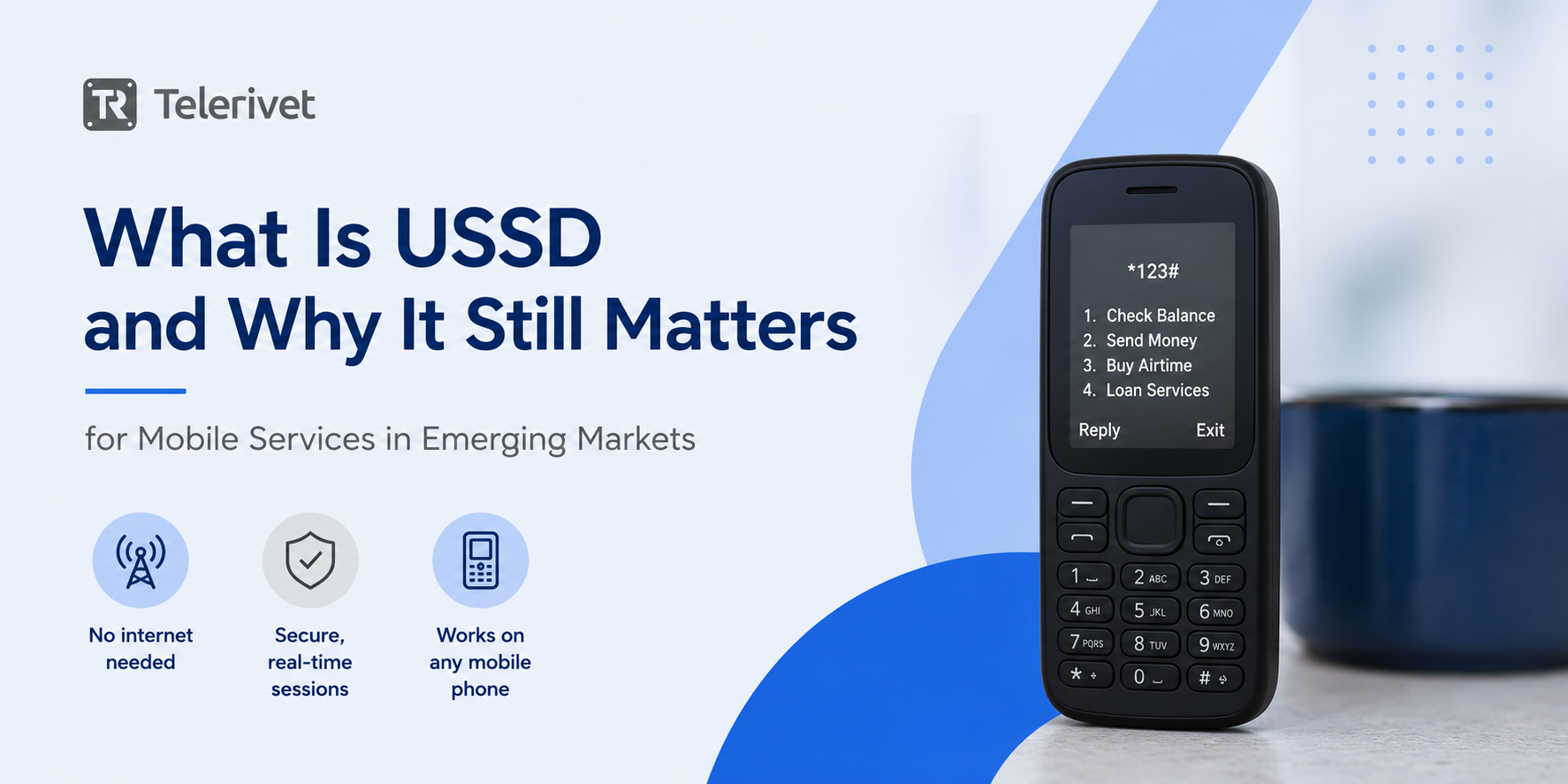
What Is USSD and Why It Still Matters for Mobile Services in Emerging Markets
USSD (Unstructured Supplementary Service Data) is a mobile communication protocol that lets users interact with a service through a short code menu without internet, without a smartphone, and without a downloaded app. It works on any GSM handset, including basic feature phones, and runs entirely over the mobile network's signaling channel. Because it requires no data connection and no app, USSD remains one of the most reliable ways to reach mobile users in low-connectivity markets across Africa, Asia, and emerging markets..
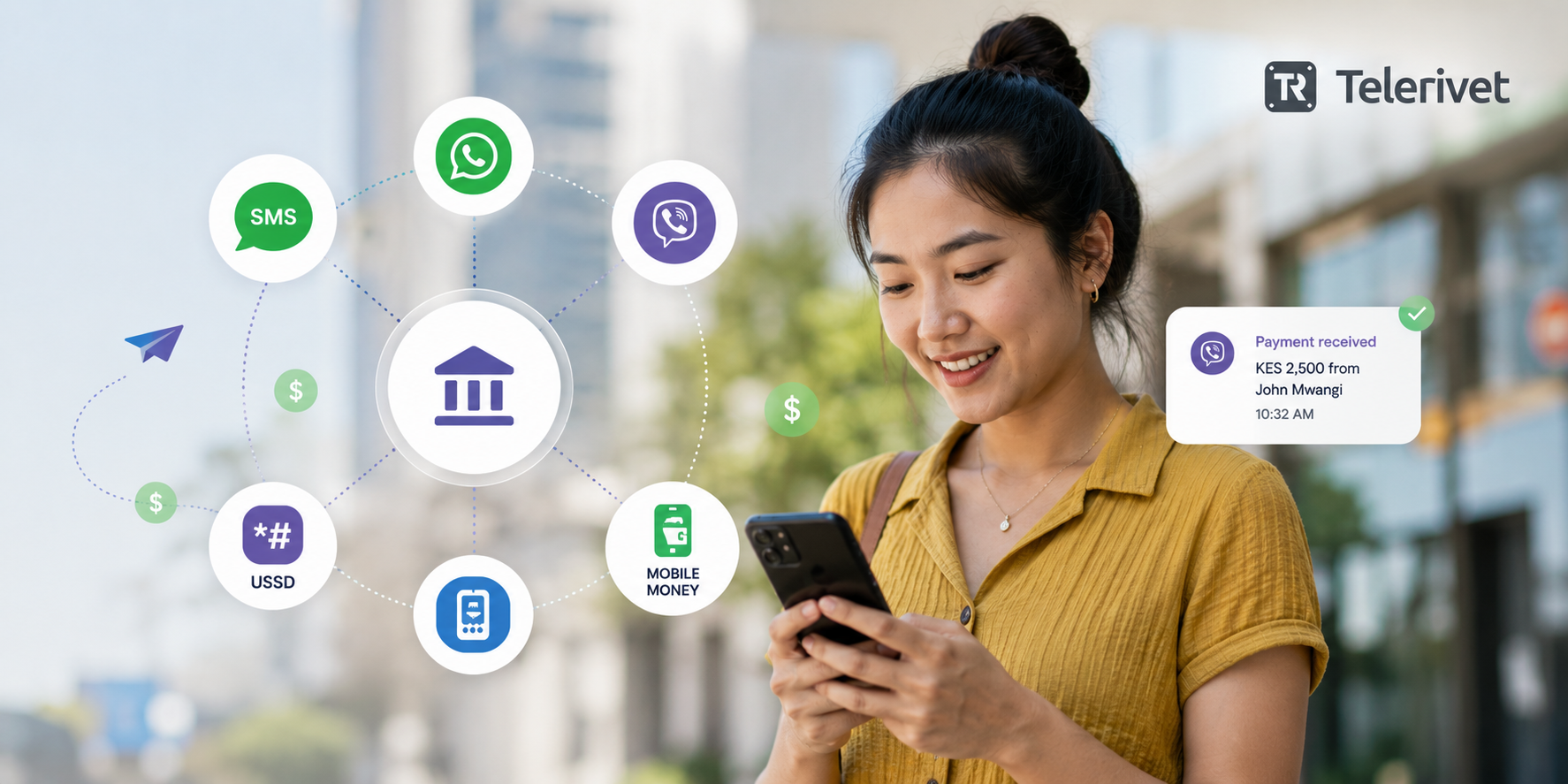
How Digital Lenders, Mobile Money Operators, and Insurers Communicate With Customers at Scale
Digital lenders, mobile money operators, microfinance institutions, and insurers operating across Africa, Southeast Asia and other global markets share a common communication challenge: their customers are not a uniform population. Some have smartphones and mobile data. Many use feature phones. Some are in areas with consistent network coverage. Others are not. Building a customer communication system that reaches all of them, reliably, at scale, across multiple products and markets, requires different decisions than a communication setup built for a connected, smartphone-first customer base..
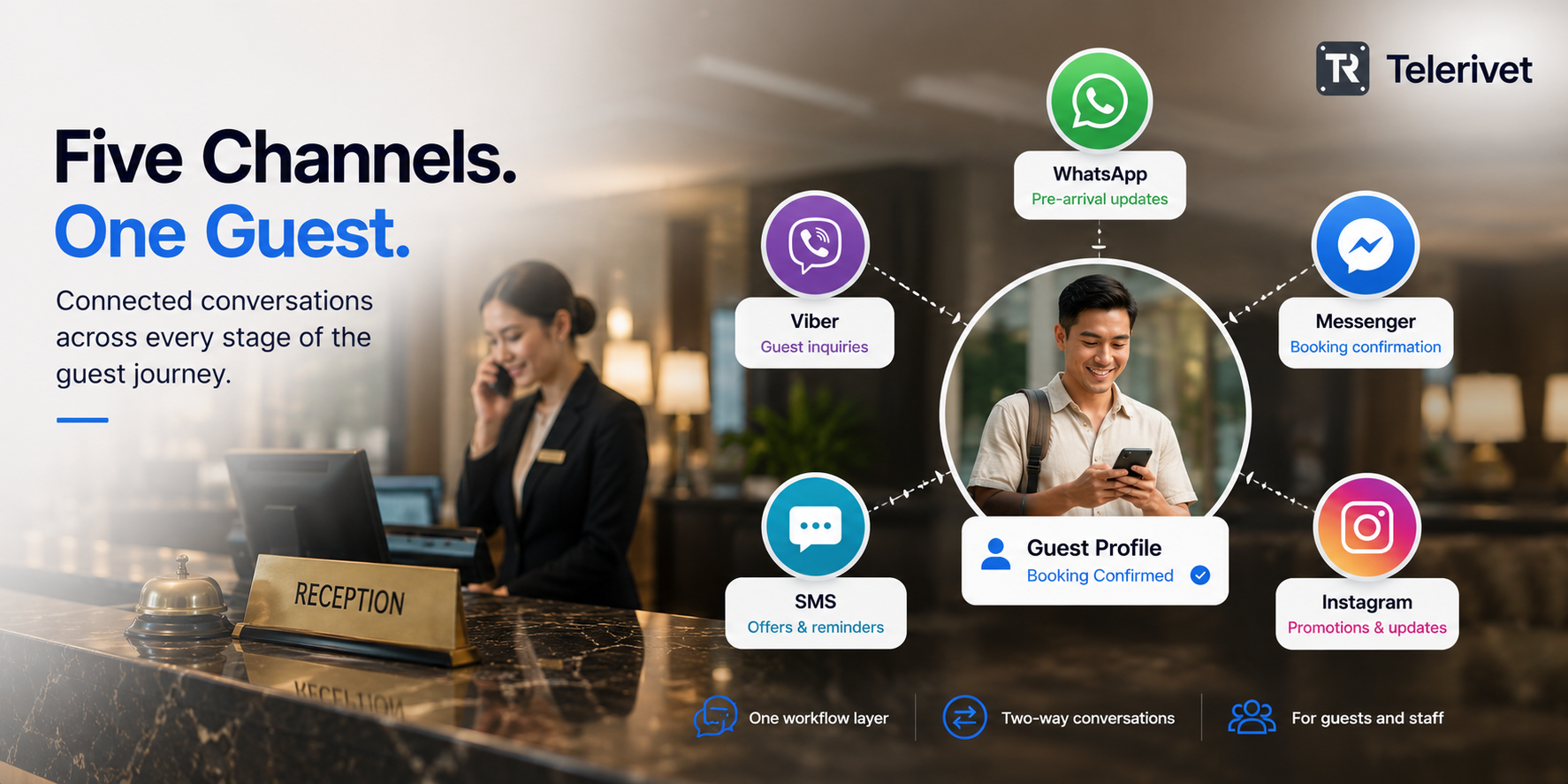
Your Guests Are on Five Channels. Your Workflows Are on None.
Hotel guest messaging refers to the automated and manual communication between a property and its guests across channels including WhatsApp, Viber, SMS, Instagram, Facebook Messenger. Effective hotel guest messaging connects these channels to a shared workflow layer so that booking events, modifications, and guest requests trigger coordinated communication across staff and guests simultaneously, rather than being handled manually on separate devices..
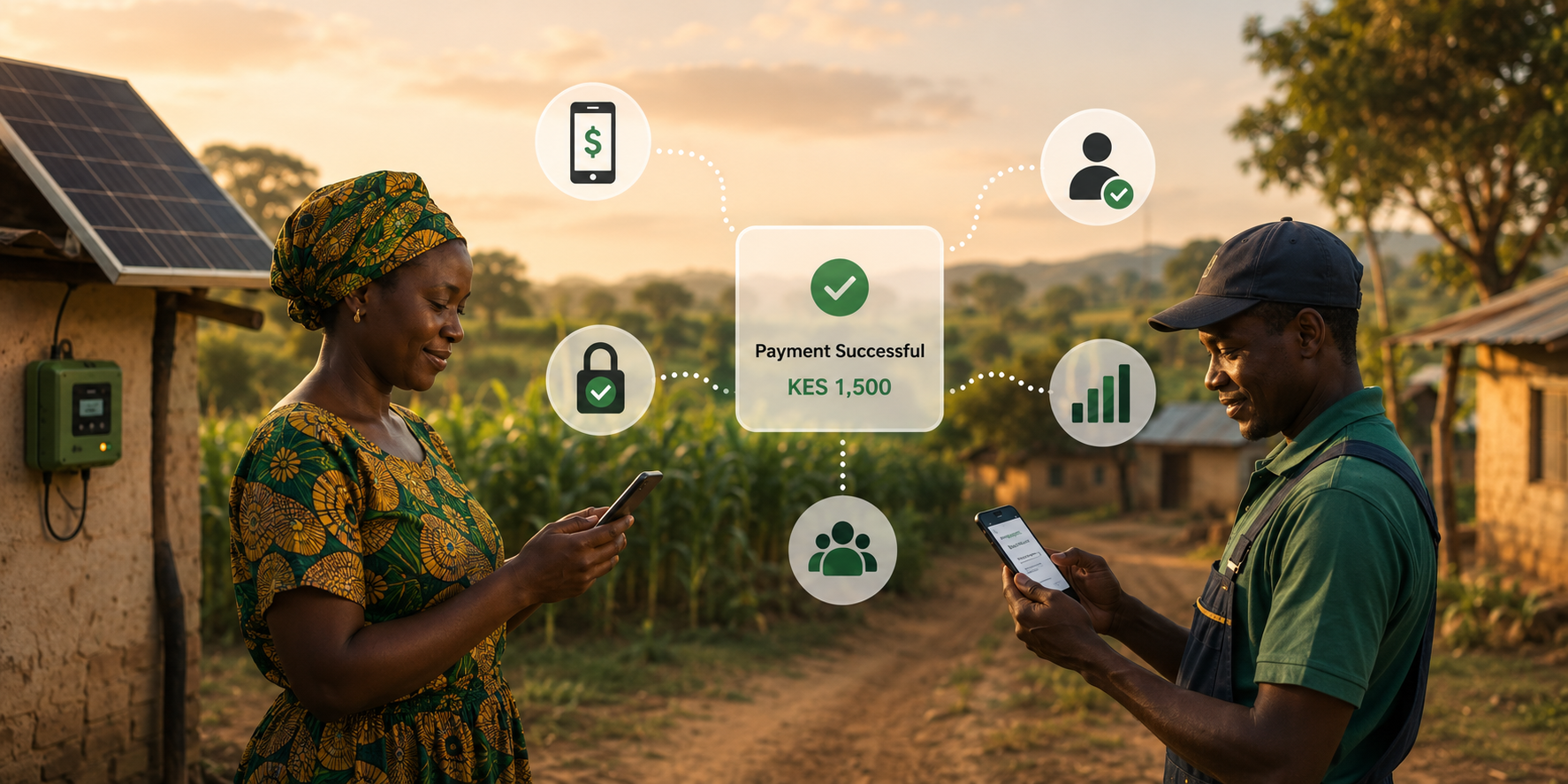
How PAYGo Solar and Agricultural Finance Operators Use SMS as Operational Infrastructure
PAYGo (pay-as-you-go) solar and agricultural finance operators use SMS to automate the connection between a customer payment and the service it unlocks. When a mobile money payment arrives, an SMS workflow parses the transaction, updates the account status, sends a confirmation to the customer, and in some cases dispatches a field agent if the account requires manual intervention. This runs automatically across thousands of accounts in real time. The SMS layer is not a communication add-on, it is what makes the business model operationally viable at scale..