Running an SMS vaccination reminder program at scale requires four components working together: a reliable patient contact list with valid numbers and language preferences, a messaging platform capable of multi-language sequencing and two-way response handling, integration with the health facility's scheduling or registry system, and routing logic that accounts for recipients without smartphones or reliable data access. The communication problem is solvable. The operational challenge is building the workflow that connects all four.
Vaccination coverage gaps in low- and middle-income countries are not always caused by vaccine shortages. In many programs, vaccines are available, health facilities are operating, and community health workers are already deployed..
SMS (4)
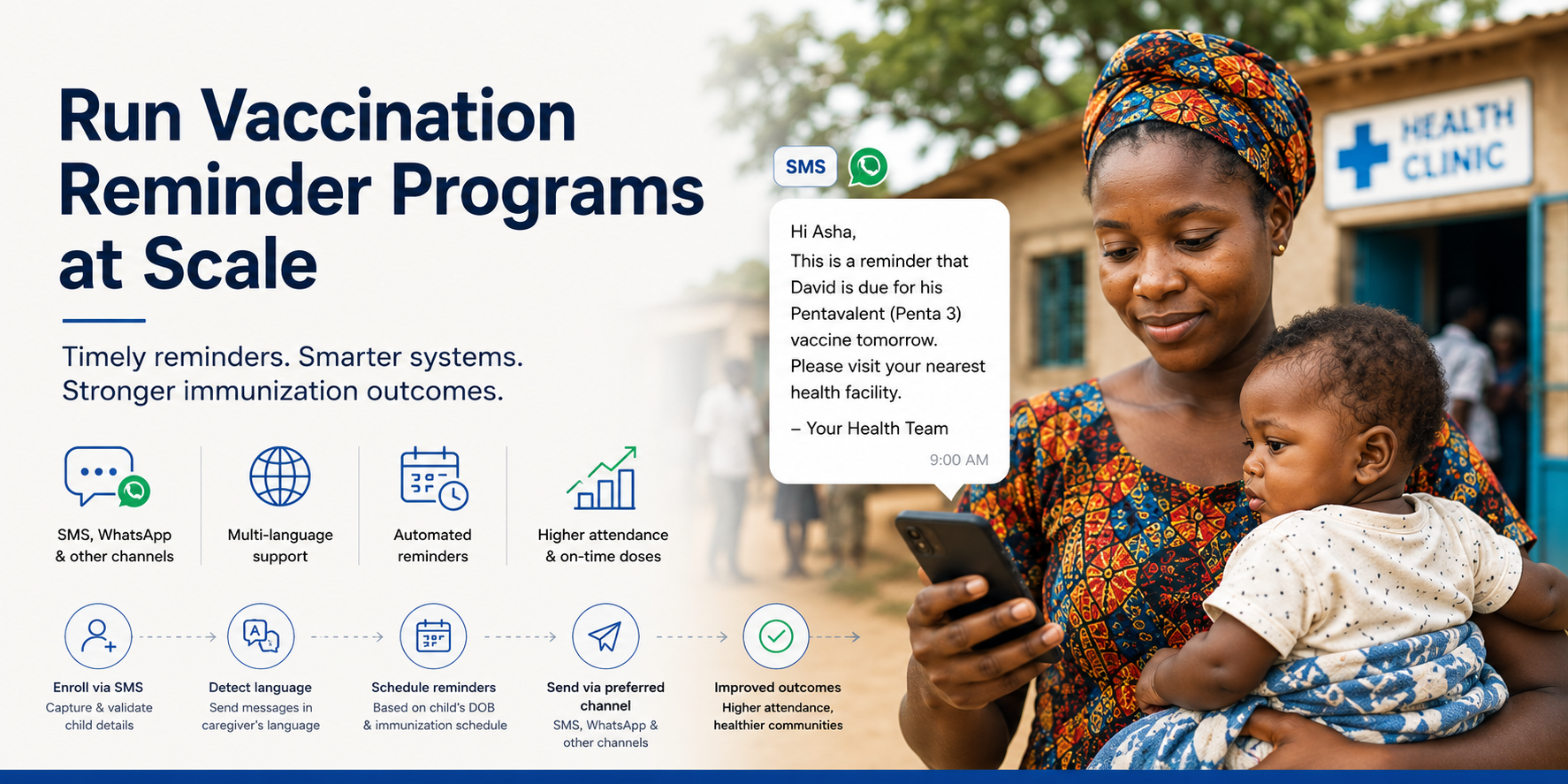
What It Takes to Run an SMS Vaccination Reminder Program at Scale
Business SMS in Canada: CASL, 10DLC Registration, and Why Unregistered Messages Disappear
Your SMS program is sending. Your platform dashboard shows messages delivered. And somewhere between your server and a Rogers or Bell subscriber's phone, a portion of that traffic is being filtered, throttled, or silently dropped because your number is unregistered A2P traffic on a domestic Canadian carrier.
Business SMS in South Africa: POPIA, WASPA, and the One-Approach Rule
The Information Regulator of South Africa has been explicit about what changed in 2024. For the first five years after POPIA came into force, the regulator's approach was education. That phase is over. In February 2024, the regulator issued its first enforcement notice for a direct marketing violation under POPIA. In December 2024, it published a Guidance Note spelling out exactly what Section 69 requires. In April 2025, it amended the POPIA Regulations to simplify how data subjects can object to marketing and request deletion of their data. The signal across all three actions is the same: enforcement has begun.
Sending SMS in Tanzania: TCRA Sender ID Registration, the PDPA, and What Operators Need to Know
Tanzania has 90 million mobile subscriptions and one of the highest mobile money transaction rates in Sub-Saharan Africa. It is also a market where the Tanzania Communications Regulatory Authority has been tightening its grip on commercial SMS traffic since 2023, where every alphanumeric sender ID generally needs to be registered with the relevant mobile network operators before a single message is sent, and where a 2022 data protection law with active enforcement adds a second compliance layer that most operators building SMS programs have not fully accounted for.
Business SMS in France: GDPR, CNIL, and the 06/07 Number Rule That Catches International Programs
Since January 1, 2023, commercial messaging platforms in France have not been permitted to send marketing SMS from numbers beginning with 06 or 07. Those are the standard French mobile number prefixes, the numbers that French recipients associate with calls and messages from real people. For commercial SMS, those numbers became unavailable to business platforms. Organizations that set up their French SMS program before that date and have not updated their routing since may be sending from numbers that are no longer permitted for commercial use.
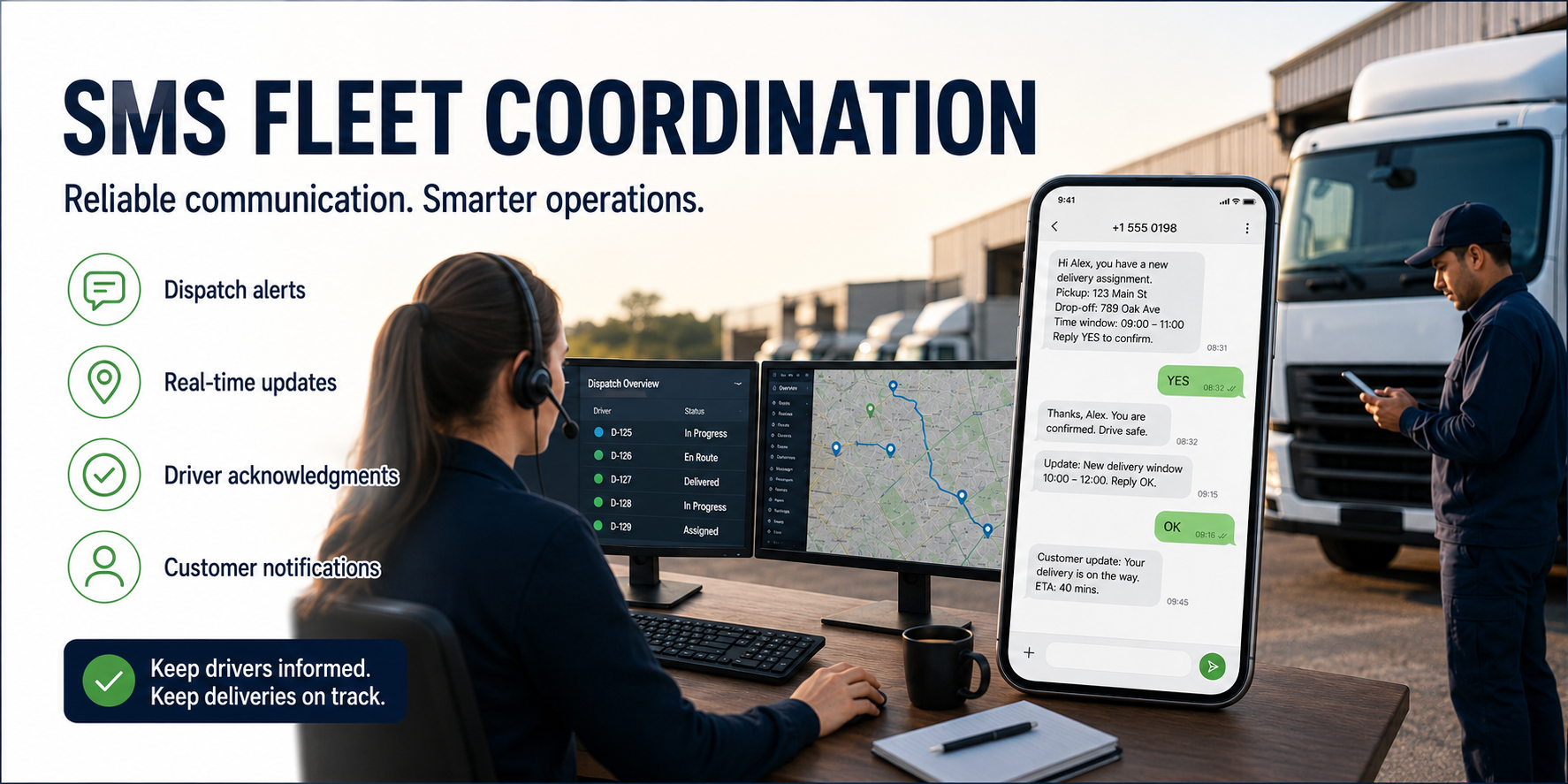
How Logistics Operators Use SMS for Fleet Coordination
SMS fleet coordination is the use of automated and two-way SMS messaging to manage real-time communication between dispatchers, drivers, and customers across a logistics operation covering route assignments, pickup confirmations, delivery window notifications, proof-of-delivery requests, and exception alerts. It is an operational workflow, not a marketing channel: messages are triggered by dispatch events, delivery milestones, and driver status updates, not by campaign schedules.
Most logistics operators don't go looking for a messaging platform. They find one because they need a better way to manage fleet communication.
Sending SMS in Rwanda: RURA Registration, the Two-Way SMS Gap, and Law 058/2021
Most teams designing SMS programs for Rwanda discover the two-way limitation after the program is already built. The workflow assumes recipients can reply to confirm, opt out, or respond to a survey. The sender ID is registered, the consent records are in order, and the first broadcast goes out. Then nothing comes back, because standard A2P SMS routes used by most providers do not support inbound replies on MTN Rwanda and Airtel Rwanda.
Sending SMS in Kenya: Sender ID Rules, Safaricom Approval, and the Promotional Restriction Most Teams Miss
Your SMS program is reaching Safaricom numbers. Except the ones that silently dropped. And the campaign you sent after 6 PM that delivered to no one. And the branded sender name you configured that only works on transactional messages, not promotional ones, something your provider may not have mentioned when you set it up.
Sending SMS in Pakistan: PTA Compliance, Four Carriers, and What Makes This Market Different
Pakistan's mobile market is one of the largest in South Asia and one of the least addressed in business messaging guides. With 193 million mobile subscribers, a population of 253 million of whom approximately 61% live in rural areas, and 116 million internet users as of early 2025, Pakistan is a market where SMS remains the most reliable channel for reaching audiences across both urban centers and rural communities where data connectivity is intermittent or unavailable. For development sector organizations, agricultural programs, financial services, and operational programs coordinating across geographically distributed teams, the case for building a Pakistan SMS program is straightforward. The compliance and carrier architecture that makes it work requires attention to four carriers that behave differently from each other, a national do-not-call registry that must be checked before promotional sends, and a data protection framework that is still developing.
Sending SMS in India: TRAI, DLT Registration, and the Template Scrubbing Layer
India's SMS compliance system is unlike every other market in this series. In Nigeria, Kenya, and Tanzania, the core requirement is registering a sender name with each operator. In Australia and the US, you register with a centralized authority or registry. India requires you to register three distinct things, your business entity, your sender header, and the exact text of every message you intend to send, before a single message can reach a recipient. Miss any one layer, or let a single character in your message body differ from the registered template, and the carrier's system drops the message silently. Your platform shows it as sent. It never arrives.

How Real Estate Companies Use SMS, WhatsApp, Viber, Messenger to Capture Property Leads
Real estate companies manage communication across a wide range of interactions. Prospective buyers inquire about properties, existing customers ask questions, tenants request support, and property managers send updates about facilities or payments.