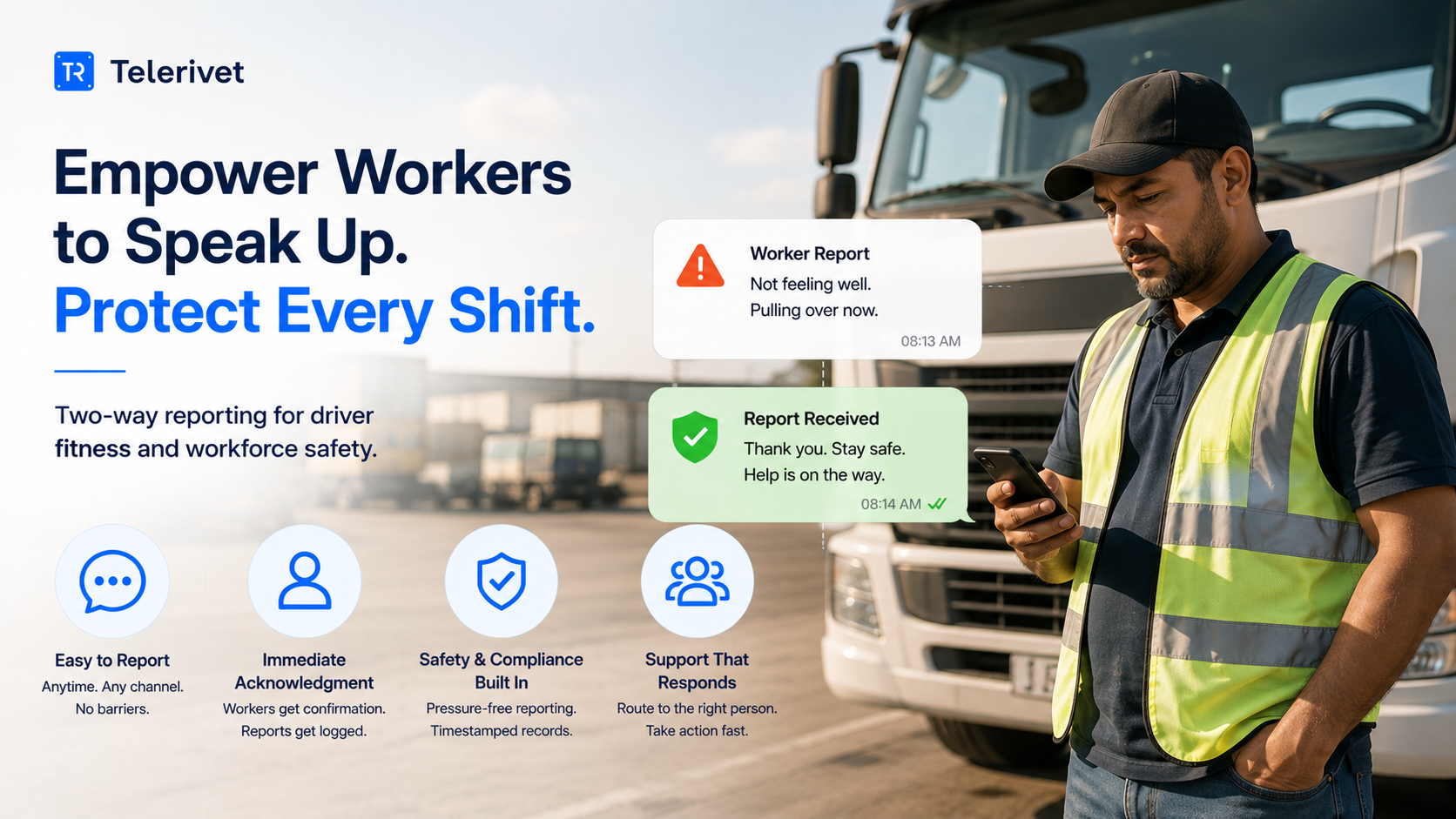
From August 1, 2026, Australian heavy vehicle drivers operate under an expanded legal duty. The NHVR's unfit to drive duty gives drivers of any heavy vehicle over 4.5 tonnes the legal standing to stop driving, and requires employers to support them in reporting fitness concerns without pressure or adverse consequences. It replaces a narrower rule that only covered fatigue, with one that covers physical illness, injury, medication side effects, and mental health.
Field Workforce & Safety
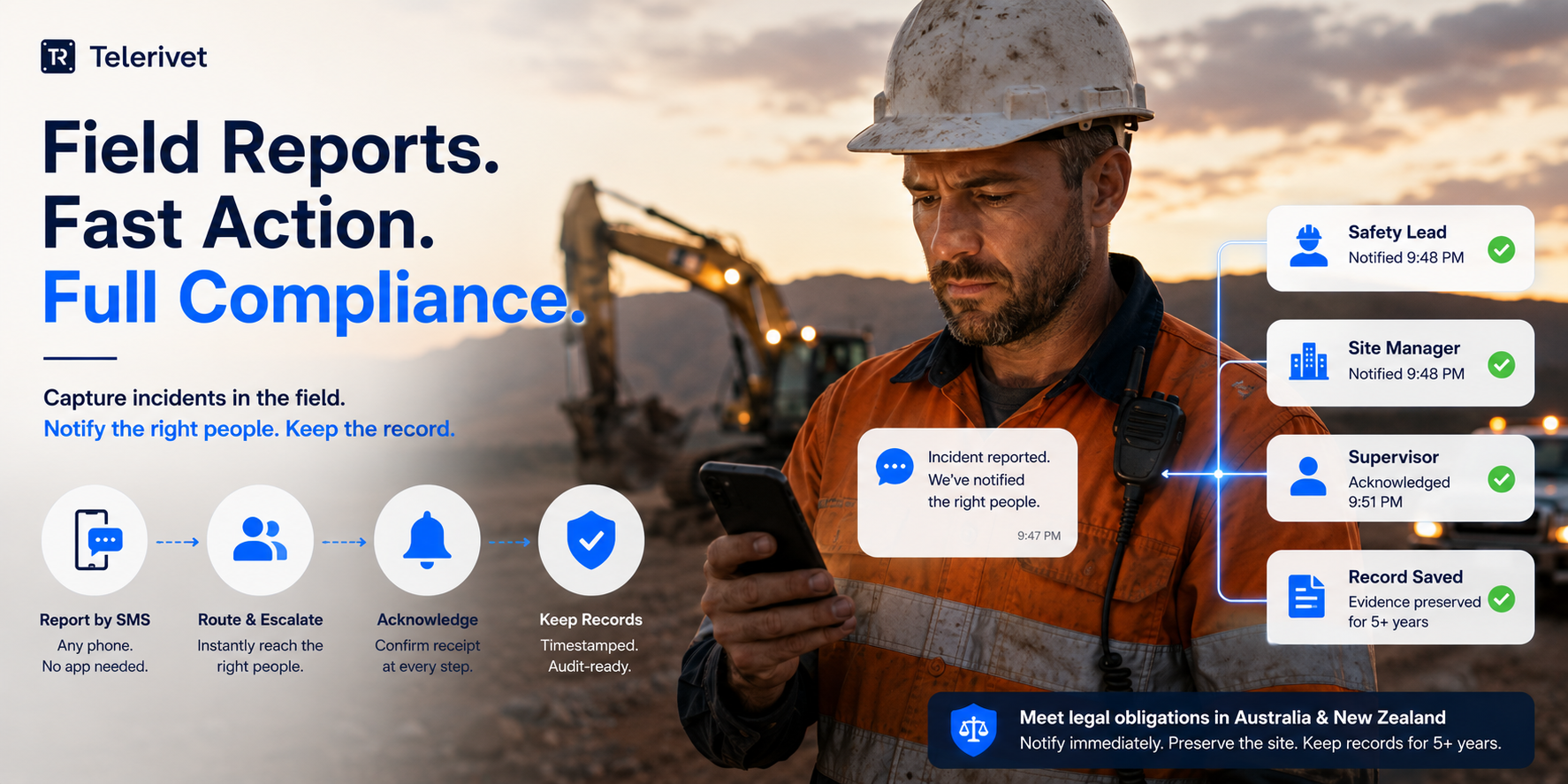
Workplace Incident Reporting in Australia and New Zealand: The Worker's Side of the Record
Jul 17, 2026
A worker is injured at a remote site on a Friday night. Their crewmate calls a supervisor, who is off shift. The supervisor texts the site manager in the morning. The site manager mentions it to the safety lead on Monday. Somewhere in that chain, a legal clock has been running the whole time, because in Australia and New Zealand the duty to notify the regulator starts the moment the business becomes aware of the incident. Awareness travels exactly as fast as your reporting channel.
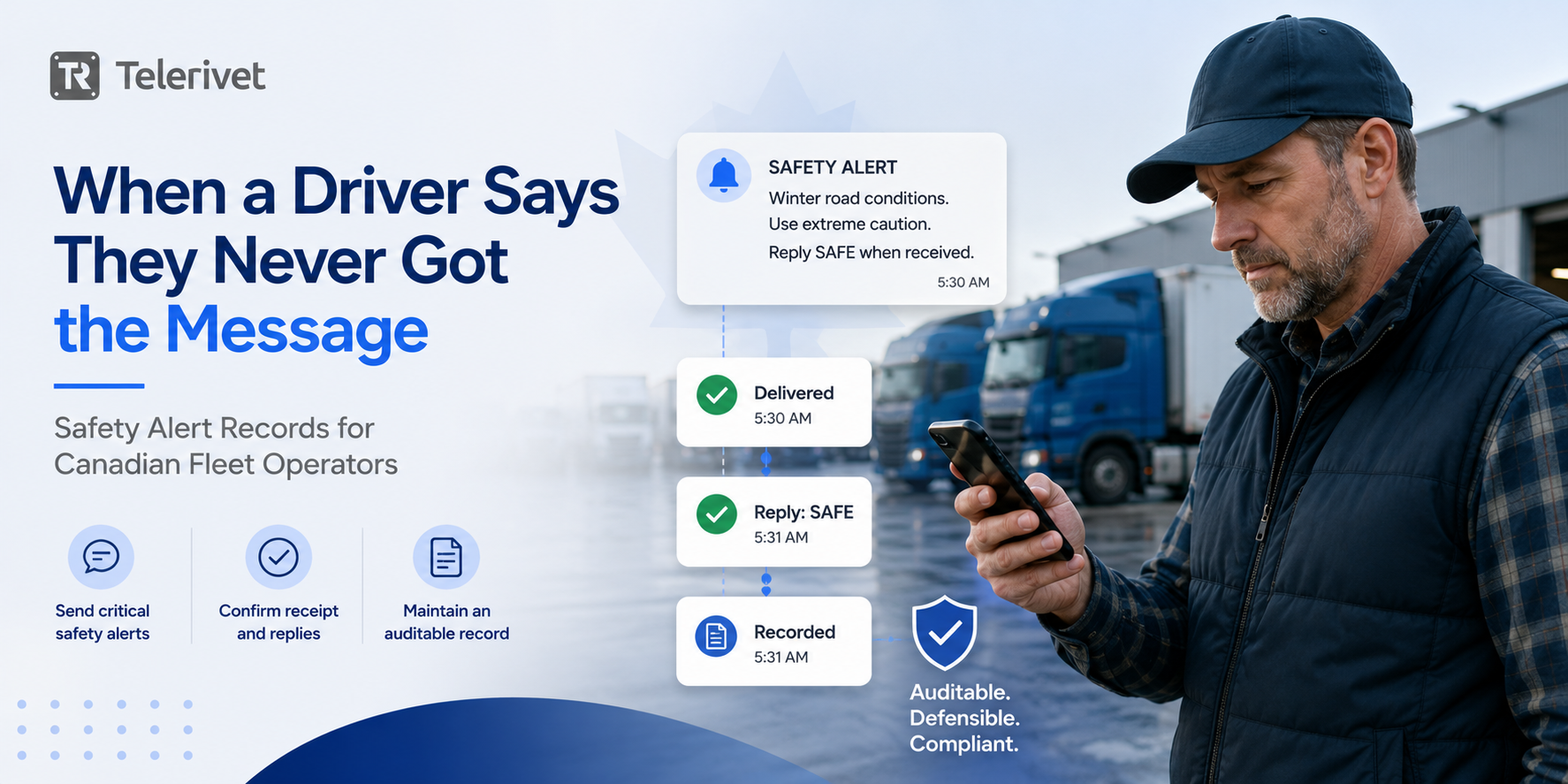
When a Driver Says They Never Got the Message: Safety Alert Records for Canadian Fleet Operators
Jul 2, 2026
It is 5:30 a.m. A dispatcher sends a route condition update to a group chat on their personal phone. Fifteen drivers are in that group. Some are already on the road. Some have not left the terminal. At least two have the chat on mute.
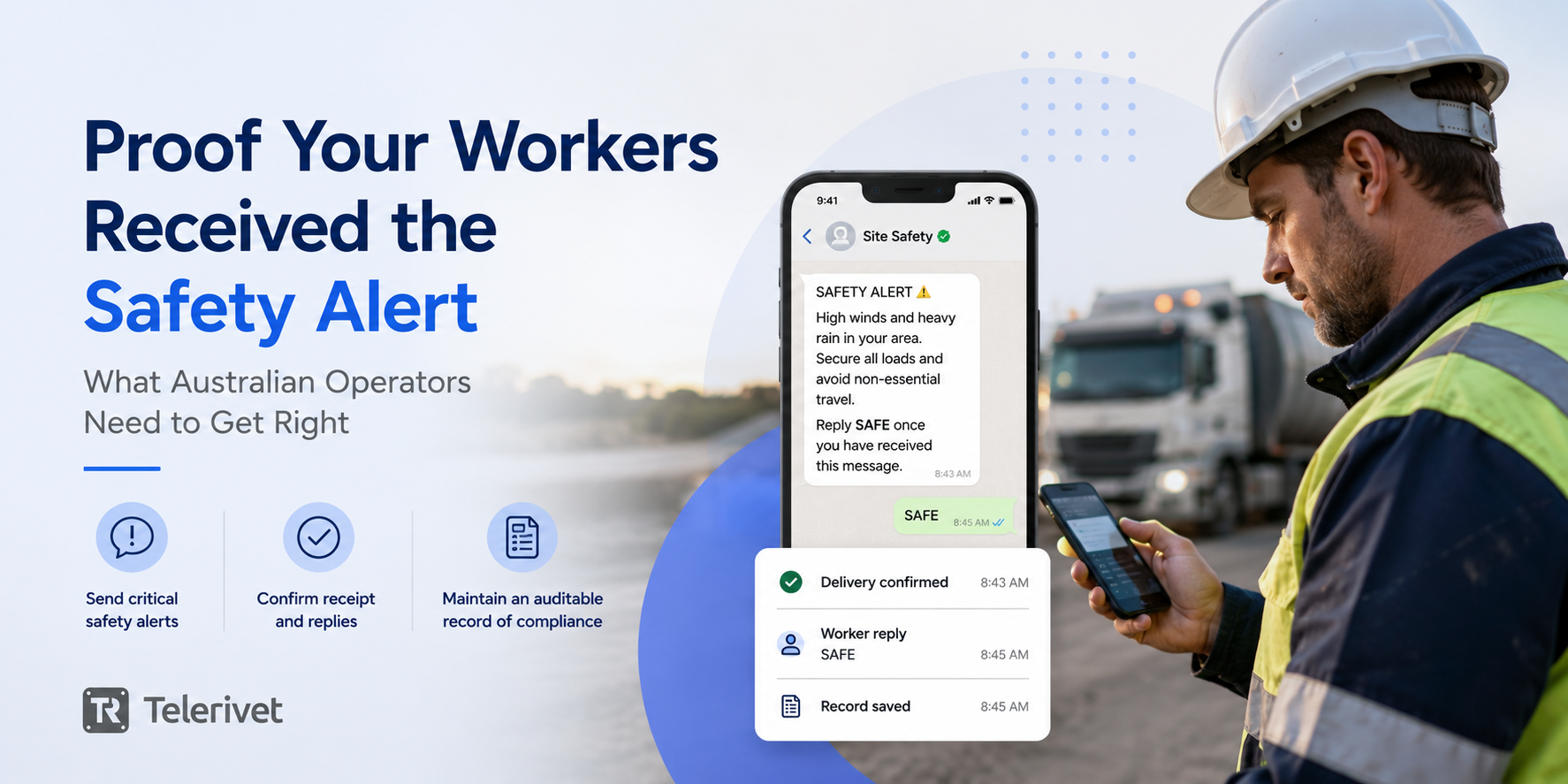
Proof Your Workers Received the Safety Alert: What Australian Operators Need to Get Right
Jun 26, 2026
Something happened at one of your sites. An investigator is sitting across from you and they want to know whether the relevant workers were notified before the incident. You tell them your Safety Manager sent a text. The investigator asks to see the record.

Lone Worker Check-Ins in Australia: Building a Welfare Check System That Meets Your WHS Duties
Jun 18, 2026
A drilling technician is alone at a site three hours from the nearest town. A utilities crew member is working a fault line solo on a Sunday night shift. A community health worker is driving between properties with patchy reception. In each case, the same question sits underneath the operation: if something goes wrong, how long before anyone knows?