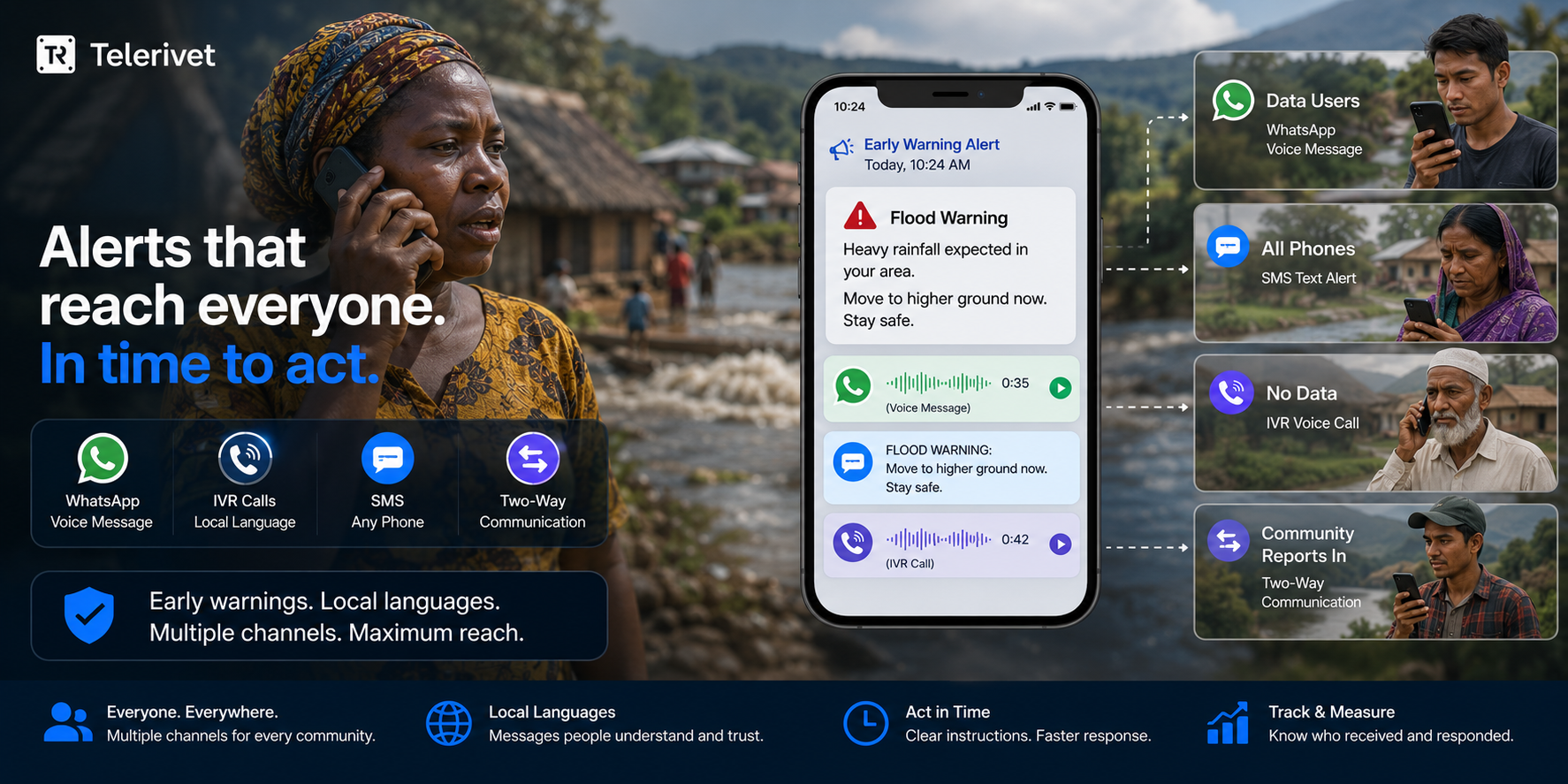
An early warning system (EWS) that successfully alerts a dispatch team but fails to reach the community at risk has not completed its job. In disaster risk reduction (DRR) practice, the difference between a warning sent and a warning received, understood, and acted upon is often where lives are lost.
Field Operations
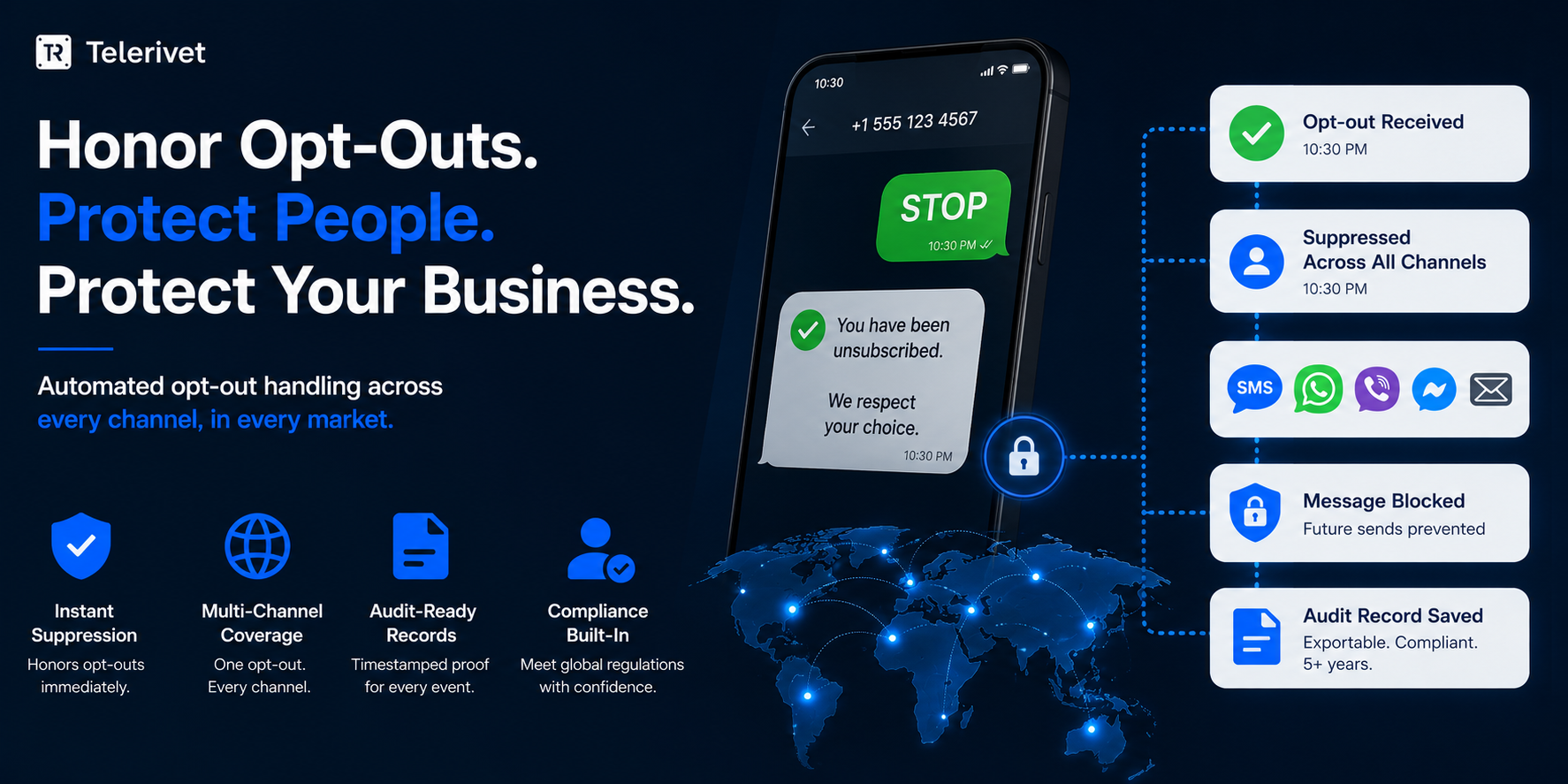
Opt-Out Compliance Is Not a Feature. It Is Liability Management.
Jul 18, 2026
Ask a high-volume sender what they value in a messaging platform and you will hear about deliverability, routing, and cost per message. Almost nobody says opt-out handling. Yet when we listen to what enterprise operators actually cite as their top value drivers after a year of running campaigns across multiple countries, automated opt-out handling keeps appearing near the top of the list. One global event operator named it among their top three.
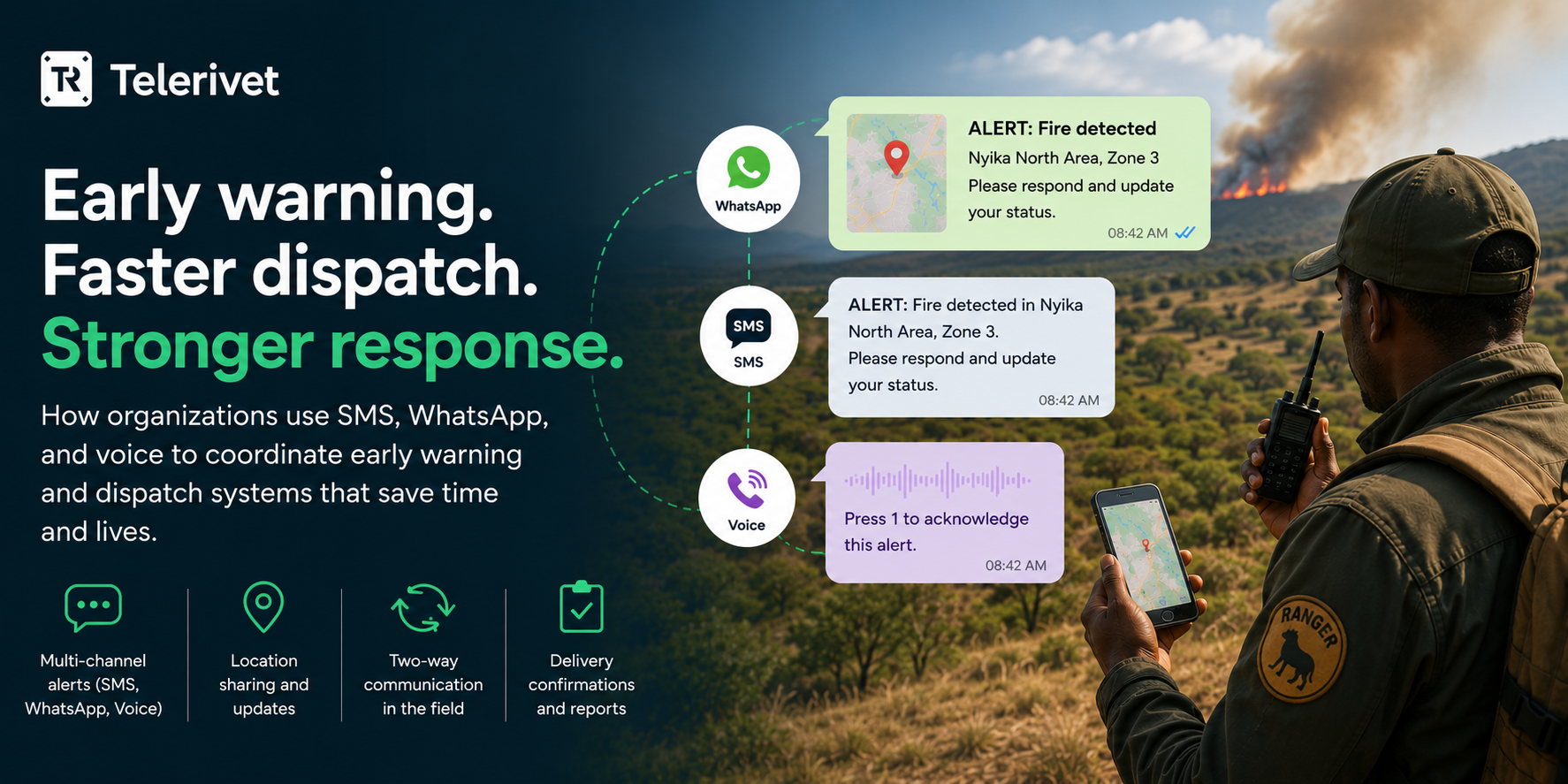
How Organizations Use SMS, WhatsApp, IVR to Build Early Warning and Dispatch Systems
Jun 16, 2026
When a satellite detects a fire burning in a remote conservation reserve, the detection itself is not the hard part. The hard part is what happens next: getting the right message to the right people, across unreliable networks, in under sixty seconds, so that a field team can respond before the situation escalates.

Why Field Force Communication Breaks Down at Scale and What to Do About It
Apr 22, 2026
Field force communication is the system a business uses to coordinate between a central operations team and distributed field agents covering task assignment, check-ins, status updates, and exception reporting. At small scale, a group chat and a spreadsheet are sufficient. At 100+ agents, the absence of structured message routing, automated check-ins, and response tracking creates coordination failures that cost coverage, visibility, and operational control..