Beneath every customer-facing messaging channel sits a coordination layer that most platforms do not expose: the logic that decides when a message is sent, which channel it travels through, what happens if it fails to deliver, and whether the intended outcome was confirmed. This is the orchestration layer and it is what determines whether a communication system actually works, not just whether it sends messages.
Most communication systems look simple from the outside. A company sends messages, triggers reminders, or responds to customers on SMS, WhatsApp, Viber, or whatever channel is popular in that region. The experience looks straightforward. The reality beneath it is anything but.
Communication Orchestration (3)
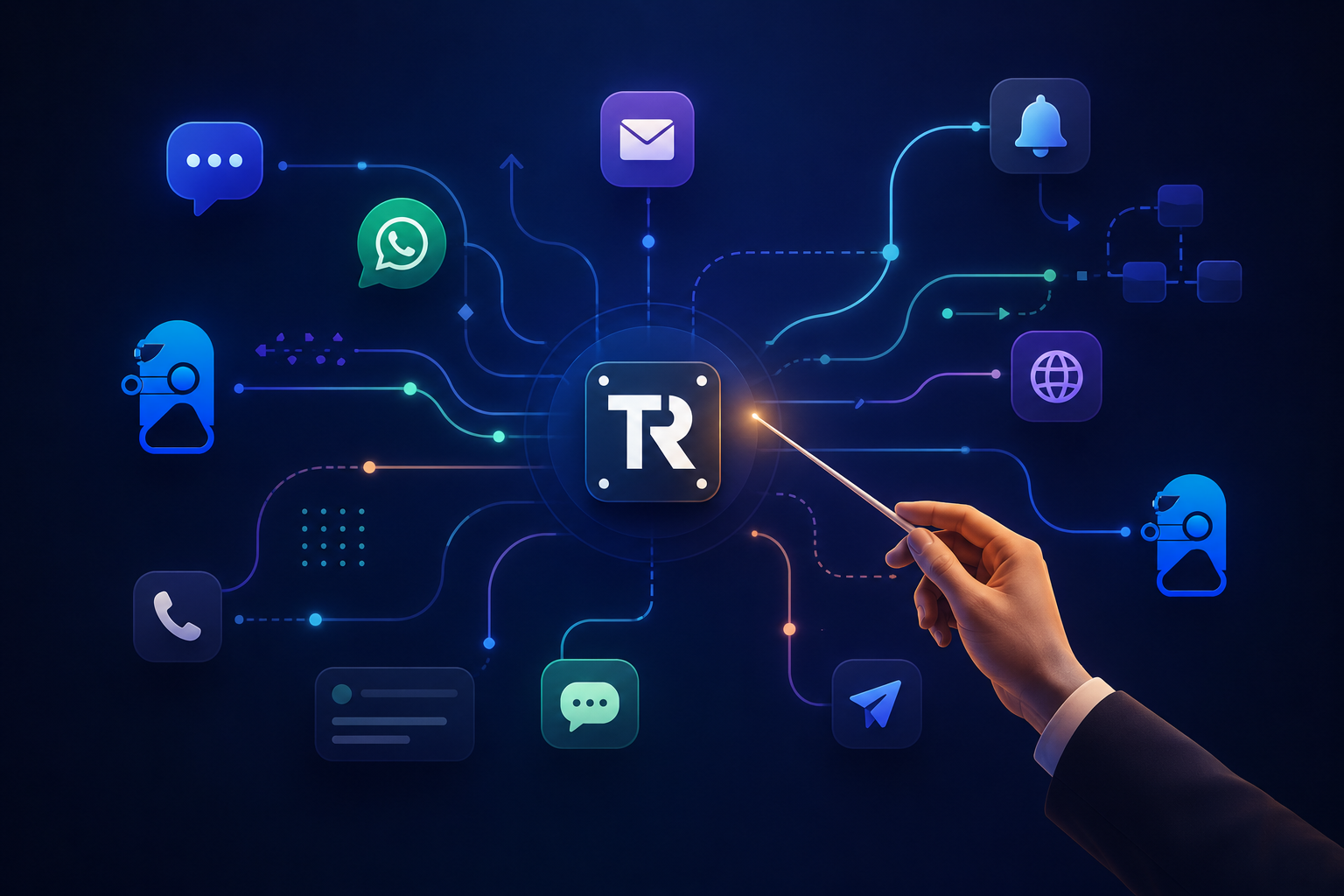
The Hidden Orchestration Layer in Customer Communication Systems
Dec 31, 2025
The Art of the Failover: How Multi-Channel Flexibility Makes Huge Gains at the Margins
Sep 8, 2025
A messaging failover is the automatic rerouting of a message to a secondary channel when the primary channel fails to deliver for example, switching from WhatsApp to SMS when a recipient has no internet connection, or from SMS to voice when a number is temporarily unreachable. Failover logic is the difference between a message that was sent and a message that actually reached someone. It operates invisibly when it works, and produces missed payments, missed appointments, and failed dispatches when it does not.
Most teams think about failovers as insurance. Something you set up in case things go wrong..
Connectivity Completeness: Telerivet’s universal communications layer
Sep 27, 2024
Connectivity completeness is the principle that a communication platform should be able to reach any recipient, on any channel, through any network without requiring the sender to manage that complexity. Routing decisions, fallback logic, and multi-network coverage are handled at the platform level. The operator decides who needs to receive a message and what it should say. The platform determines how to get it there.
Telerivet offers a complete connectivity solution for organizations to communicate in real time with customers, stakeholders, or staff anywhere in the world with an unmatched choice of providers.