Civic observation field coordination is the real-time communication workflow that connects a central operations team with distributed volunteers across three phases: assignment dispatch before the window opens, structured status reporting during it, and escalation routing when anomalies arise. In most emerging markets, this workflow runs on SMS because SMS is the only channel that reaches every volunteer regardless of device type, data plan, or connectivity level.
Running a civic observation program is one of the more demanding field coordination problems in the public sector. You have hundreds or thousands of trained volunteers deployed across dispersed locations. The operational window is compressed and often unpredictable. Every check-in missed, every assignment unclear, every escalation that reaches the wrong person has consequences that compound quickly. And unlike most field programs, there is rarely a second window to fix what went wrong.
Surveys & Feedback
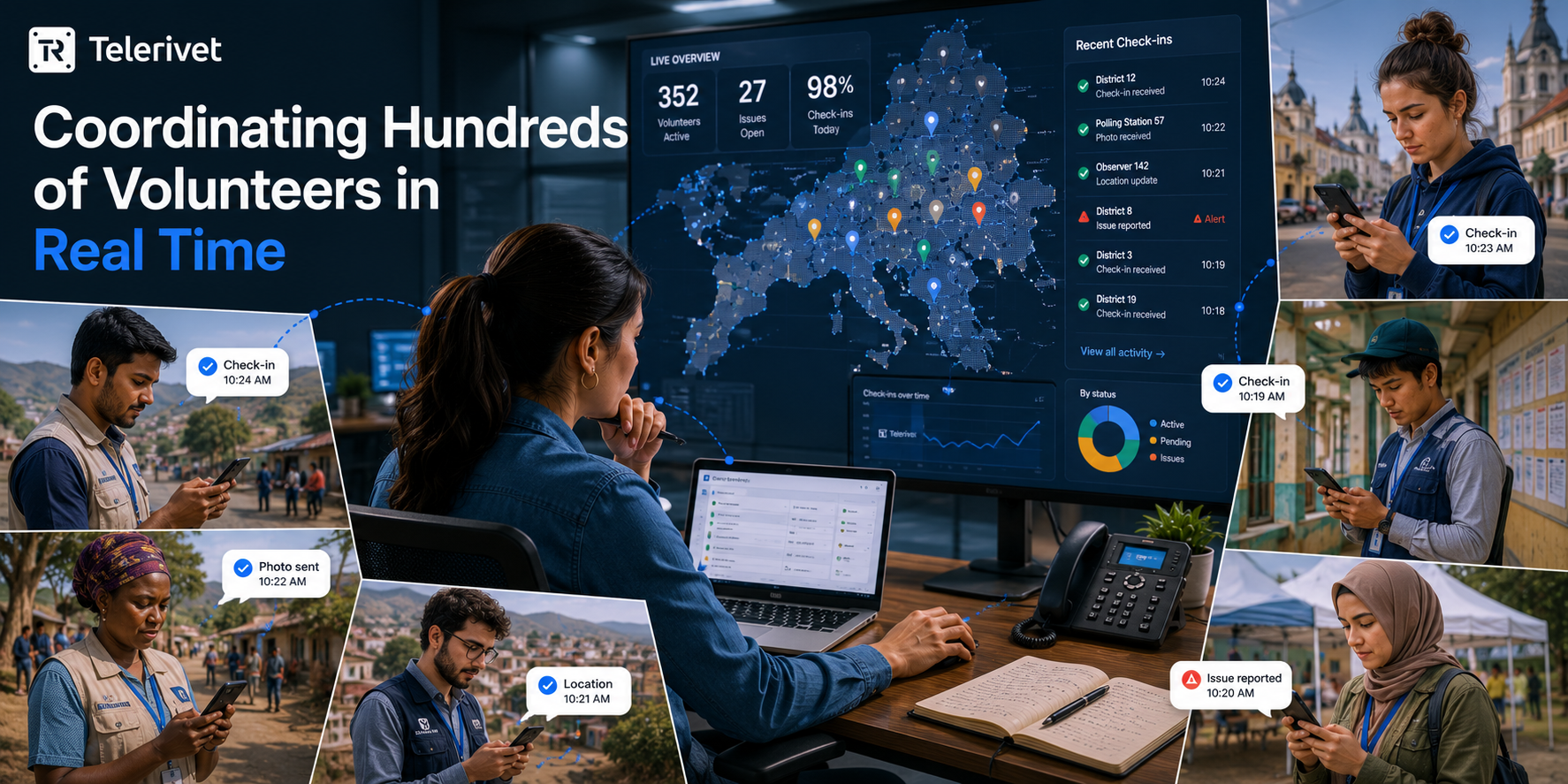
How Civic Observation Programs Coordinate Hundreds of Volunteers in Real Time
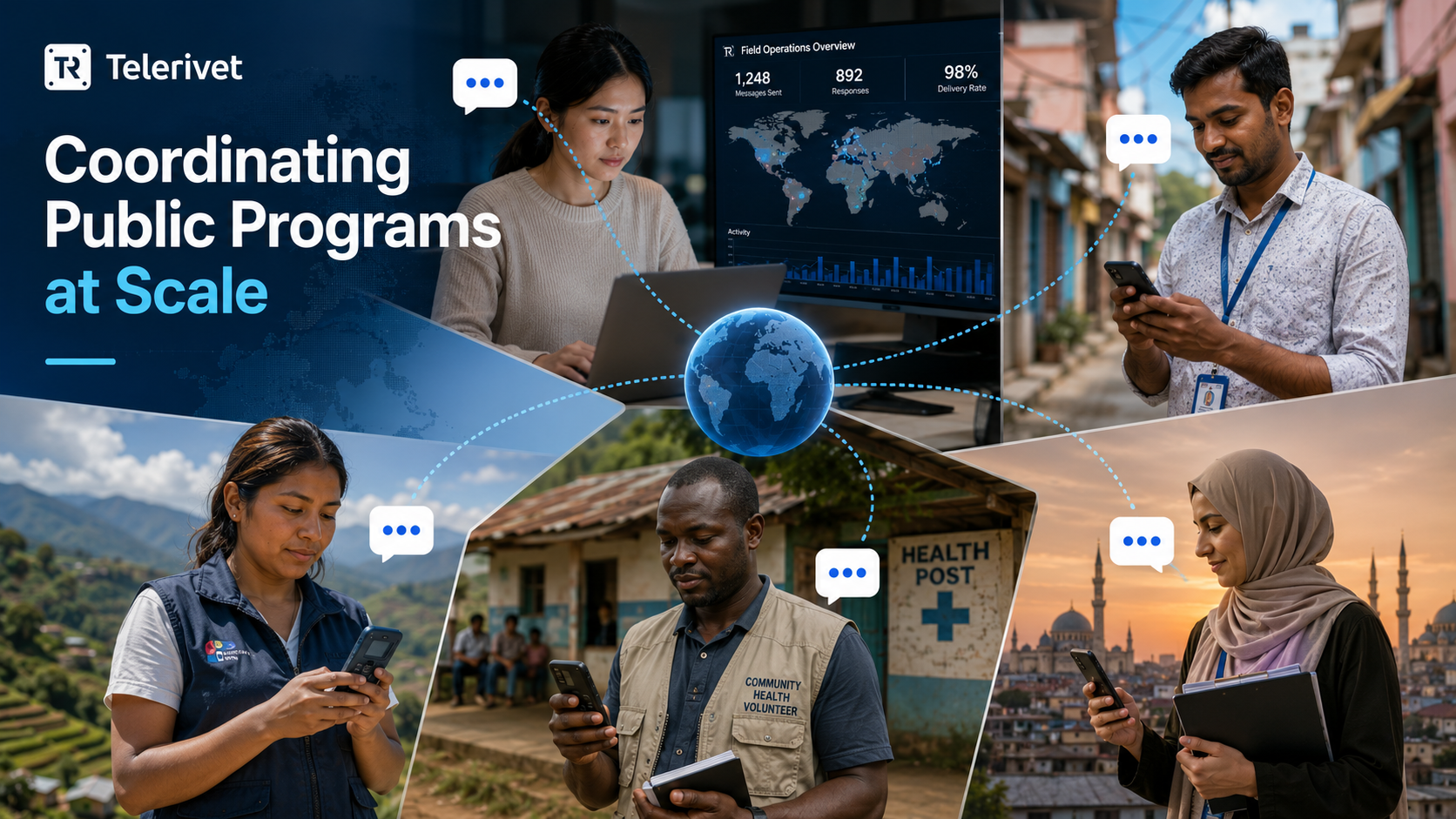
When the Work Happens Off the Grid: Coordinating Public Programs at Scale
Field coordination for public programs is the real-time exchange of instructions, status reports, and alerts between a central operations team and distributed agents or participants in the field. Across most of the world, this workflow runs on SMS because SMS is the only channel that works everywhere.
When I was a Peace Corps volunteer in Tanzania, I learned something that has shaped how I think about technology ever since. The most important work people were trying to accomplish didn't happen where the internet was. It happened in villages connected by dirt roads, in health posts with no reliable power, in community centers where a feature phone was the most sophisticated device in the room. The question was never whether people wanted to coordinate or communicate at scale. The question was what tools were actually usable in the conditions they were operating in.
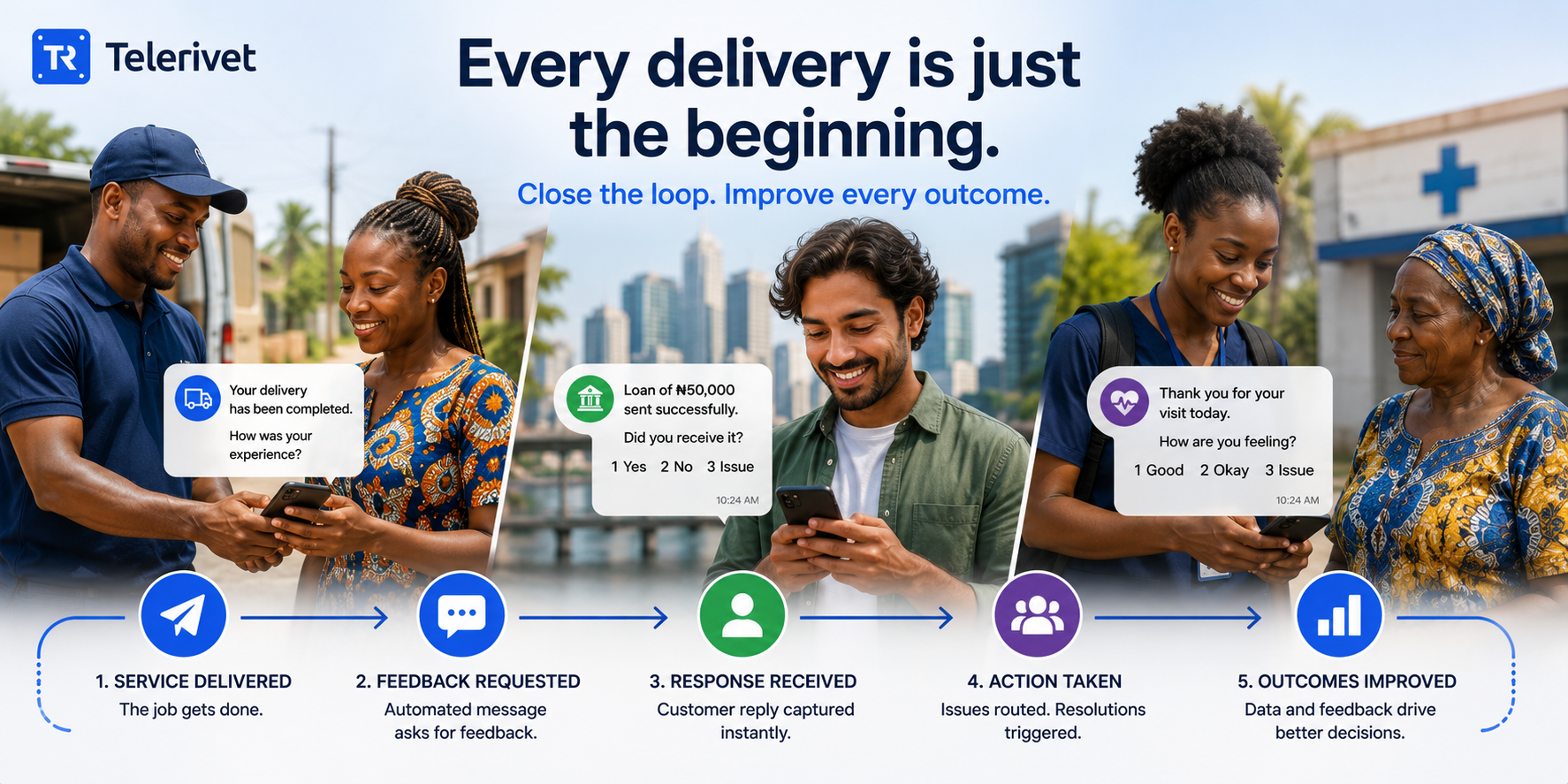
The Delivery Was the Easy Part: Why the Feedback Loop Is the Workflow That Gets Skipped
A post-service feedback workflow is the structured sequence of communication that runs after a service event to confirm delivery, capture the recipient's experience, and route any follow-up action to the right team. It is not a survey. It is not a customer experience research function. It is the final stage of the workflow itself, and in most organizations it is missing.
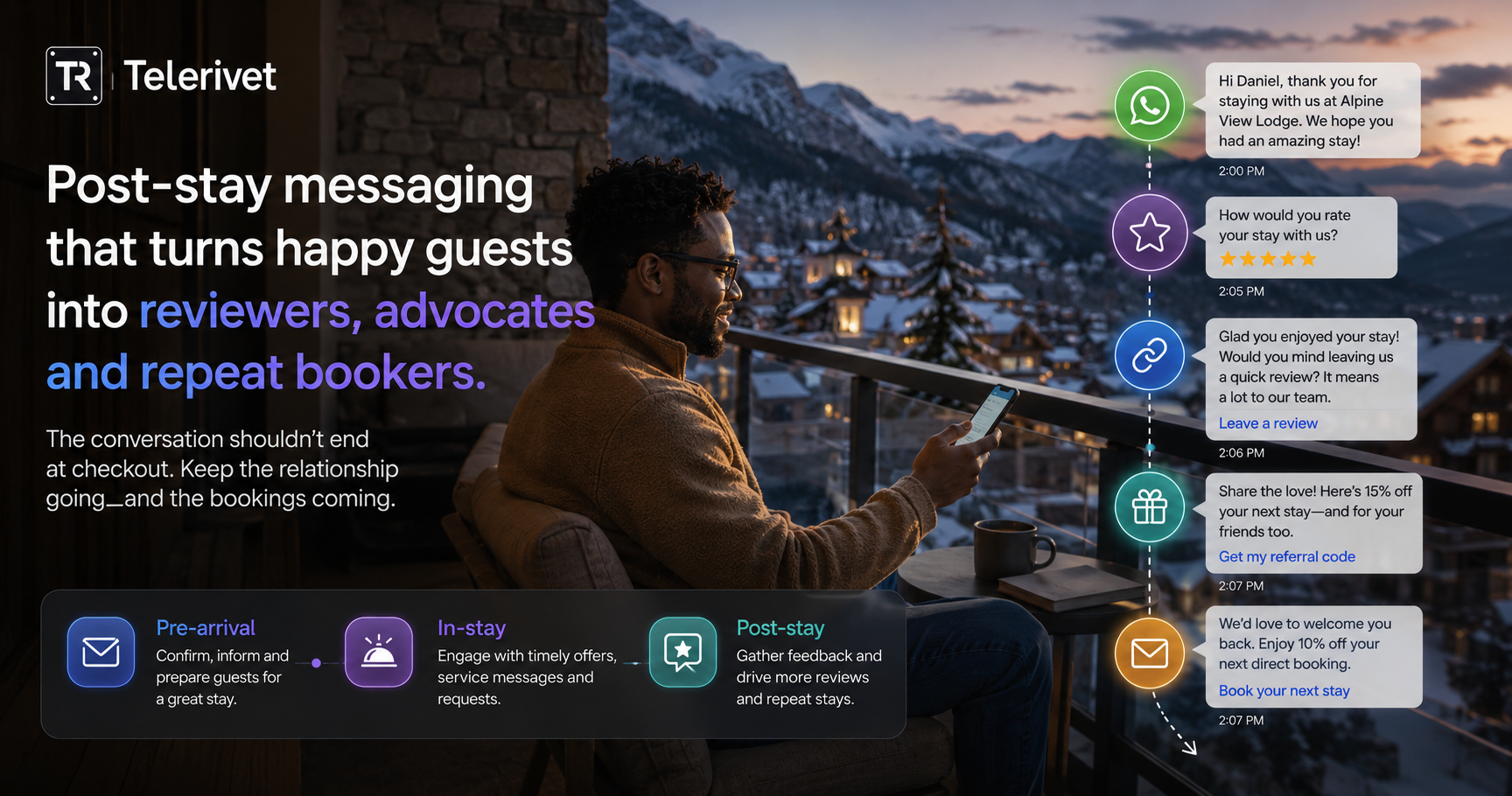
After Checkout: The Post-Stay Messaging Playbook for Boutique and Independent Hotels
What is post-stay hotel messaging? Post-stay messaging refers to automated communication sent to guests after checkout. For boutique hotels and independent hosts, a post-stay sequence typically includes a satisfaction check, a branching review request that routes positive responses to a public review platform and negative responses to a private resolution path, a referral or discount code, and a re-engagement message ahead of the next booking season. WhatsApp is the most reliable channel for post-stay communication with international guests because it works on WiFi regardless of which SIM the guest is using after returning home.
The guest has checked out. They are in a taxi to the airport, or already at the gate, or back home sorting through their photos. For most boutique hotels, independent resorts, and multi-property Airbnb or Vrbo hosts, this is where the relationship ends. No message goes out. The next communication, if it happens at all, is a generic marketing email weeks later that the guest has already forgotten how to connect to the stay they had..
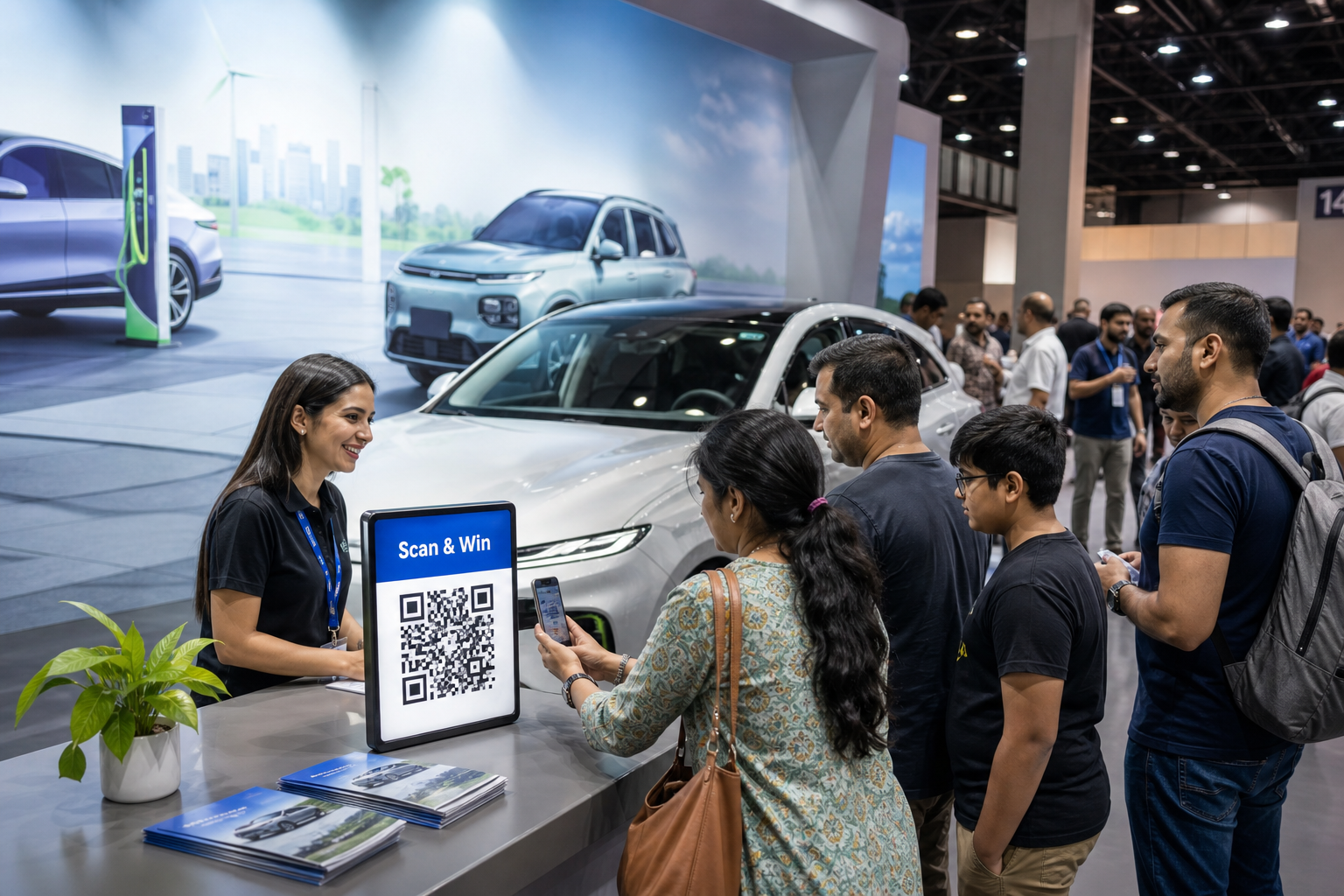
How to Capture and Qualify Leads at an Auto Show via WhatsApp
WhatsApp lead capture at an auto show is the use of a QR code or short number displayed at a brand stand to initiate a WhatsApp conversation with a visitor, collecting contact details, qualifying interest, and routing the lead to the right follow-up workflow, all without paper forms or manual data entry. The operational advantage is that the lead exists in a structured, actionable format before the visitor has left the floor. The most common alternative, collecting paper forms and entering them manually after the event, loses between 20% and 40% of leads to illegible handwriting, incomplete entries, or delayed follow-up..
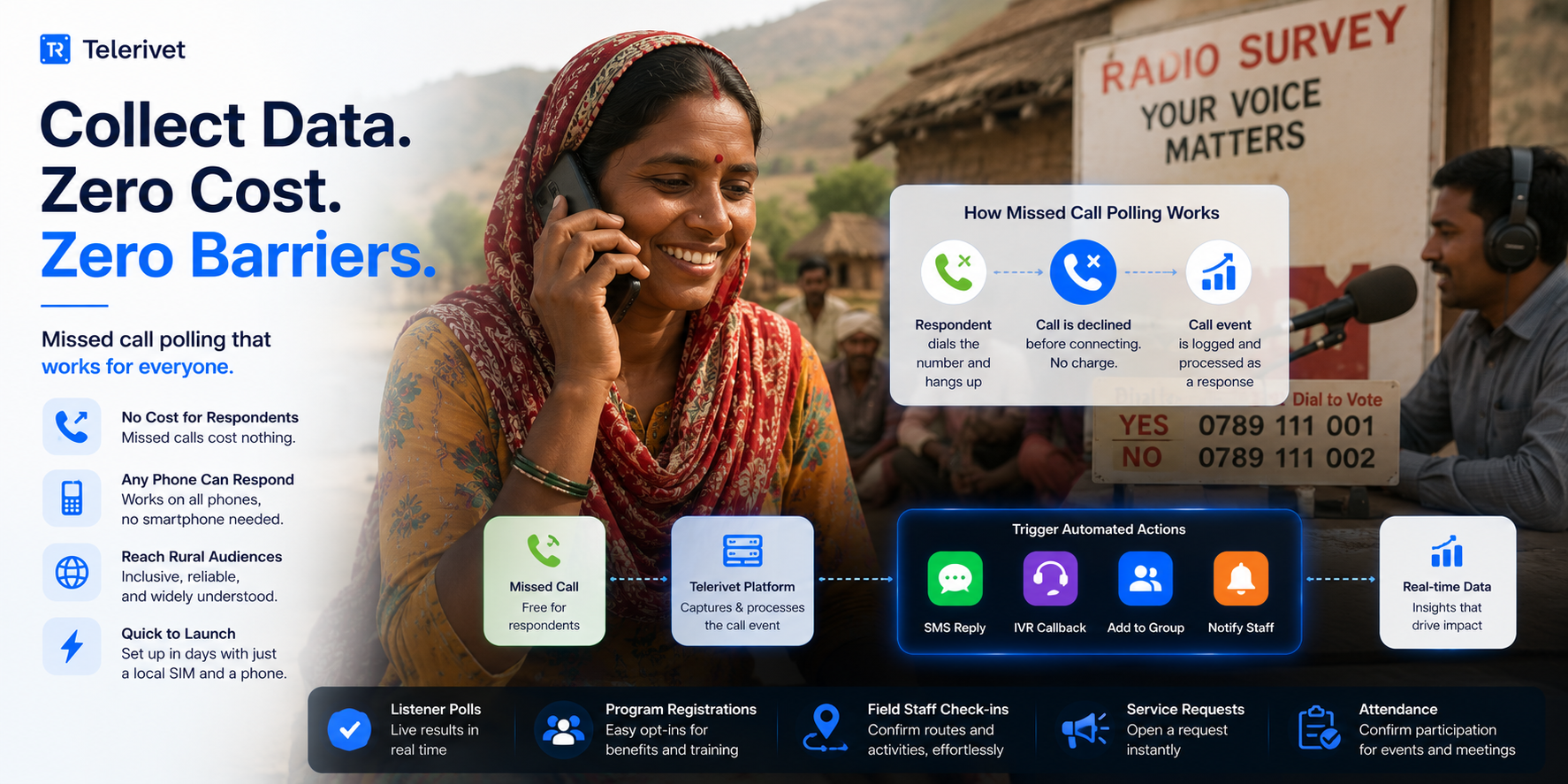
The Missed Call Is the Message: Collecting Field Data at Zero Cost to the Respondent
Every survey methodology has a hidden assumption built into it: that the person responding can afford to respond. For organizations collecting data from rural audiences across Sub-Saharan Africa, South Asia, and Southeast Asia, that assumption fails constantly. An SMS reply costs money. A data connection costs more. A survey that requires either one is not measuring what your audience thinks. It is measuring who can afford to tell you.

Running Multi-Country SMS Data Collection for Field Research
The six weeks between ethics approval and your first survey wave are a strange period. The instrument is ready. The participant list is built. The field logistics are locked. And someone still has to figure out how to actually reach 400 farmers in western Kenya and northern Tanzania on a regular basis for the next 18 months, ask them structured questions, pay them something for their time, and bring back data clean enough to analyze.