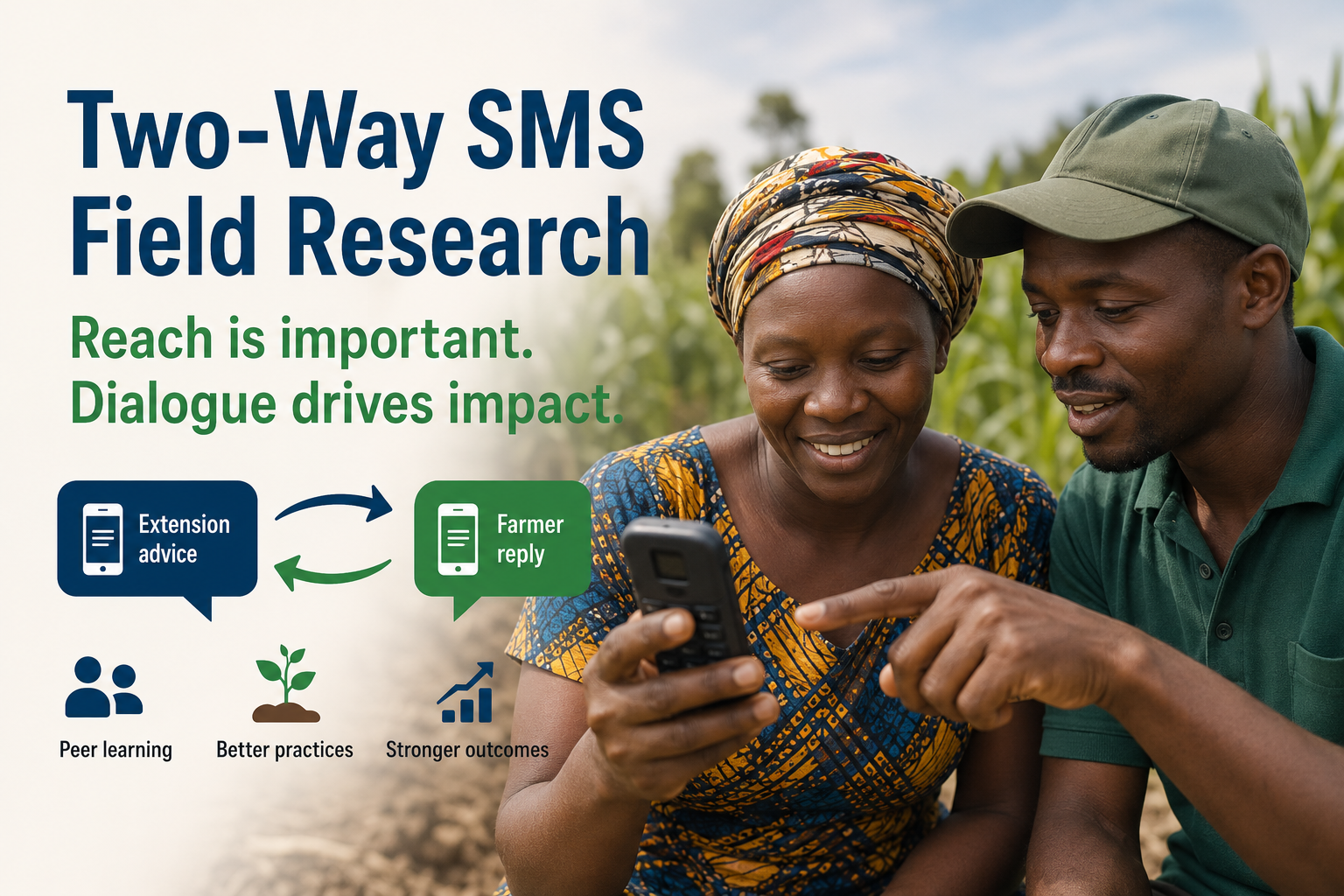
Before I started Telerivet, I spent two years as a Peace Corps volunteer in Tanzania, working on local ICT skills in communities where a feature phone was often the only computer anyone owned. What stuck with me was not the technology itself, but how much people did with it once they could talk back instead of just receive.
Sub-Saharan Africa
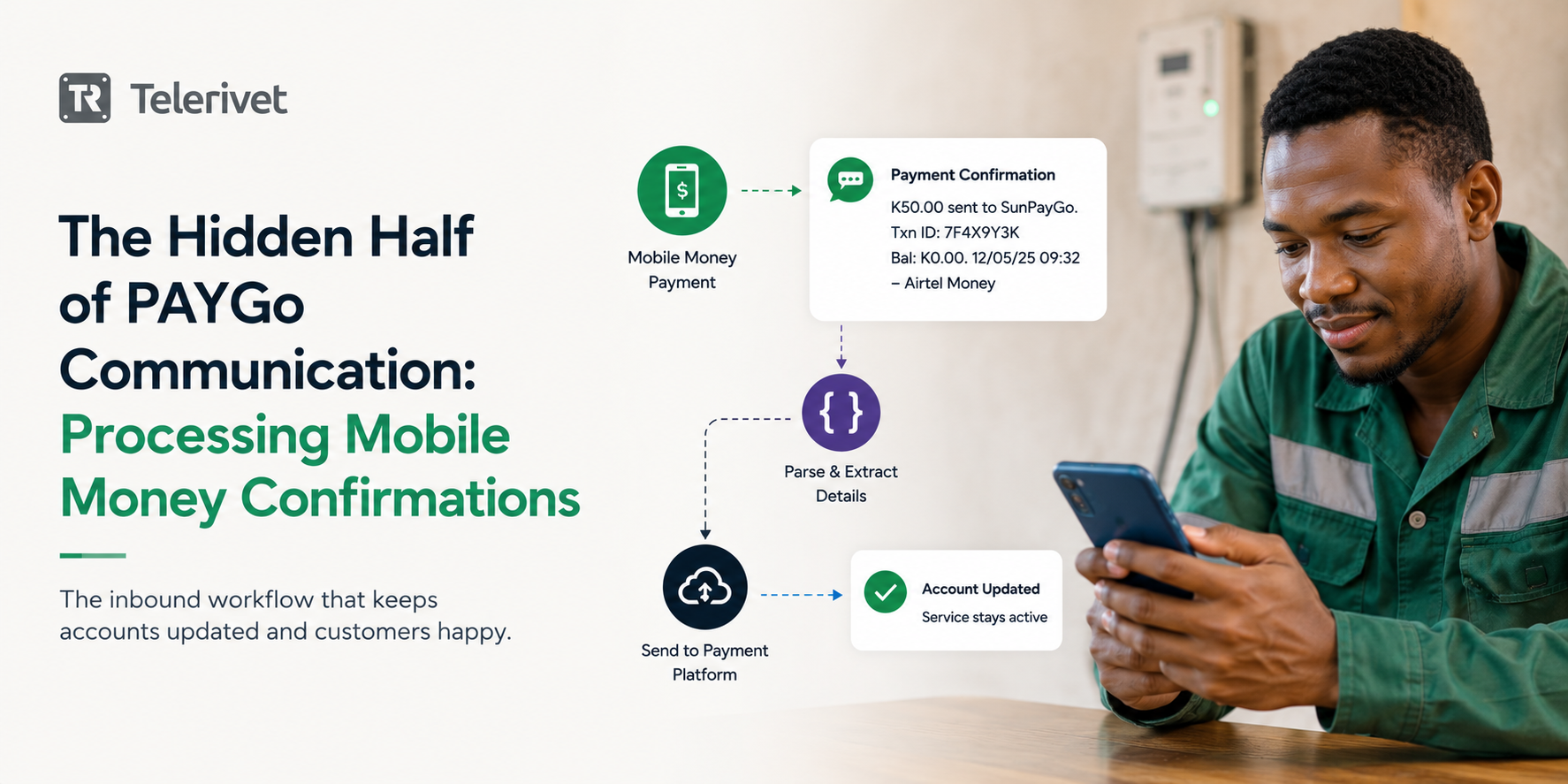
When Mobile Money Payments Arrive but Accounts Don't Update
Jul 23, 2026
When a mobile money payment arrives for a PAYGo solar account, a loan repayment, or a utility service, the payment itself is only half the workflow. The other half is the inbound confirmation: the system that detects the payment, parses the transaction details, matches it to the correct account, and triggers the downstream action, enabling the device, updating the balance, sending a customer confirmation. Most operators build the outbound half carefully and underinvest in the inbound half. That is usually when they discover what the inbound half costs when it fails.
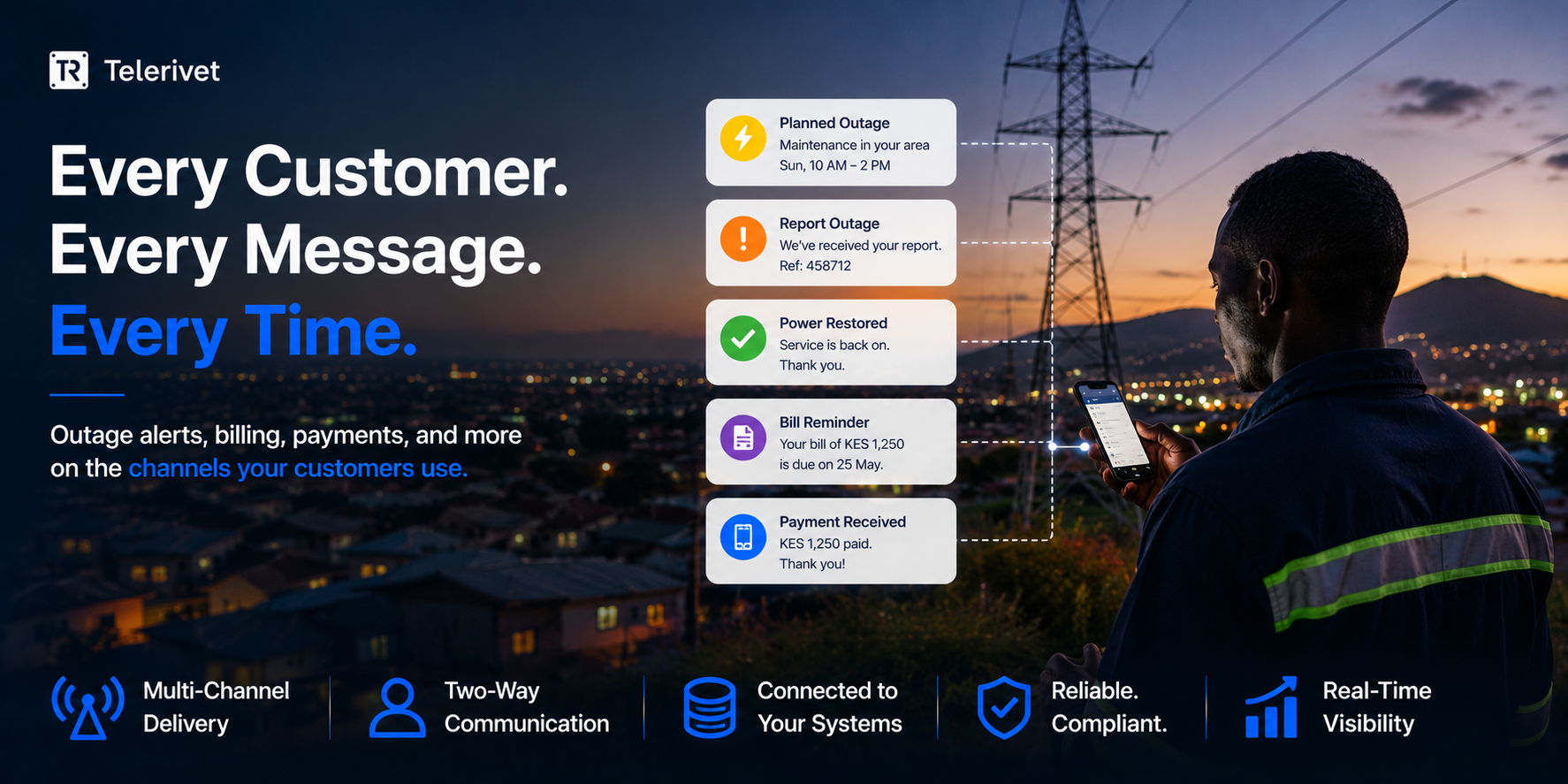
When a Third-Party App Knows About the Outage Before Your Customers Do
Jul 21, 2026
In Kenya, planned power interruptions are published as formal notices listing affected markets, schools, and villages by name, and customers are directed to the website, social media, or the newspaper to find them. The gap is real enough that independent apps exist purely to convert those notices into phone alerts. The utility holds the meter records and the phone numbers. Someone else does the notifying.
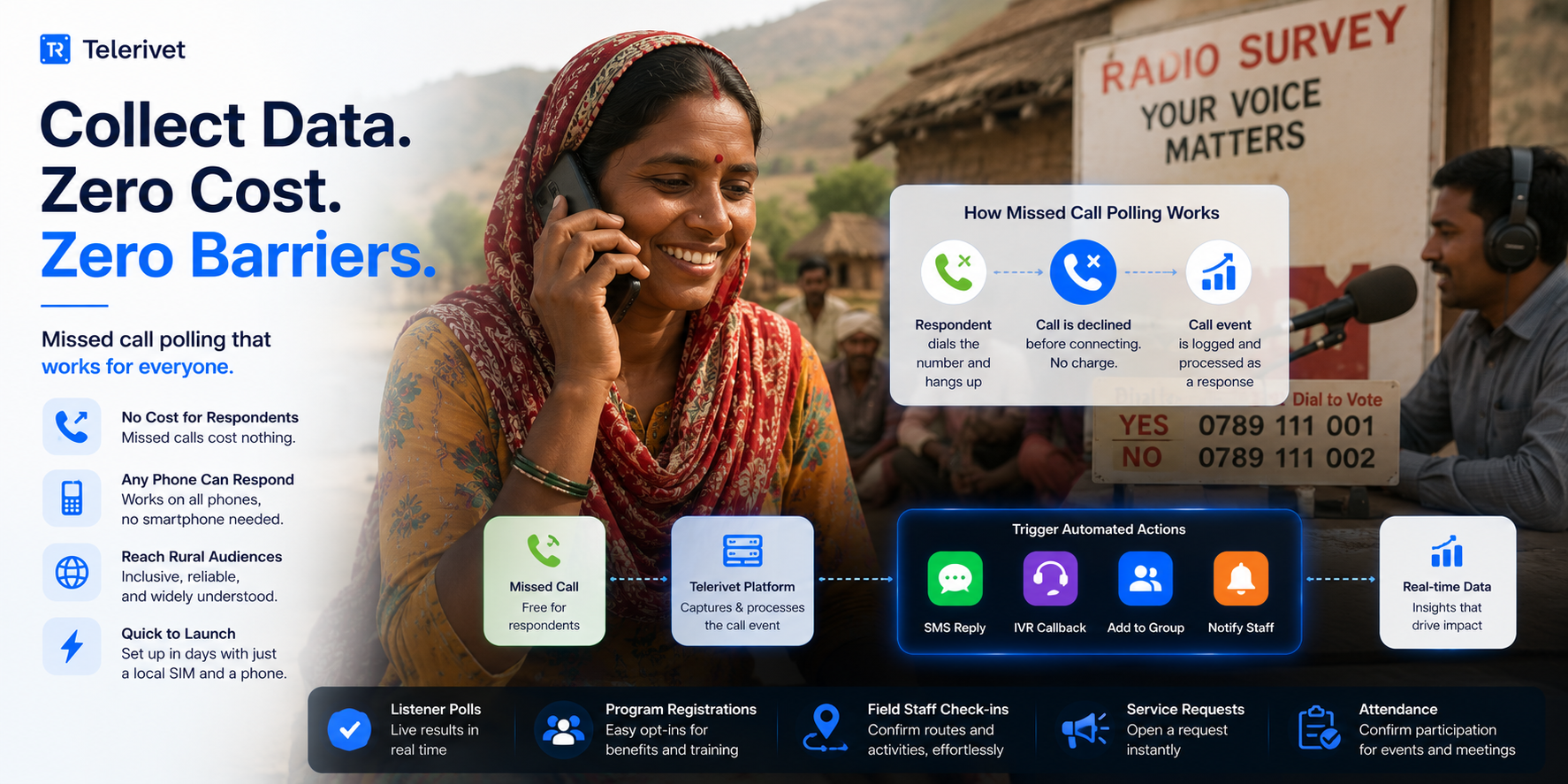
The Missed Call Is the Message: Collecting Field Data at Zero Cost to the Respondent
Jul 14, 2026
Every survey methodology has a hidden assumption built into it: that the person responding can afford to respond. For organizations collecting data from rural audiences across Sub-Saharan Africa, South Asia, and Southeast Asia, that assumption fails constantly. An SMS reply costs money. A data connection costs more. A survey that requires either one is not measuring what your audience thinks. It is measuring who can afford to tell you.
Sending SMS in Uganda: UCC Registration, the DPPA, and What Changed in 2025
Apr 28, 2026
On July 10, 2025, Uganda's Personal Data Protection Office secured the country's first criminal conviction under the Data Protection and Privacy Act 2019. The case involved a digital lending company whose director had used a borrower's personal data, name, photograph, and phone number, to create a threatening video circulated on WhatsApp. The director was convicted for operating without PDPO registration and for processing personal data without consent. The fine was modest. The precedent is not. The PDPO's acting director was explicit: this conviction is the beginning of assertive enforcement, not an isolated case.
Sending SMS in Nigeria: Sender ID Registration, DND, and Why Messages Silently Fail
Apr 15, 2026
Your SMS program worked in testing. It worked for the first campaign. Then, somewhere between your platform's dashboard and your customers' phones, a growing share of messages started disappearing. No error. No bounce. Your dashboard says sent. Your customers say nothing arrived. If you are messaging into Nigeria, this is not a bug. It is the predictable result of a regulatory system that most teams only learn about after it has already cost them.
Business SMS in South Africa: POPIA, WASPA, and the One-Approach Rule
Mar 16, 2026
The Information Regulator of South Africa has been explicit about what changed in 2024. For the first five years after POPIA came into force, the regulator's approach was education. That phase is over. In February 2024, the regulator issued its first enforcement notice for a direct marketing violation under POPIA. In December 2024, it published a Guidance Note spelling out exactly what Section 69 requires. In April 2025, it amended the POPIA Regulations to simplify how data subjects can object to marketing and request deletion of their data. The signal across all three actions is the same: enforcement has begun.
Sending SMS in Tanzania: TCRA Sender ID Registration, the PDPA, and What Operators Need to Know
Mar 3, 2026
Tanzania has 90 million mobile subscriptions and one of the highest mobile money transaction rates in Sub-Saharan Africa. It is also a market where the Tanzania Communications Regulatory Authority has been tightening its grip on commercial SMS traffic since 2023, where every alphanumeric sender ID generally needs to be registered with the relevant mobile network operators before a single message is sent, and where a 2022 data protection law with active enforcement adds a second compliance layer that most operators building SMS programs have not fully accounted for.
Sending SMS in Rwanda: RURA Registration, the Two-Way SMS Gap, and Law 058/2021
Feb 11, 2026
Most teams designing SMS programs for Rwanda discover the two-way limitation after the program is already built. The workflow assumes recipients can reply to confirm, opt out, or respond to a survey. The sender ID is registered, the consent records are in order, and the first broadcast goes out. Then nothing comes back, because standard A2P SMS routes used by most providers do not support inbound replies on MTN Rwanda and Airtel Rwanda.
Sending SMS in Kenya: Sender ID Rules, Safaricom Approval, and the Promotional Restriction Most Teams Miss
Feb 2, 2026
Your SMS program is reaching Safaricom numbers. Except the ones that silently dropped. And the campaign you sent after 6 PM that delivered to no one. And the branded sender name you configured that only works on transactional messages, not promotional ones, something your provider may not have mentioned when you set it up.
Sending SMS in Ghana: NCA Sender ID Registration, the Sunday Rule, and Act 843
Jan 20, 2026
Most teams building SMS programs in Ghana discover the Sunday restriction after their first failed Sunday campaign. The setup seemed correct. The sender ID was registered. The contact list was clean. The messages were sent. And then the delivery reports came back empty, because promotional SMS cannot be sent on Sundays in Ghana, and it cannot be sent before 8 AM or after 7 PM on any day of the week.