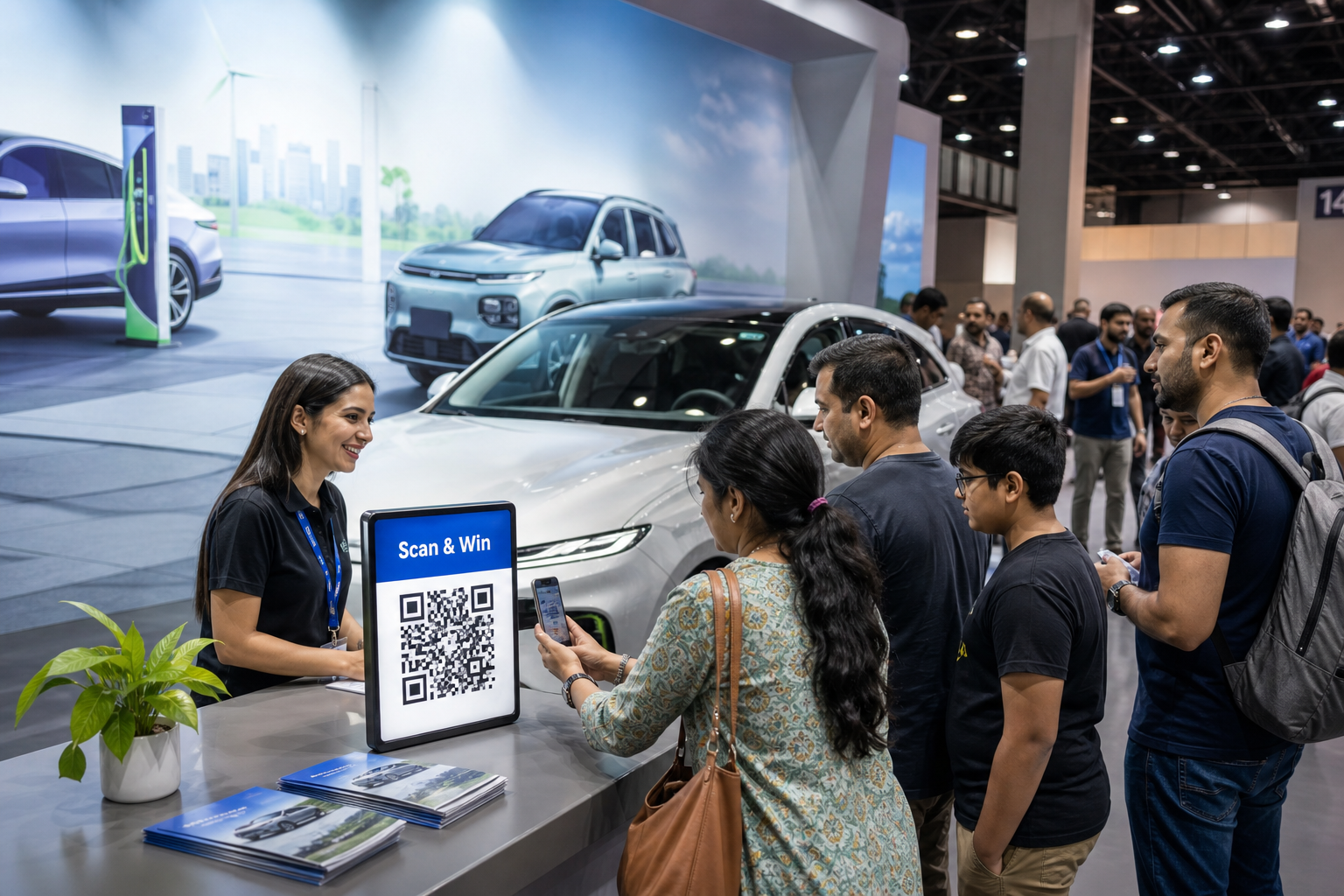
WhatsApp lead capture at an auto show is the use of a QR code or short number displayed at a brand stand to initiate a WhatsApp conversation with a visitor, collecting contact details, qualifying interest, and routing the lead to the right follow-up workflow, all without paper forms or manual data entry. The operational advantage is that the lead exists in a structured, actionable format before the visitor has left the floor. The most common alternative, collecting paper forms and entering them manually after the event, loses between 20% and 40% of leads to illegible handwriting, incomplete entries, or delayed follow-up..
Multichannel Messaging
How to Build Automated Customer Communication Workflows That Actually Scale
Jul 16, 2026
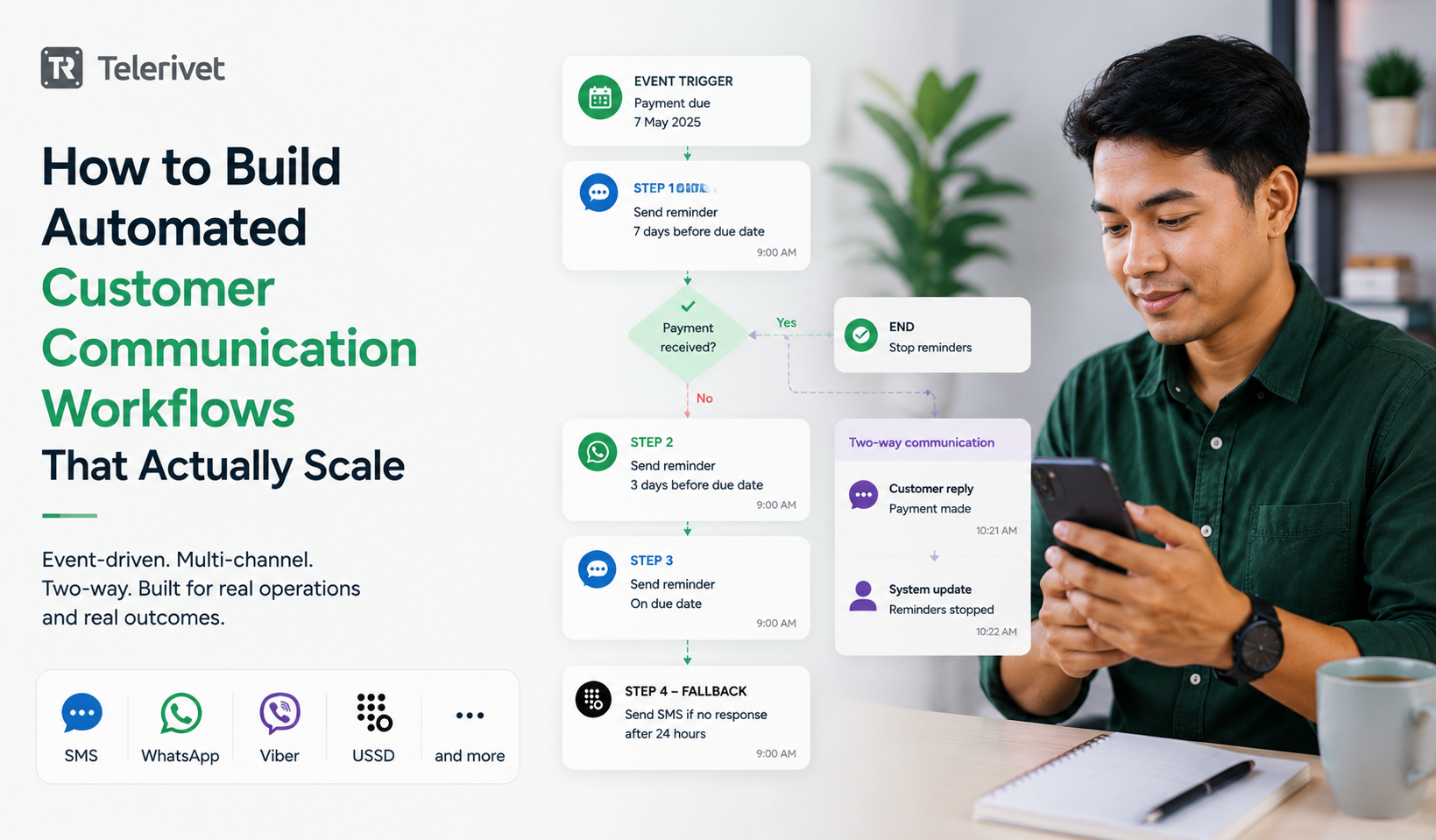
An automated customer communication workflow is a set of triggered, conditional messaging rules that runs without manual intervention - sending the right message, to the right recipient, through the right channel, at the right moment, and adjusting based on what happens next. The word "automated" is the easy part. The hard part is "scale", building workflows that stay reliable and maintainable as recipient volume, market count, and message complexity grow.
A payment reminder sent three days late does not prevent a missed payment. An appointment confirmation that lands on the wrong channel does not reduce no-shows. A delivery notification triggered by the wrong system event is worse than no notification at all.The operational problem most organizations are actually solving is not whether to use SMS or WhatsApp. It is how to build communication workflows that run reliably, adapt to real-world conditions, and stay consistent as customer volume grows, without requiring a technical team to maintain them every week.
The In-Stay Revenue Opportunity Independent Hotels in Africa and Southeast Asia Are Leaving on the Table
Jul 13, 2026
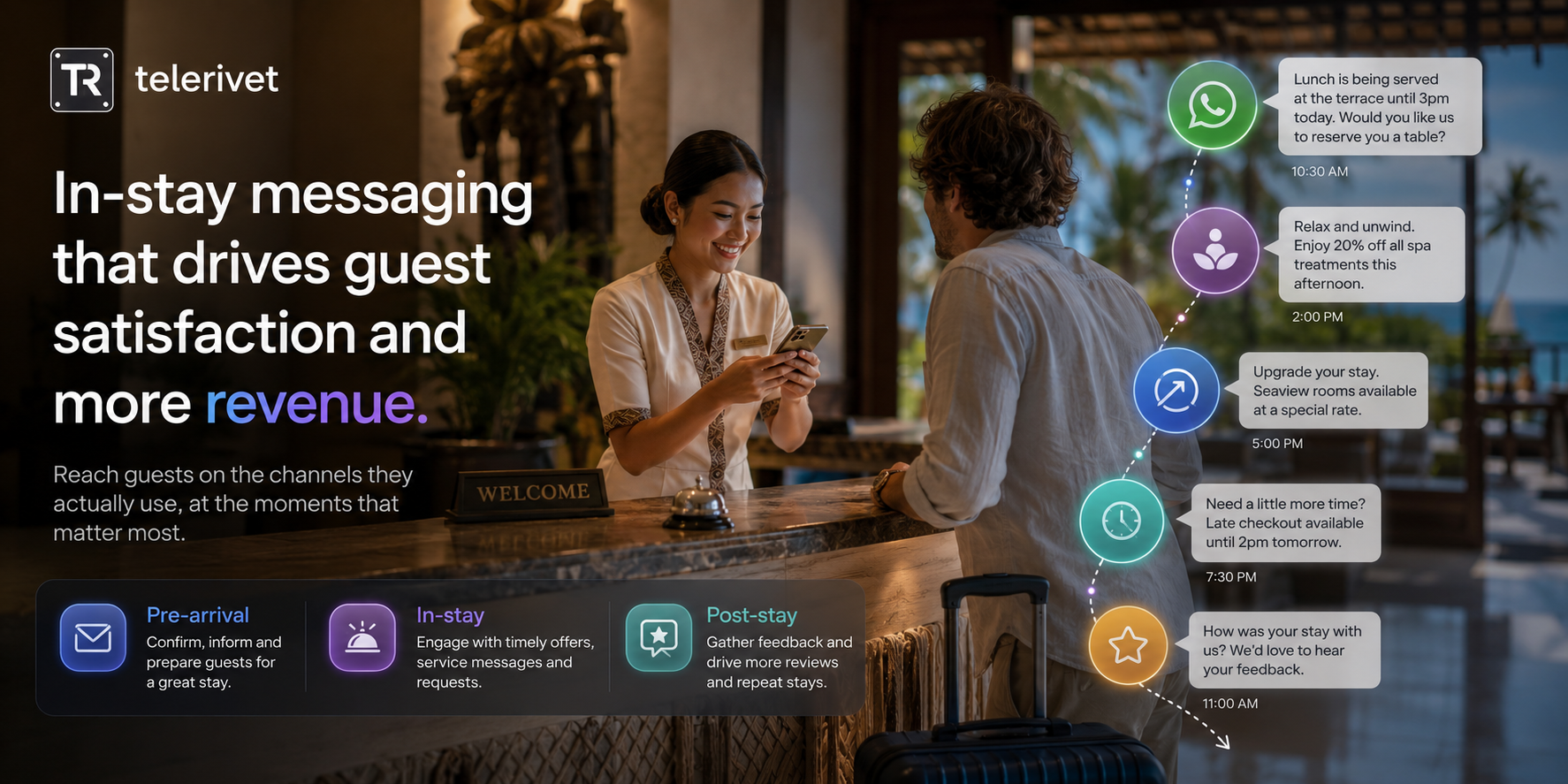
In-stay messaging refers to automated or semi-automated communication sent to guests while they are on the property. For independent and boutique hotels, in-stay messages typically cover food and beverage promotions, spa and activity offers, and late checkout upsells. WhatsApp is the most effective channel for in-stay communication in Southeast Asia and Sub-Saharan Africa because guests already have it installed and the conversation thread from pre-arrival contact is still open.
A guest checks in at a boutique resort in Bohol. Or a business hotel in Nairobi. Or a heritage property in Penang. They drop their bags, connect to WiFi, and for the next two or three days they are on your property - captive, willing to spend, and entirely unreachable unless they walk up to the front desk..
When the Field Needs to Reach You: Inbound Communication for Logistics Operations
Jul 10, 2026
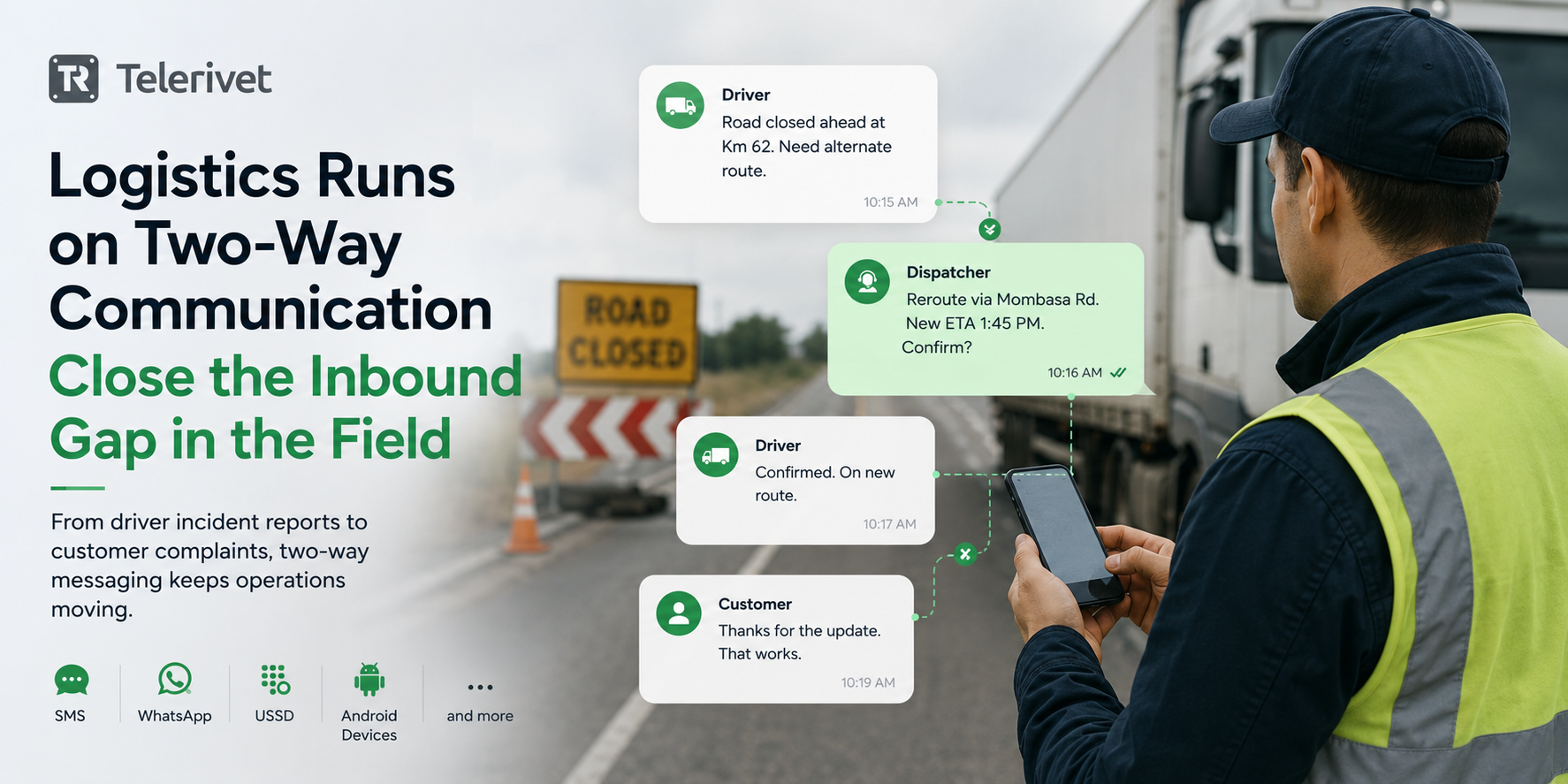
Inbound communication in logistics is the system that handles messages originating from drivers, agents, and field personnel, exception reports, route change requests, delivery confirmations, and status updates, and routes them to the right person or automated workflow in real time. Most logistics communication systems are designed for outbound: dispatch instructions go out to drivers, delivery windows go out to customers. The inbound half, what happens when the field needs to reach the center, is the part that breaks under operational pressure..
What Is Communication Orchestration? A Practical Definition
Jul 9, 2026
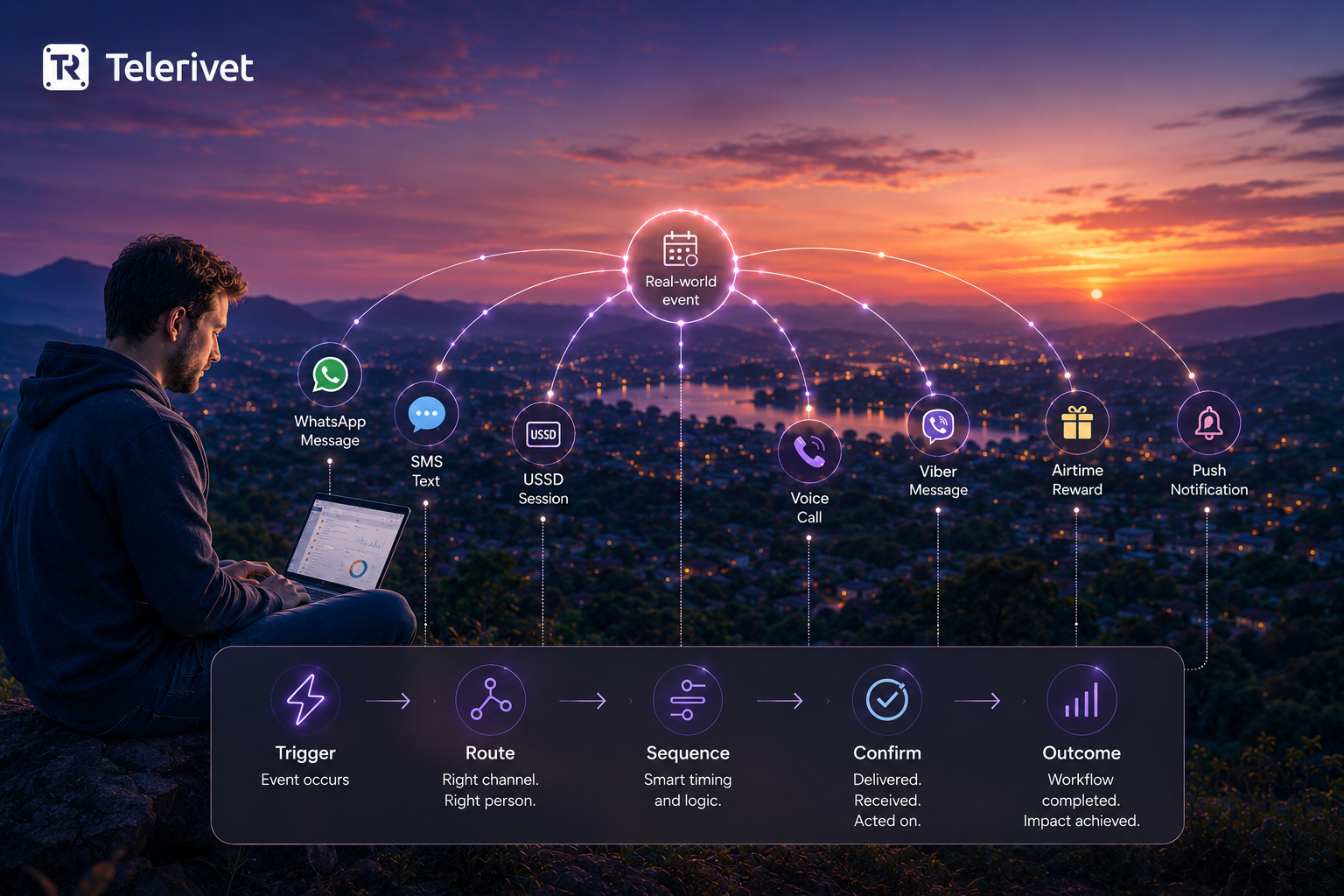
Communication orchestration is the design and automation of how messages are initiated, routed, sequenced, and confirmed across channels based on operational triggers, recipient context, and real-world outcomes.
It is not about which channels an organization uses. It is about the logic that decides when a message is sent, to whom, through what channel, and what happens next depending on whether it lands. Most organizations that start thinking about communication orchestration get stuck on the wrong question. They ask: which channels should we be using? They add WhatsApp alongside SMS. They add voice as a fallback. They document a stack and call it a strategy..
Why Hotel Pre-Arrival Guest Messaging in Southeast Asia Is Still a Manual Job
Jun 30, 2026
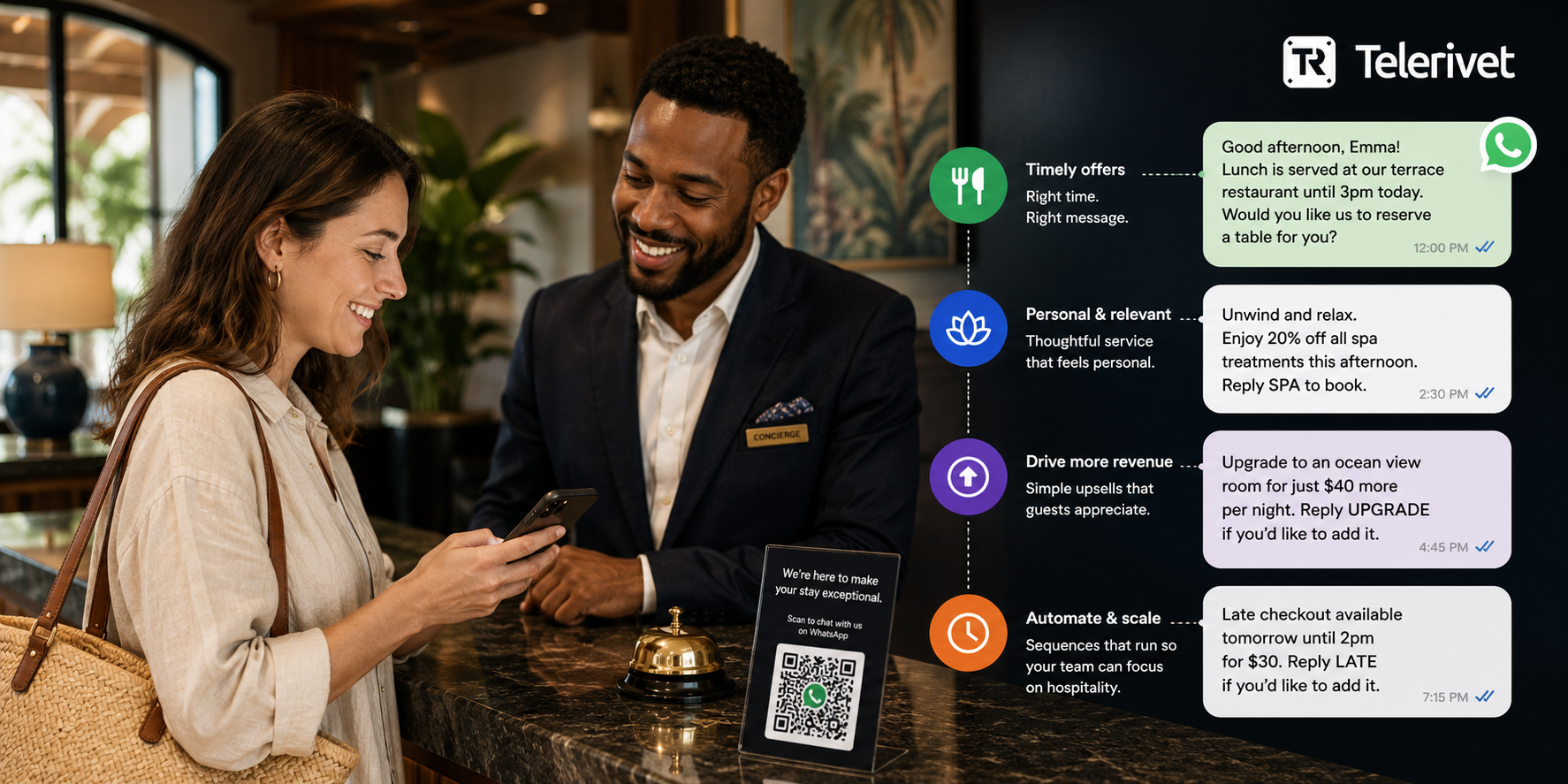
The window between a booking confirmation and a guest's check-in is one of the most valuable communication opportunities a hotel has. It is also, at most properties across the Philippines, Indonesia, Thailand, Vietnam, and Malaysia, managed almost entirely manually. The same pattern holds at independent and mid-size hotels in Kenya, Tanzania, South Africa, and across much of East and Southern Africa. It likely holds across rest of APAC, EMEA and Americas too.
Turn Registrants into Attendees: Effective Event Messaging Strategies
Jun 28, 2026
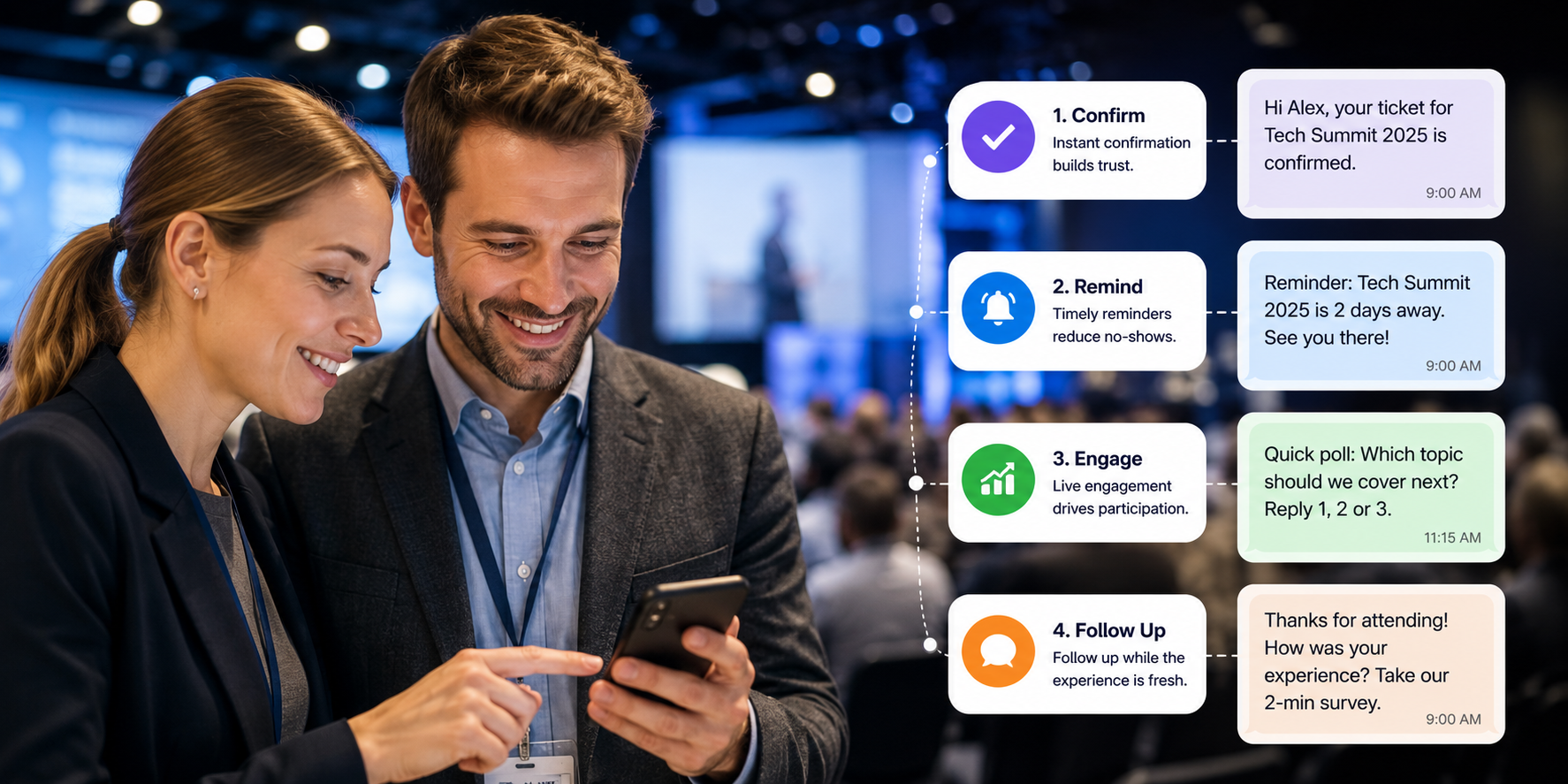
Event messaging is the communication workflow that runs between the moment someone registers for an event and the moment they walk through the door, covering confirmation, reminder, logistics, and day-of communication. A structured messaging sequence, delivered across SMS and WhatsApp at the right intervals, is consistently the highest-leverage intervention available to close that gap without adding headcount..
Most Messaging Platforms Are Built for Talking. Not for Listening. What Happens When Someone Replies?
Jun 25, 2026
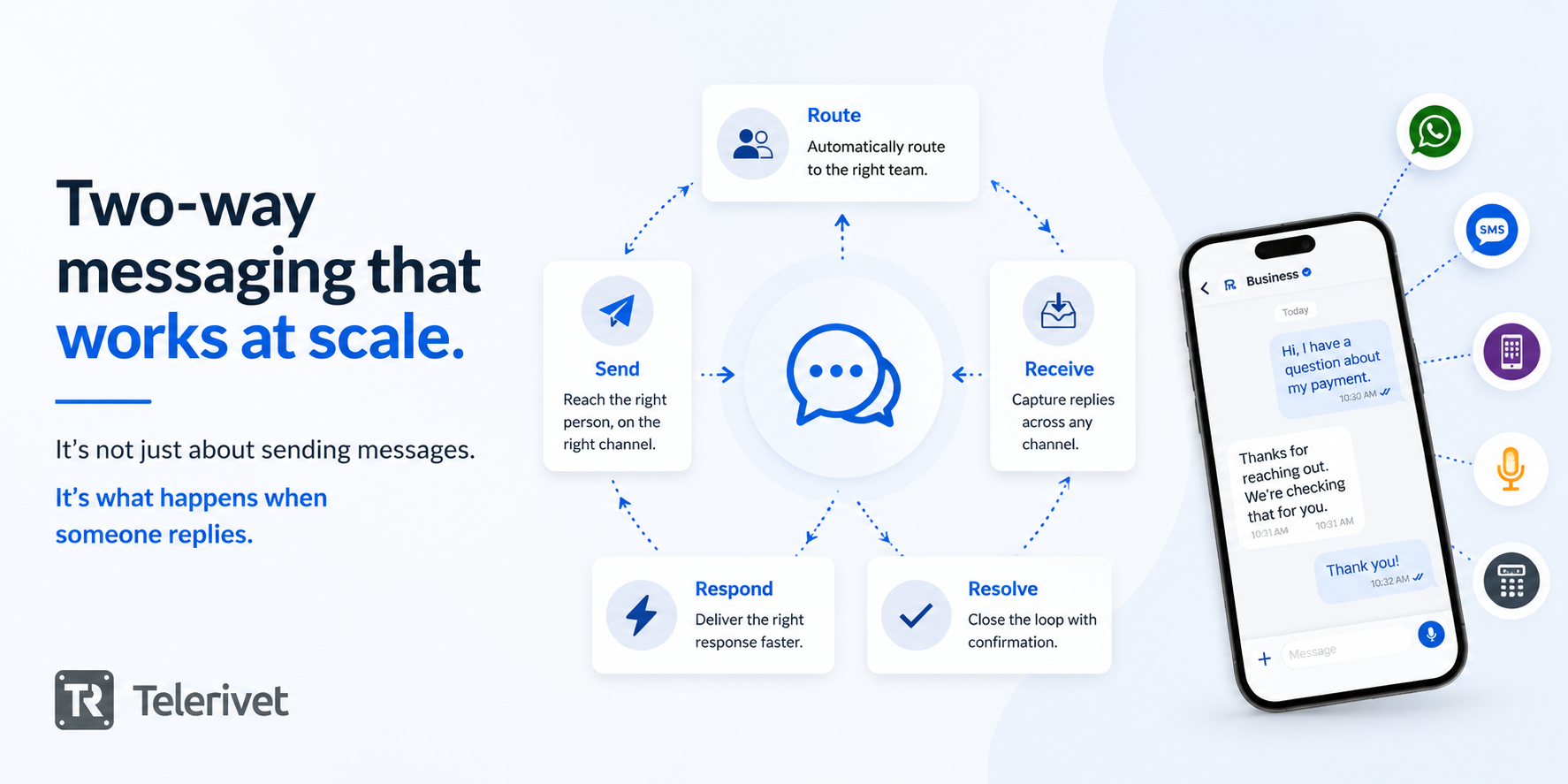
Two-way messaging is a communication setup in which a business can both send messages to recipients and receive, route, and act on replies, automatically, at scale. It is distinct from broadcast messaging (outbound-only) in that the system is designed to handle inbound responses: parsing what was said, routing it to the right person or workflow, and triggering a follow-up action without manual intervention. Most messaging platforms are built for sending.Two-way communication requires a different architecture underneath.
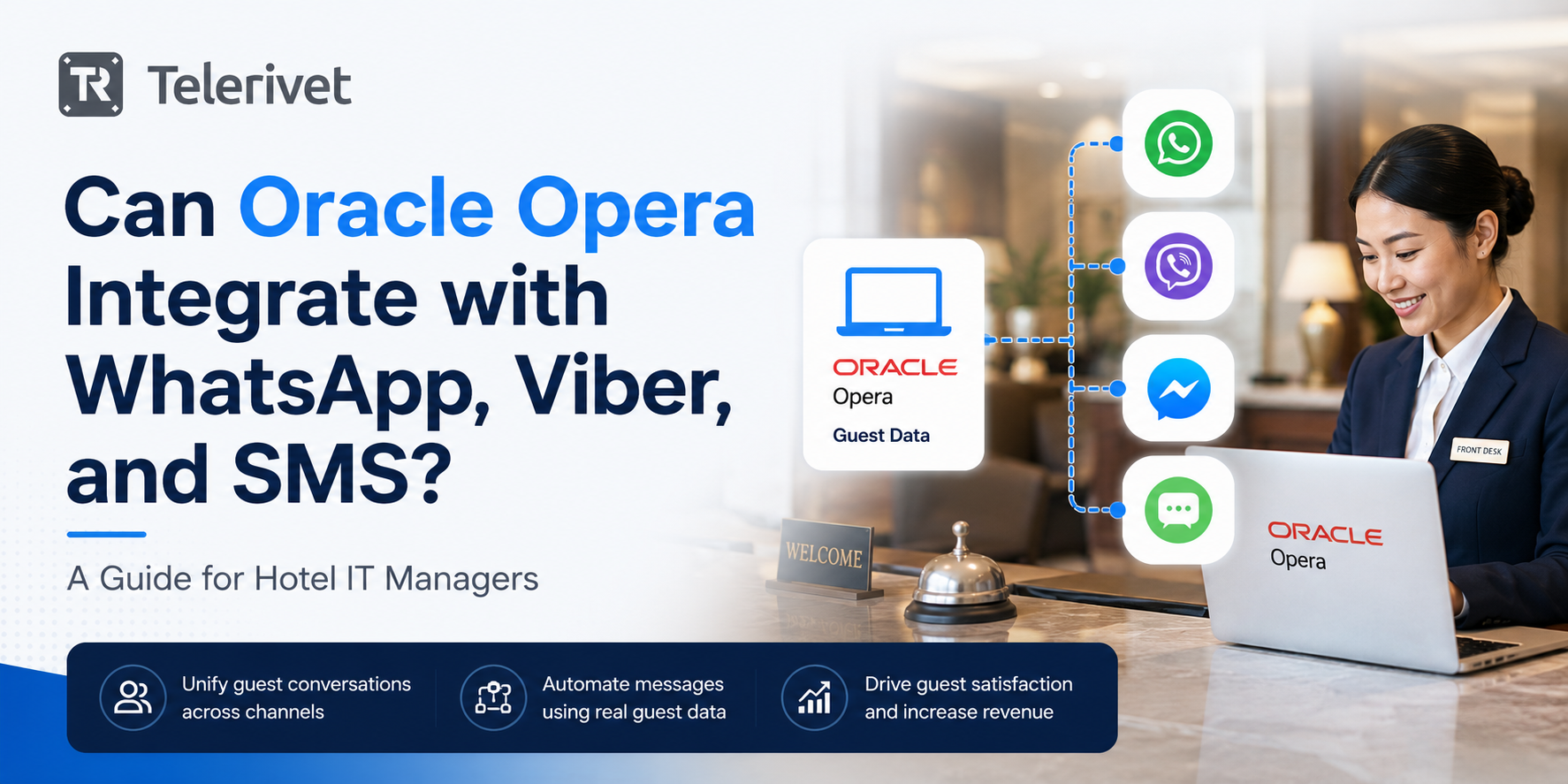
Can Oracle Opera Integrate with WhatsApp, Viber, and SMS? A Guide for Hotel IT Managers
Jun 24, 2026
Every time a reservation agent copies a phone number out of Opera and sends a WhatsApp message manually, the hotel is paying a hidden operational cost. The process works at 20 arrivals per day. It breaks at 200.
Read more »
At most mid-size hotels in the Philippines, the property management system and the guest messaging operation exist in two entirely separate worlds. Oracle Opera holds the guest record. It has the name, the booking date, the check-in date, the room type, the contact number. But the moment a guest needs to be reached for a pre-arrival confirmation, a reservation reminder, an upsell offer, or an in-stay promotion then someone leaves Opera, opens WhatsApp on a phone, finds the guest's number, and writes a message manually.
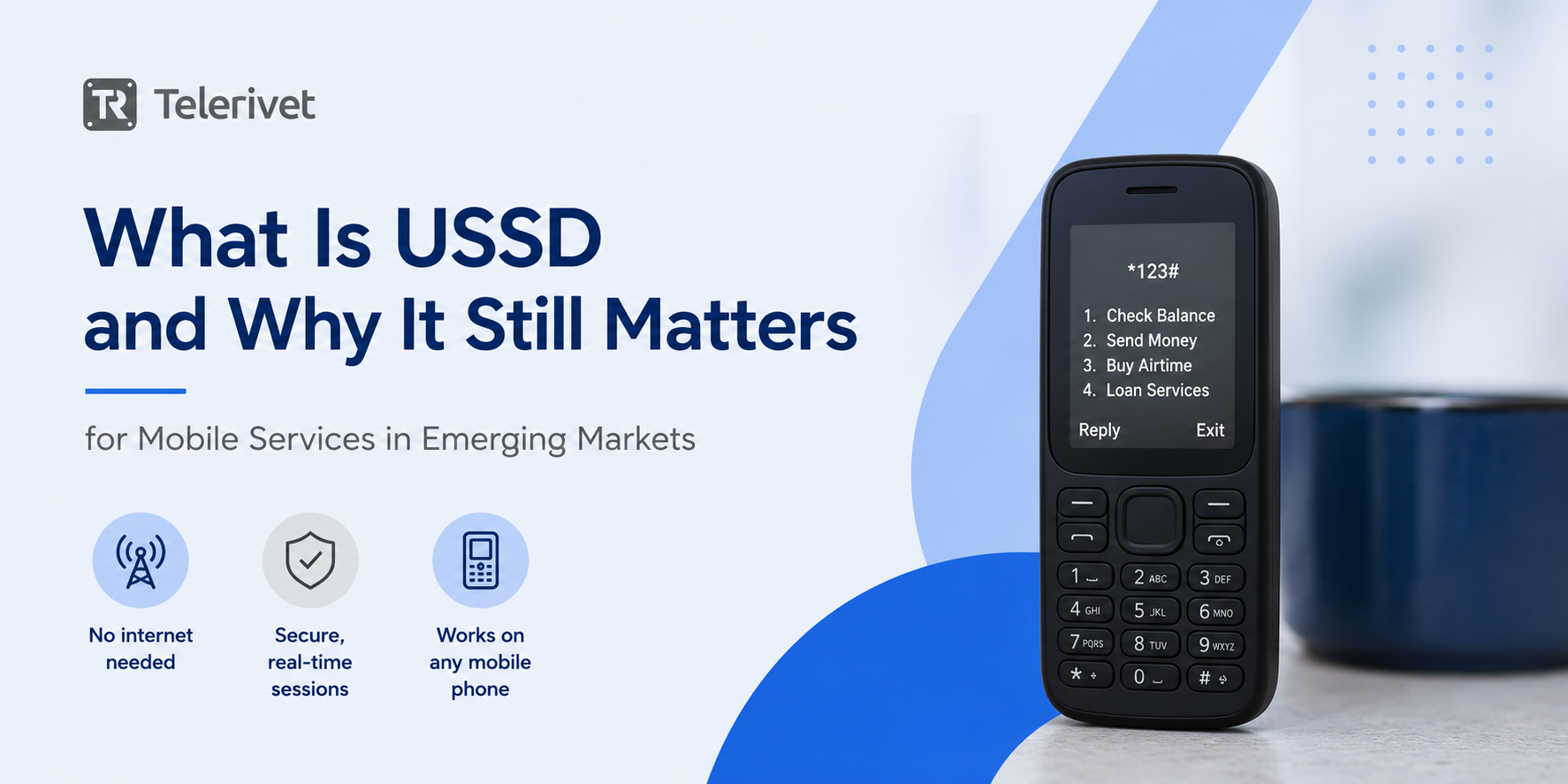
What Is USSD and Why It Still Matters for Mobile Services in Emerging Markets
Jun 22, 2026
USSD (Unstructured Supplementary Service Data) is a mobile communication protocol that lets users interact with a service through a short code menu without internet, without a smartphone, and without a downloaded app. It works on any GSM handset, including basic feature phones, and runs entirely over the mobile network's signaling channel. Because it requires no data connection and no app, USSD remains one of the most reliable ways to reach mobile users in low-connectivity markets across Africa, Asia, and emerging markets..
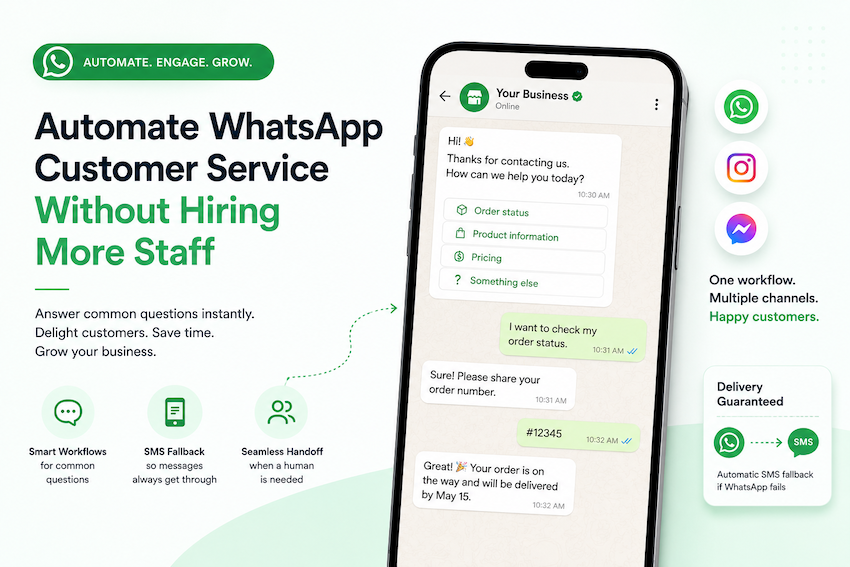
How to Automate Your WhatsApp Customer Service Without Hiring More Staff
Jun 11, 2026
If your business runs on WhatsApp, you already know the pattern. A customer messages asking about an order. Another wants a price list. Someone asks whether a product is back in stock. By mid-morning, a significant part of your day has gone to questions you have already answered dozens of times.