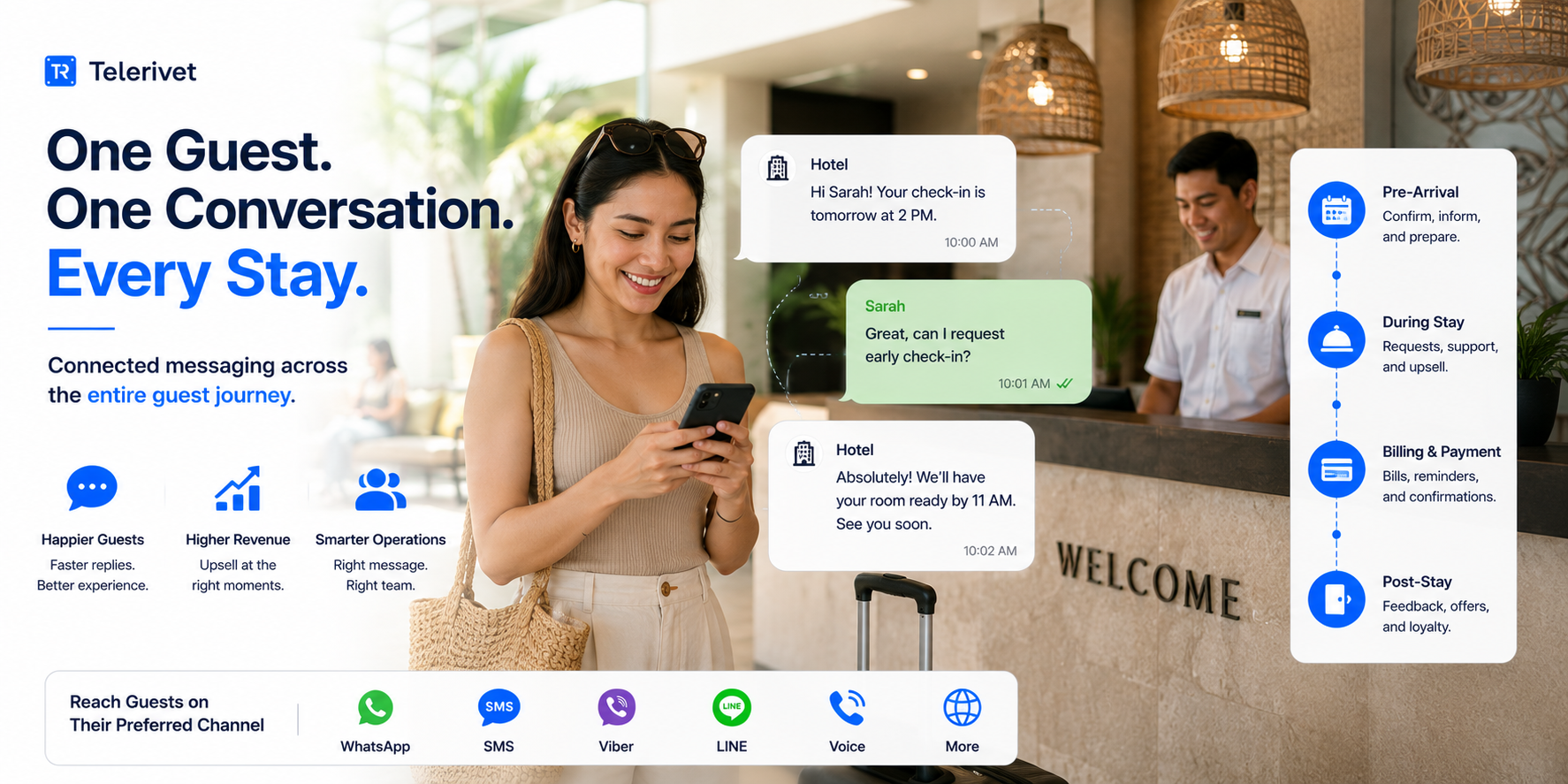
The usual setup at a mid-market hotel goes like this: reservations handles WhatsApp inquiries on one number. The front desk manages arrival coordination on another. Housekeeping works through a shared group chat. F&B takes room service requests through a fourth number entirely, saved in the personal phone of whoever is on shift.
Multi-Channel
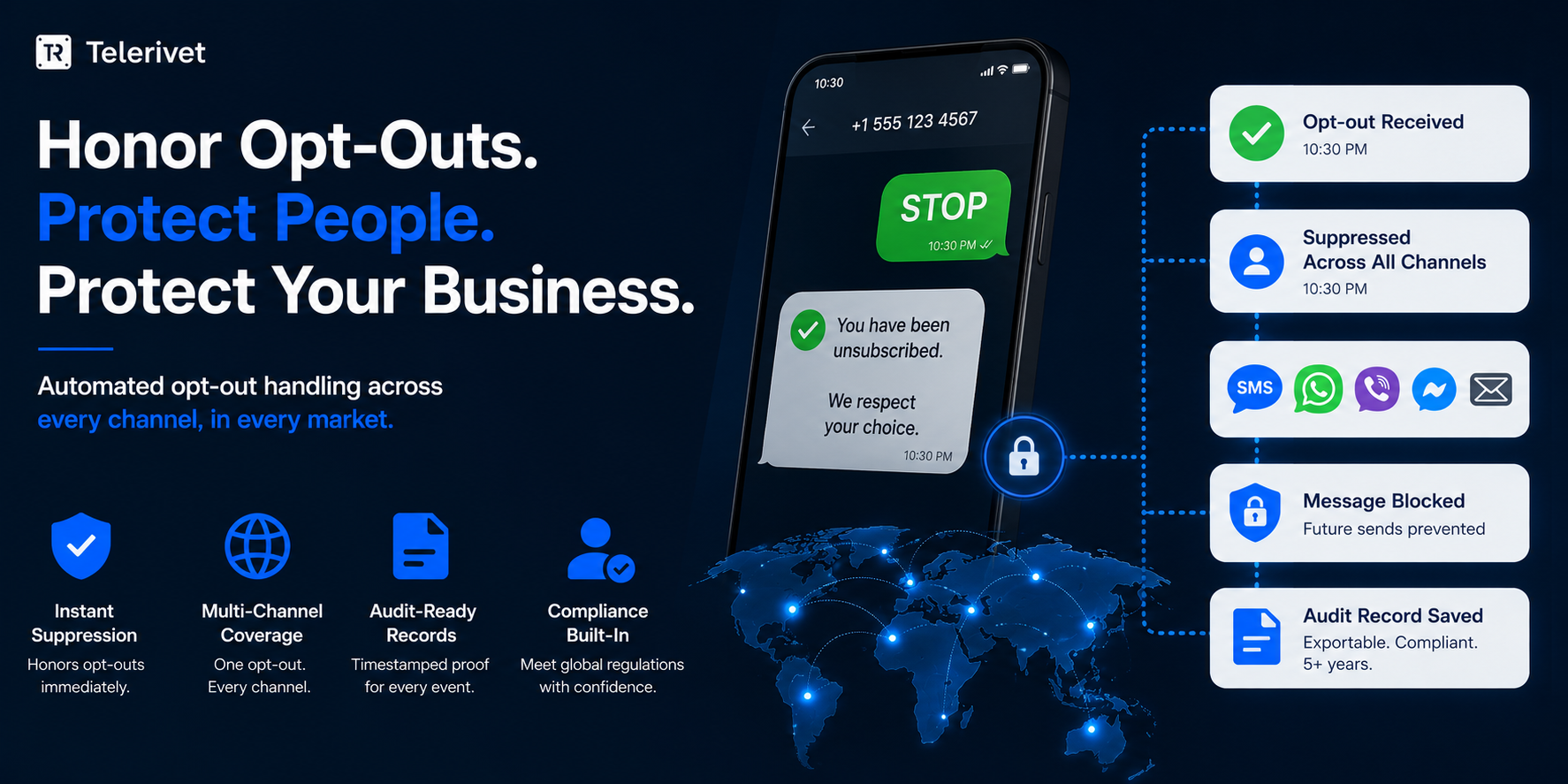
Opt-Out Compliance Is Not a Feature. It Is Liability Management.
Jul 18, 2026
Ask a high-volume sender what they value in a messaging platform and you will hear about deliverability, routing, and cost per message. Almost nobody says opt-out handling. Yet when we listen to what enterprise operators actually cite as their top value drivers after a year of running campaigns across multiple countries, automated opt-out handling keeps appearing near the top of the list. One global event operator named it among their top three.

Delivered Is Not the Same as Received: The Case for Acknowledgment-Based Alerting
Jul 11, 2026
Every operations lead has lived this conversation. The alert went out. The dashboard shows delivered. And the driver, the field tech, the miner or the borrower says, with complete sincerity, that they never got the message. Both sides are telling the truth, because "delivered" and "received" describe two different events, and the gap between them is where incidents, missed payments, and failed audits live.

What Communication Orchestration Actually Means for the People Running It
Jul 7, 2026
Most of the organizations I have watched struggle with operational communication have been dealing with the same problem for years without a name for it.
Communication orchestration is that name: the practice of coordinating messages across multiple channels according to a defined sequence and conditions, so that the right message goes to the right person at the right time based on what has already happened, not just based on what someone remembers to send. What I want to do here is not define it further. It is to describe what the problem looks like from the inside, in the working day of the person carrying it, because that is the frame the formal definition almost never starts with.

You Own the Route. You're Missing the Platform
Jun 27, 2026
The operators who have what global messaging platforms spend years and hundreds of millions acquiring (direct carrier agreements, registered sender IDs, shortcodes, and trusted enterprise client relationships) are losing ground to those same platforms. Not because the platforms have better connectivity. They do not. In most markets, a local gateway operator or regional aggregator has cleaner routes, better deliverability, and stronger carrier relationships than any global platform could replicate from the outside..