Most organizations that run field operations have learned to communicate with their field teams. They send dispatch instructions. They receive delivery confirmations. They track location and status through some combination of messages, calls, and spreadsheet updates. That part, however imperfectly, tends to work.
Logistics & Fleet Operations
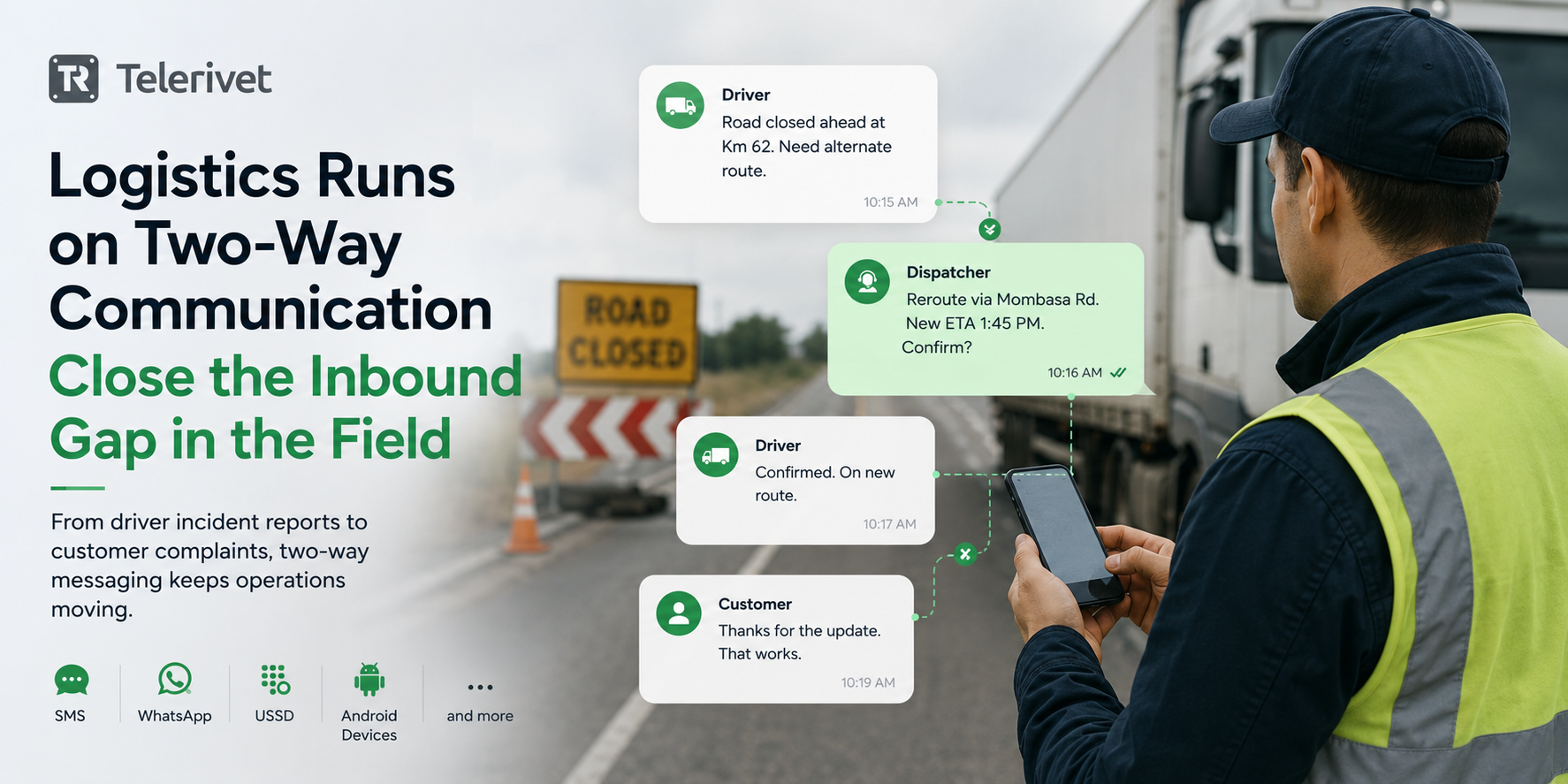
When the Field Needs to Reach You: Inbound Communication for Logistics Operations
Jul 10, 2026
Inbound communication in logistics is the system that handles messages originating from drivers, agents, and field personnel, exception reports, route change requests, delivery confirmations, and status updates, and routes them to the right person or automated workflow in real time. Most logistics communication systems are designed for outbound: dispatch instructions go out to drivers, delivery windows go out to customers. The inbound half, what happens when the field needs to reach the center, is the part that breaks under operational pressure..
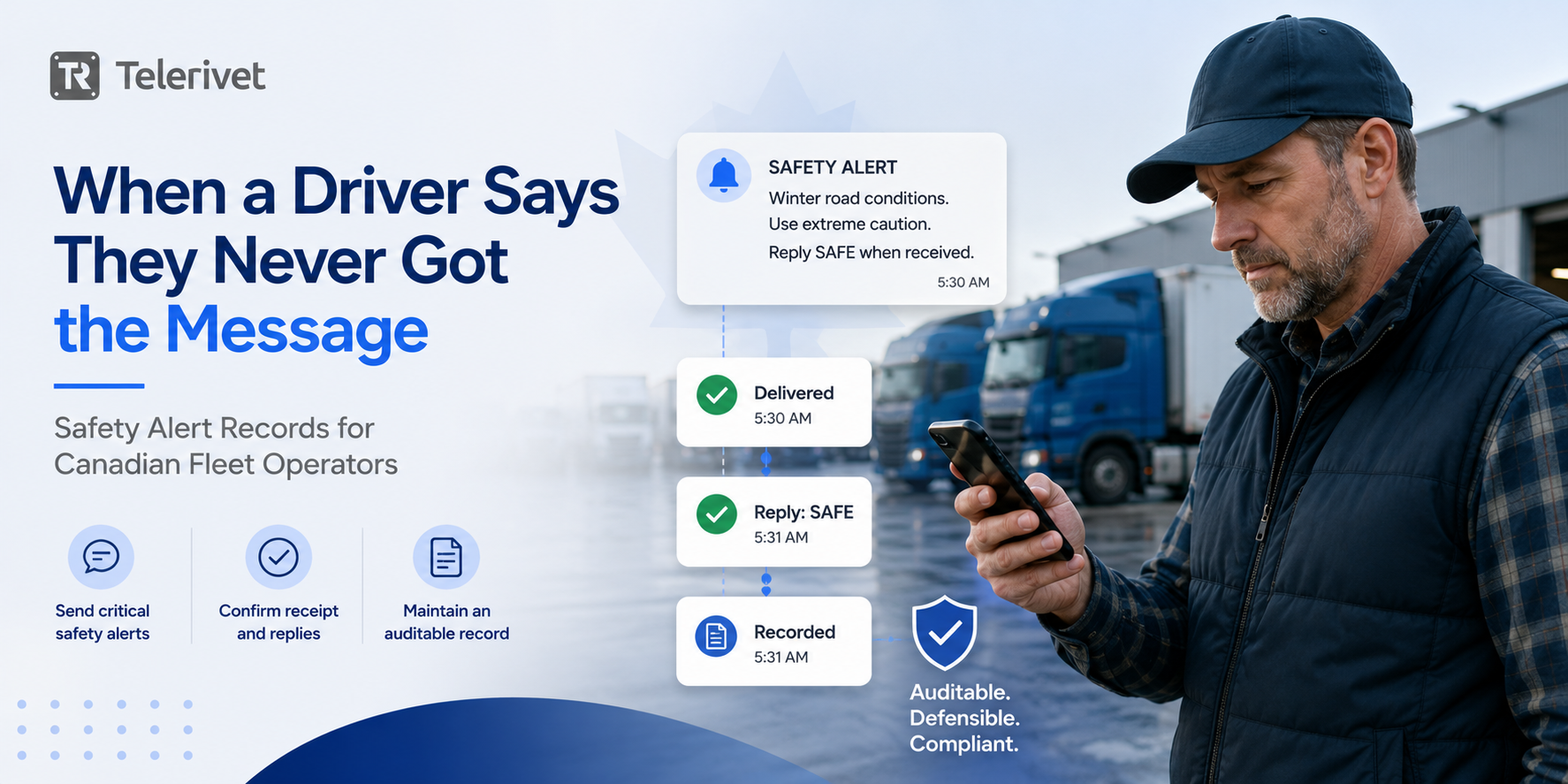
When a Driver Says They Never Got the Message: Safety Alert Records for Canadian Fleet Operators
Jul 2, 2026
It is 5:30 a.m. A dispatcher sends a route condition update to a group chat on their personal phone. Fifteen drivers are in that group. Some are already on the road. Some have not left the terminal. At least two have the chat on mute.
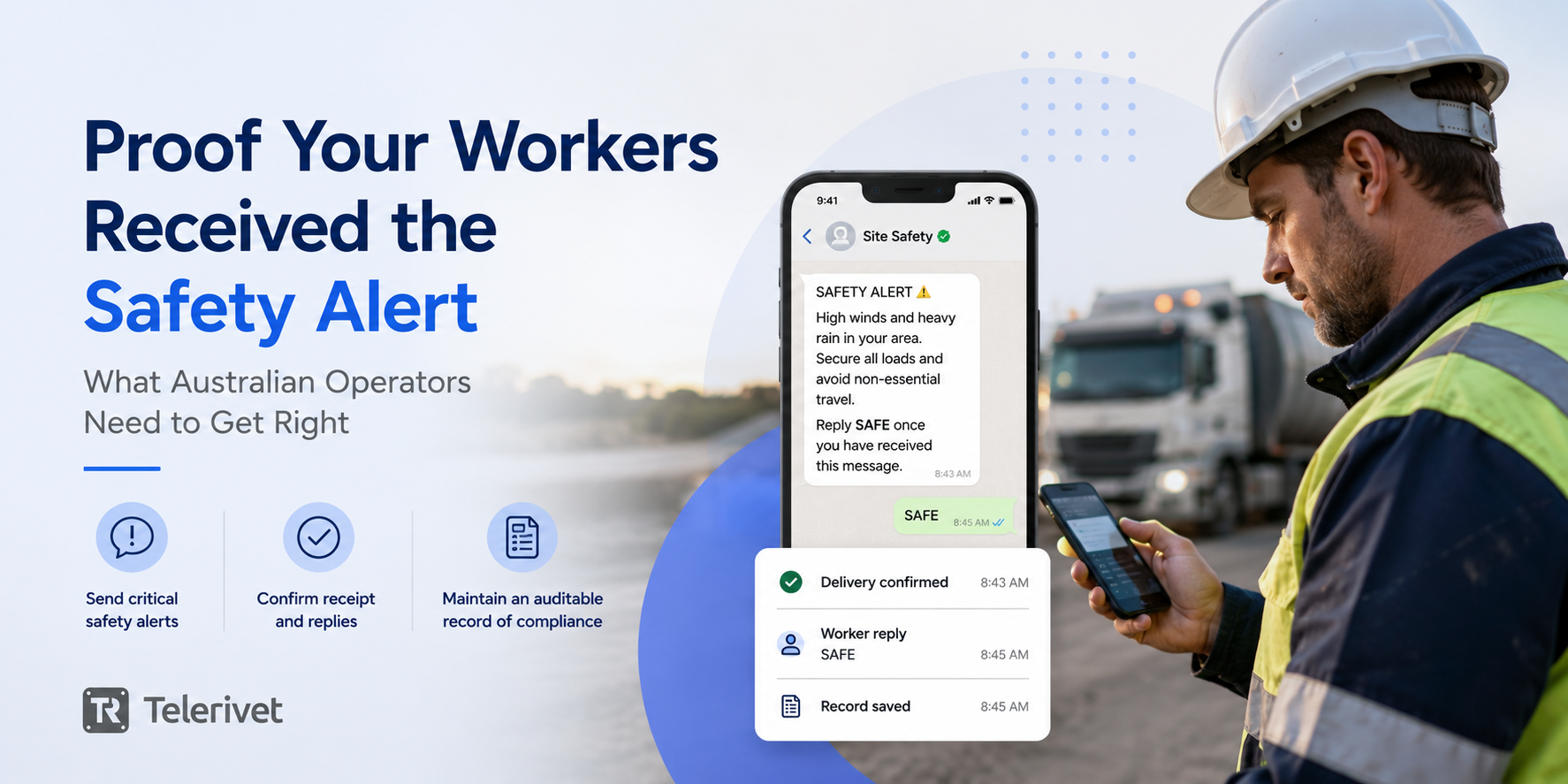
Proof Your Workers Received the Safety Alert: What Australian Operators Need to Get Right
Jun 26, 2026
Something happened at one of your sites. An investigator is sitting across from you and they want to know whether the relevant workers were notified before the incident. You tell them your Safety Manager sent a text. The investigator asks to see the record.