What is post-stay hotel messaging? Post-stay messaging refers to automated communication sent to guests after checkout. For boutique hotels and independent hosts, a post-stay sequence typically includes a satisfaction check, a branching review request that routes positive responses to a public review platform and negative responses to a private resolution path, a referral or discount code, and a re-engagement message ahead of the next booking season. WhatsApp is the most reliable channel for post-stay communication with international guests because it works on WiFi regardless of which SIM the guest is using after returning home.
The guest has checked out. They are in a taxi to the airport, or already at the gate, or back home sorting through their photos. For most boutique hotels, independent resorts, and multi-property Airbnb or Vrbo hosts, this is where the relationship ends. No message goes out. The next communication, if it happens at all, is a generic marketing email weeks later that the guest has already forgotten how to connect to the stay they had..
Hospitality & Tourism
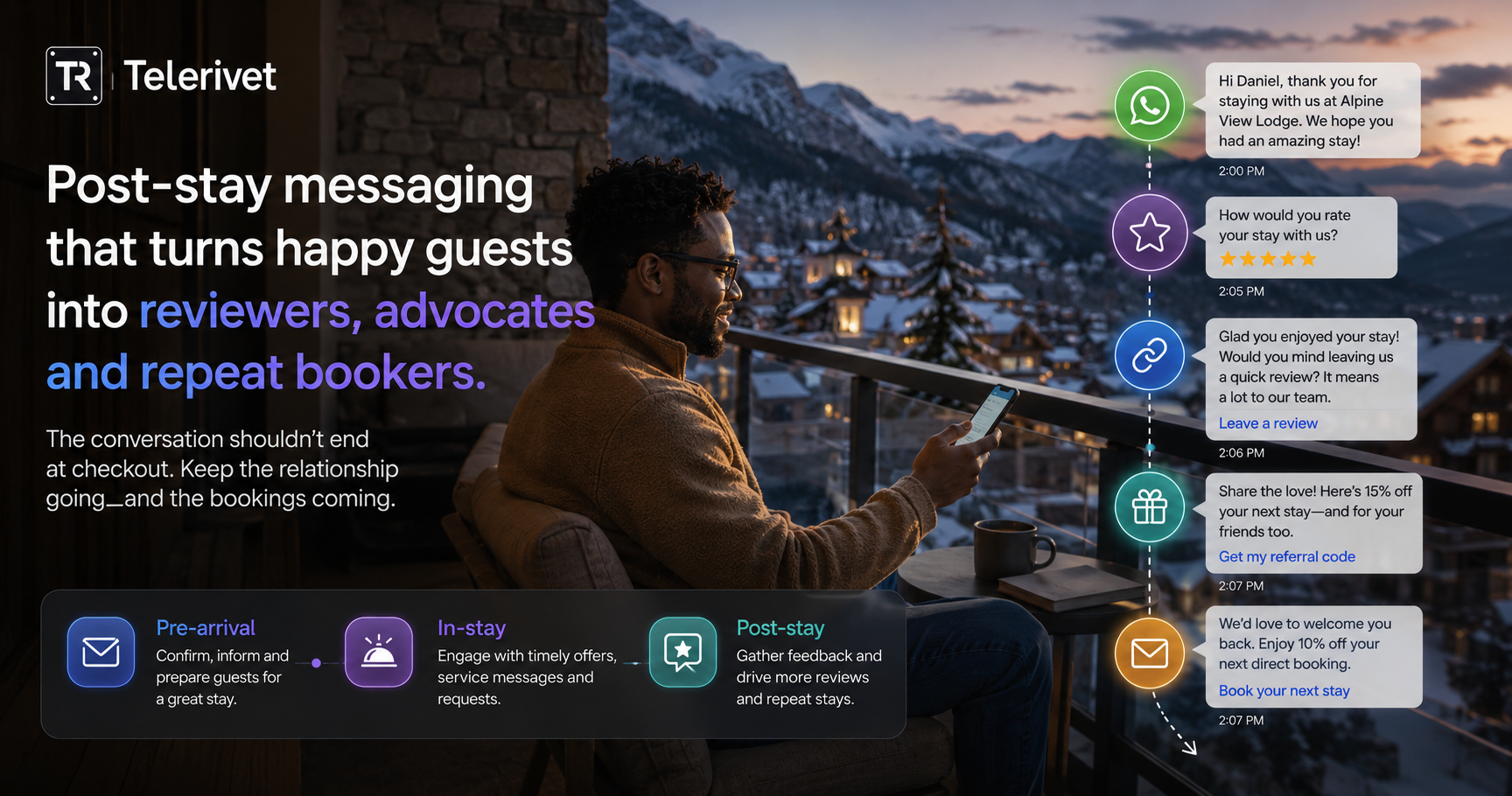
After Checkout: The Post-Stay Messaging Playbook for Boutique and Independent Hotels
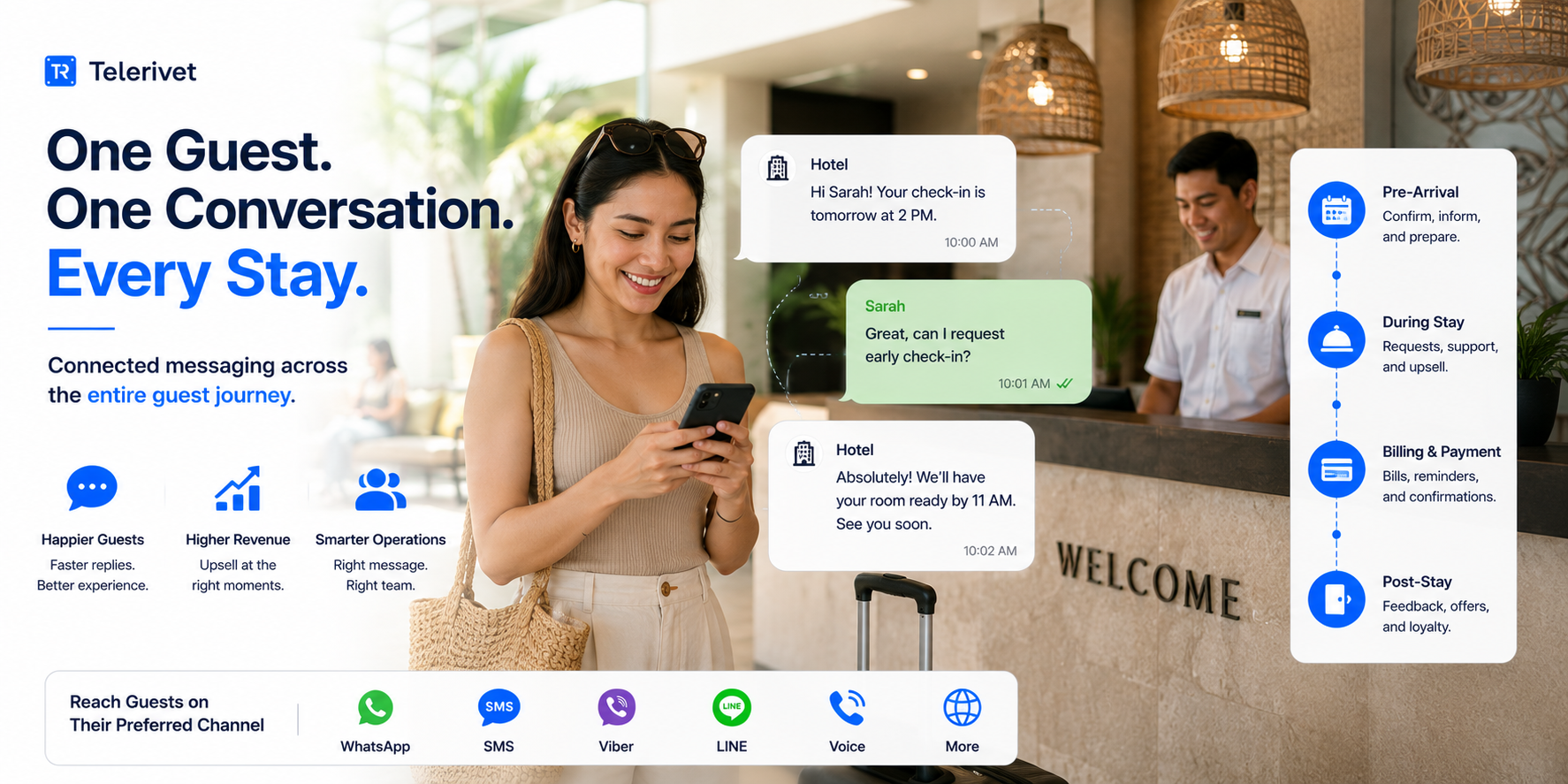
Hotel Guest Messaging: A Practical Guide for Independent and Mid-Market Properties
The usual setup at a mid-market hotel goes like this: reservations handles WhatsApp inquiries on one number. The front desk manages arrival coordination on another. Housekeeping works through a shared group chat. F&B takes room service requests through a fourth number entirely, saved in the personal phone of whoever is on shift.
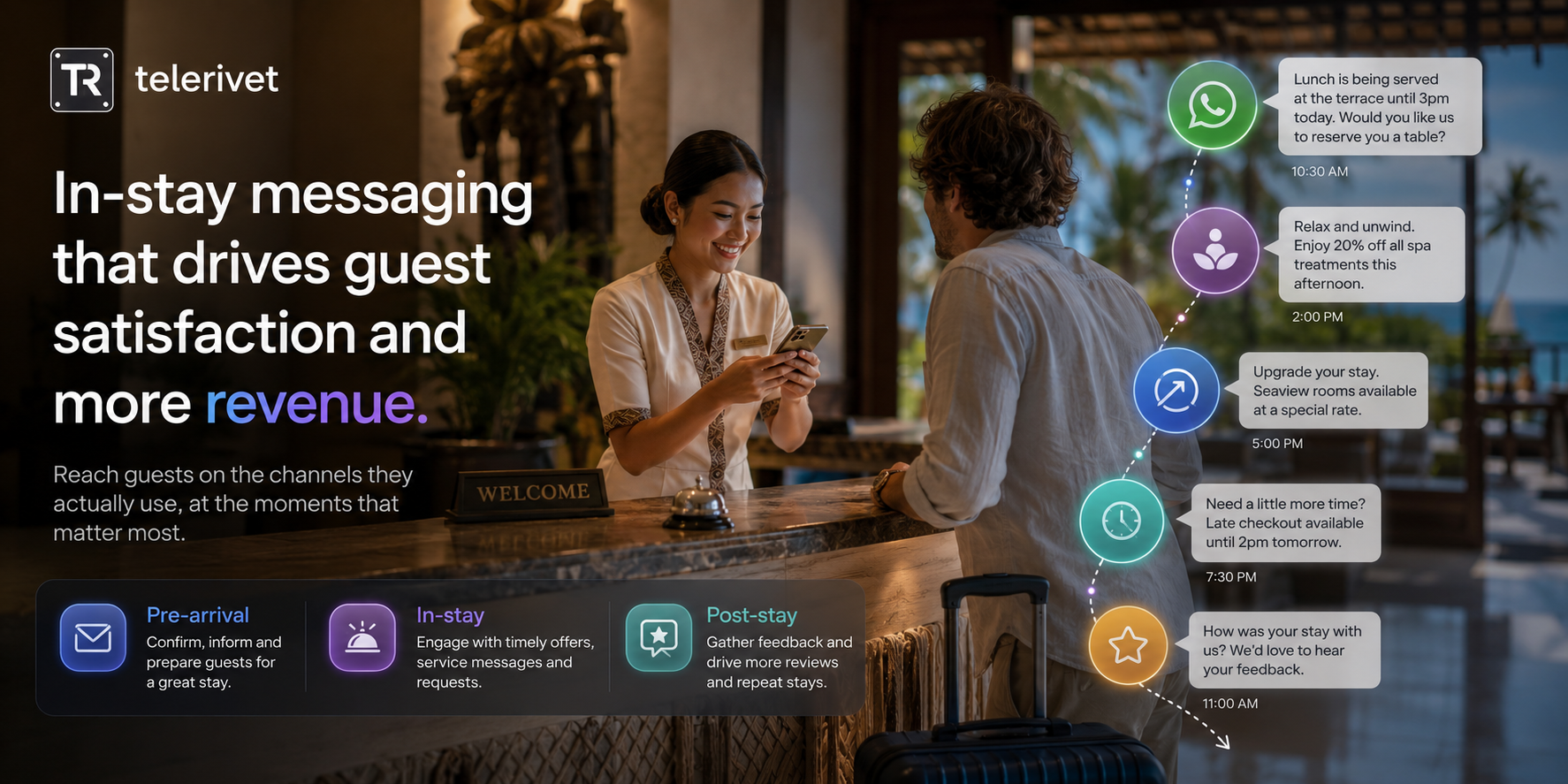
The In-Stay Revenue Opportunity Independent Hotels in Africa and Southeast Asia Are Leaving on the Table
In-stay messaging refers to automated or semi-automated communication sent to guests while they are on the property. For independent and boutique hotels, in-stay messages typically cover food and beverage promotions, spa and activity offers, and late checkout upsells. WhatsApp is the most effective channel for in-stay communication in Southeast Asia and Sub-Saharan Africa because guests already have it installed and the conversation thread from pre-arrival contact is still open.
A guest checks in at a boutique resort in Bohol. Or a business hotel in Nairobi. Or a heritage property in Penang. They drop their bags, connect to WiFi, and for the next two or three days they are on your property - captive, willing to spend, and entirely unreachable unless they walk up to the front desk..
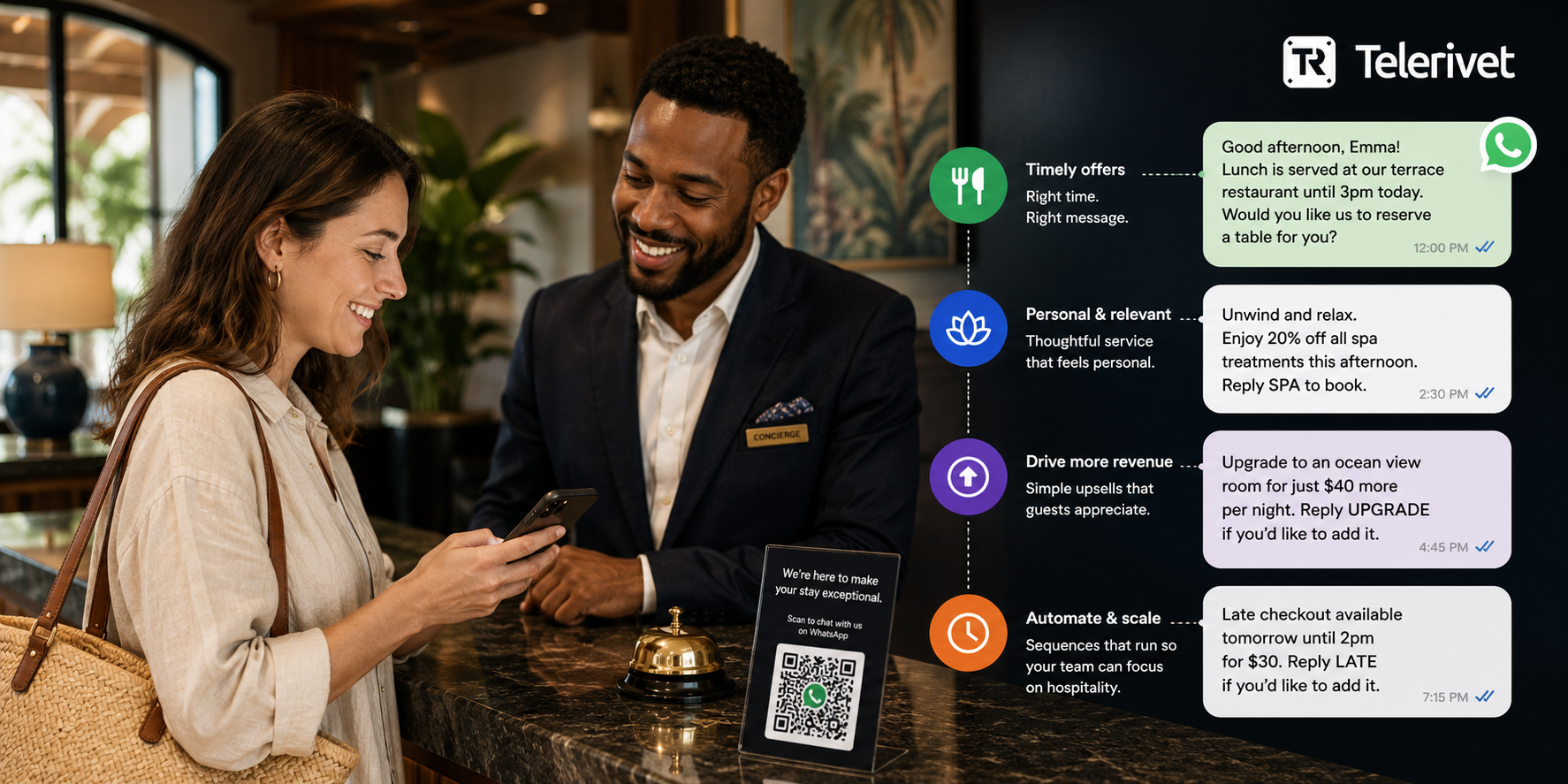
Why Hotel Pre-Arrival Guest Messaging in Southeast Asia Is Still a Manual Job
The window between a booking confirmation and a guest's check-in is one of the most valuable communication opportunities a hotel has. It is also, at most properties across the Philippines, Indonesia, Thailand, Vietnam, and Malaysia, managed almost entirely manually. The same pattern holds at independent and mid-size hotels in Kenya, Tanzania, South Africa, and across much of East and Southern Africa. It likely holds across rest of APAC, EMEA and Americas too.

Can Oracle Opera Integrate with WhatsApp, Viber, and SMS? A Guide for Hotel IT Managers
At most mid-size hotels in the Philippines, the property management system and the guest messaging operation exist in two entirely separate worlds. Oracle Opera holds the guest record. It has the name, the booking date, the check-in date, the room type, the contact number. But the moment a guest needs to be reached for a pre-arrival confirmation, a reservation reminder, an upsell offer, or an in-stay promotion then someone leaves Opera, opens WhatsApp on a phone, finds the guest's number, and writes a message manually.