Communication orchestration is the design and automation of how messages are initiated, routed, sequenced, and confirmed across channels based on operational triggers, recipient context, and real-world outcomes.
It is not about which channels an organization uses. It is about the logic that decides when a message is sent, to whom, through what channel, and what happens next depending on whether it lands. Most organizations that start thinking about communication orchestration get stuck on the wrong question. They ask: which channels should we be using? They add WhatsApp alongside SMS. They add voice as a fallback. They document a stack and call it a strategy..
Channel Fallback & Routiing
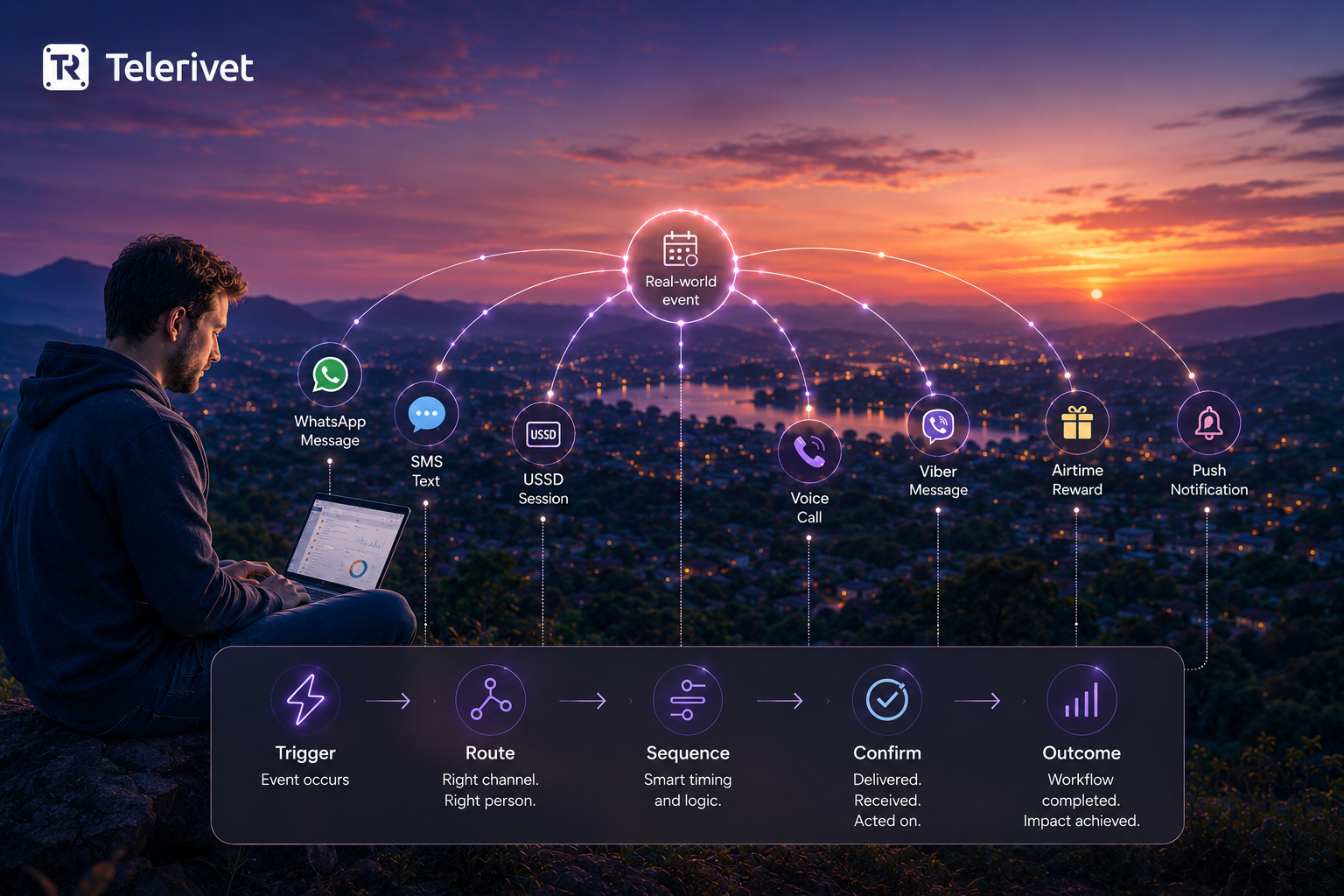
What Is Communication Orchestration? A Practical Definition
Jul 9, 2026
Multichannel Messaging Strategy: What Your Channel Assumptions Are Costing You
Jul 8, 2026
A multichannel messaging strategy is a plan for how a business reaches its recipients across more than one communication channel (SMS, WhatsApp, voice, USSD, Viber etc) and how it decides which channel to use, when, and for whom. Most organizations have multiple channels available. Fewer have thought through the routing logic: what happens when one channel fails, which channel is actually right for which recipient, and what the operational cost is of getting that wrong at scale.
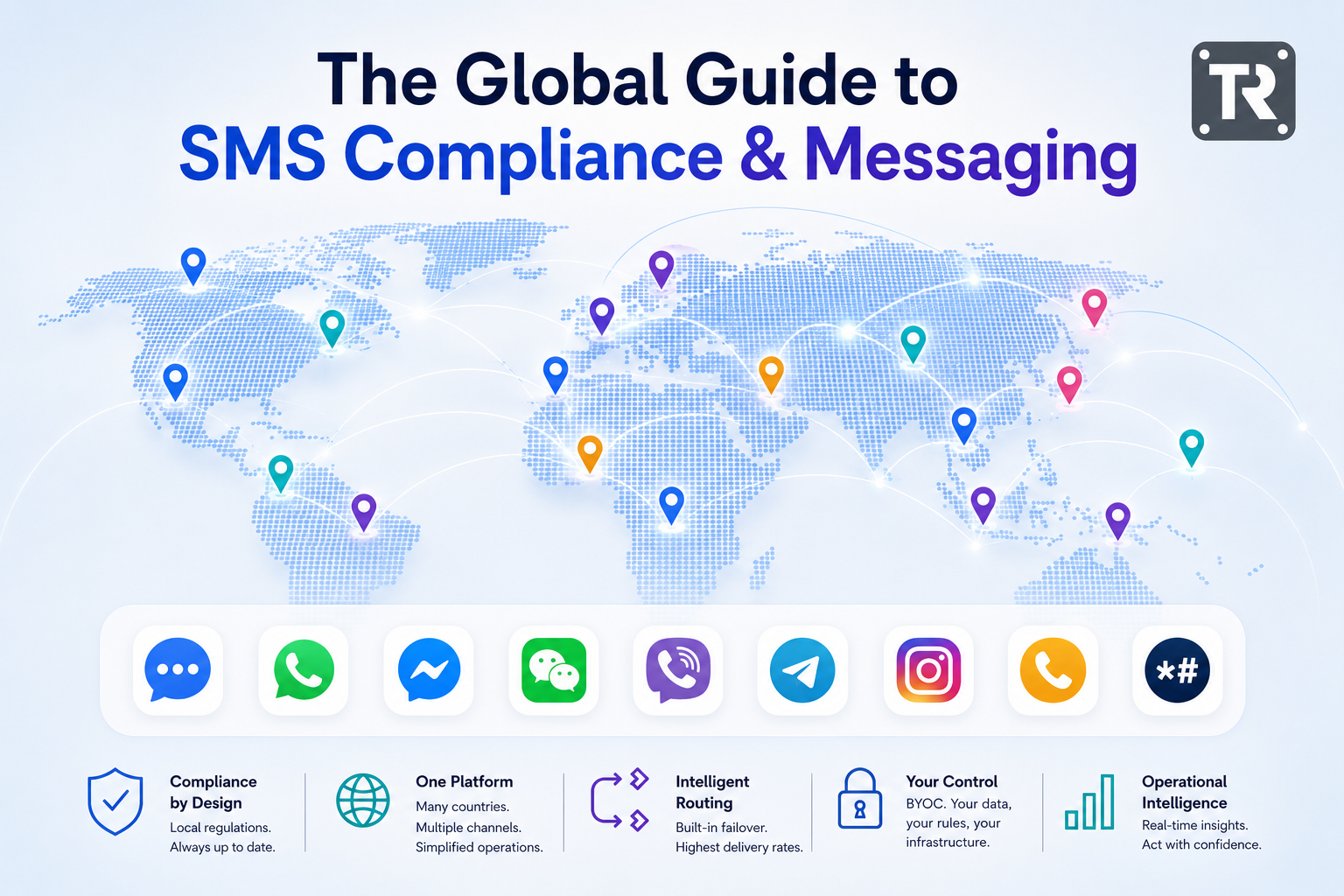
SMS Regulations by Country: The Global Compliance and Operational Architecture Guide
Jul 5, 2026
Most SMS programs that fail internationally do not fail because someone broke a law. They fail because a team designed a workflow for one market, assumed the architecture transferred, and discovered too late that it did not. Two-way SMS is unavailable for standard A2P channels in six of the markets covered in this guide. Japan's major carriers aggressively filter URLs in SMS. Mexico replaces every branded sender name with a short code. The UAE mandates an "AD-" prefix on every promotional sender ID or the message fails. Vietnam requires the brand name to appear in the message body itself, not just in the sender field. None of these are obscure edge cases. They are the standard operating environment in those markets.
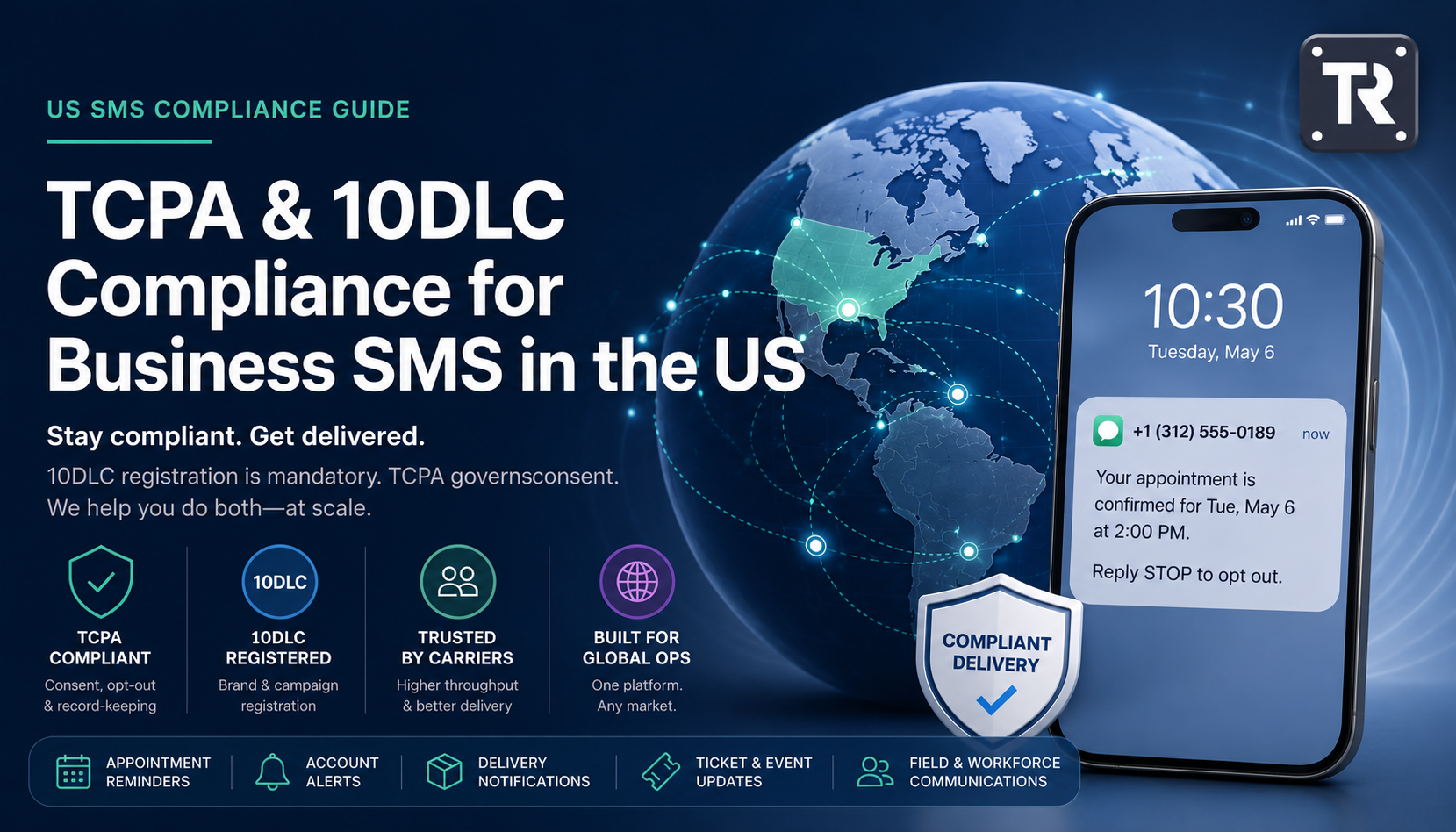
Business SMS in the United States: TCPA, 10DLC, and Building Operational Messaging Programs
Jul 4, 2026
Your SMS program is failing in the US in one of two ways, and often both simultaneously. The first is compliance failure: messages sent without proper consent, numbers not registered under 10DLC, campaigns that look identical to marketing even though they are not. The second is architectural failure: programs designed as marketing broadcasts trying to do the job of operational messaging, built on tools that cannot handle the verification, acknowledgment, and two-way logic that operational programs require.
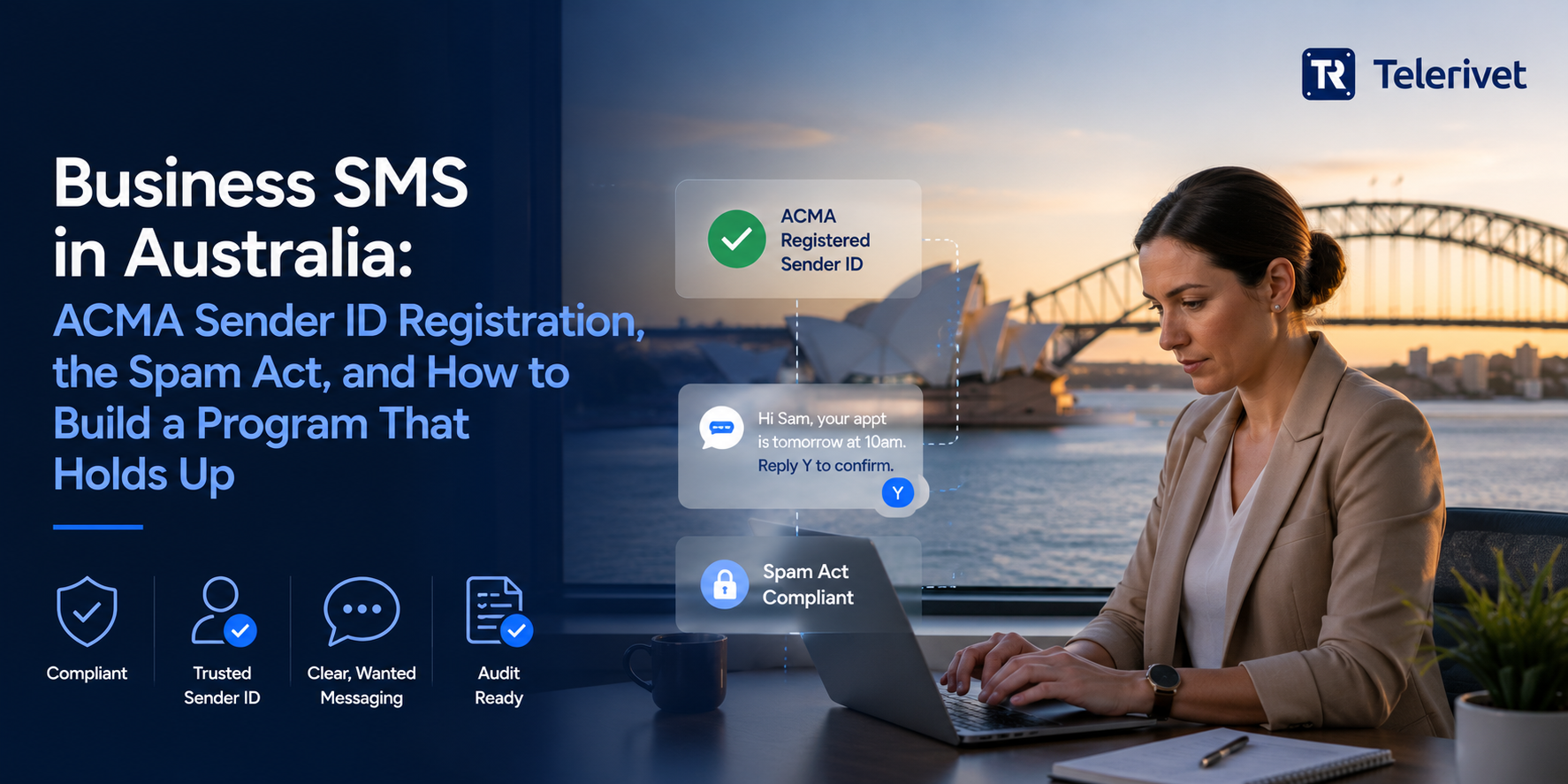
Business SMS in Australia: ACMA Sender ID Registration, the Spam Act, and How to Build a Program That Holds Up
Jul 2, 2026
From 1 July 2026, the Australian Communications and Media Authority's SMS Sender ID Register is live and in enforcement. If your organization sends SMS using a branded sender name, and that name is not registered, recipients are seeing the word "Unverified" where your business name should be. Their phone is grouping your message alongside other unregistered senders. Your delivery rate may hold, but your open rate and your customers' trust in what you send will not.

Can Oracle Opera Integrate with WhatsApp, Viber, and SMS? A Guide for Hotel IT Managers
Jun 24, 2026
Every time a reservation agent copies a phone number out of Opera and sends a WhatsApp message manually, the hotel is paying a hidden operational cost. The process works at 20 arrivals per day. It breaks at 200.
Read more »
At most mid-size hotels in the Philippines, the property management system and the guest messaging operation exist in two entirely separate worlds. Oracle Opera holds the guest record. It has the name, the booking date, the check-in date, the room type, the contact number. But the moment a guest needs to be reached for a pre-arrival confirmation, a reservation reminder, an upsell offer, or an in-stay promotion then someone leaves Opera, opens WhatsApp on a phone, finds the guest's number, and writes a message manually.
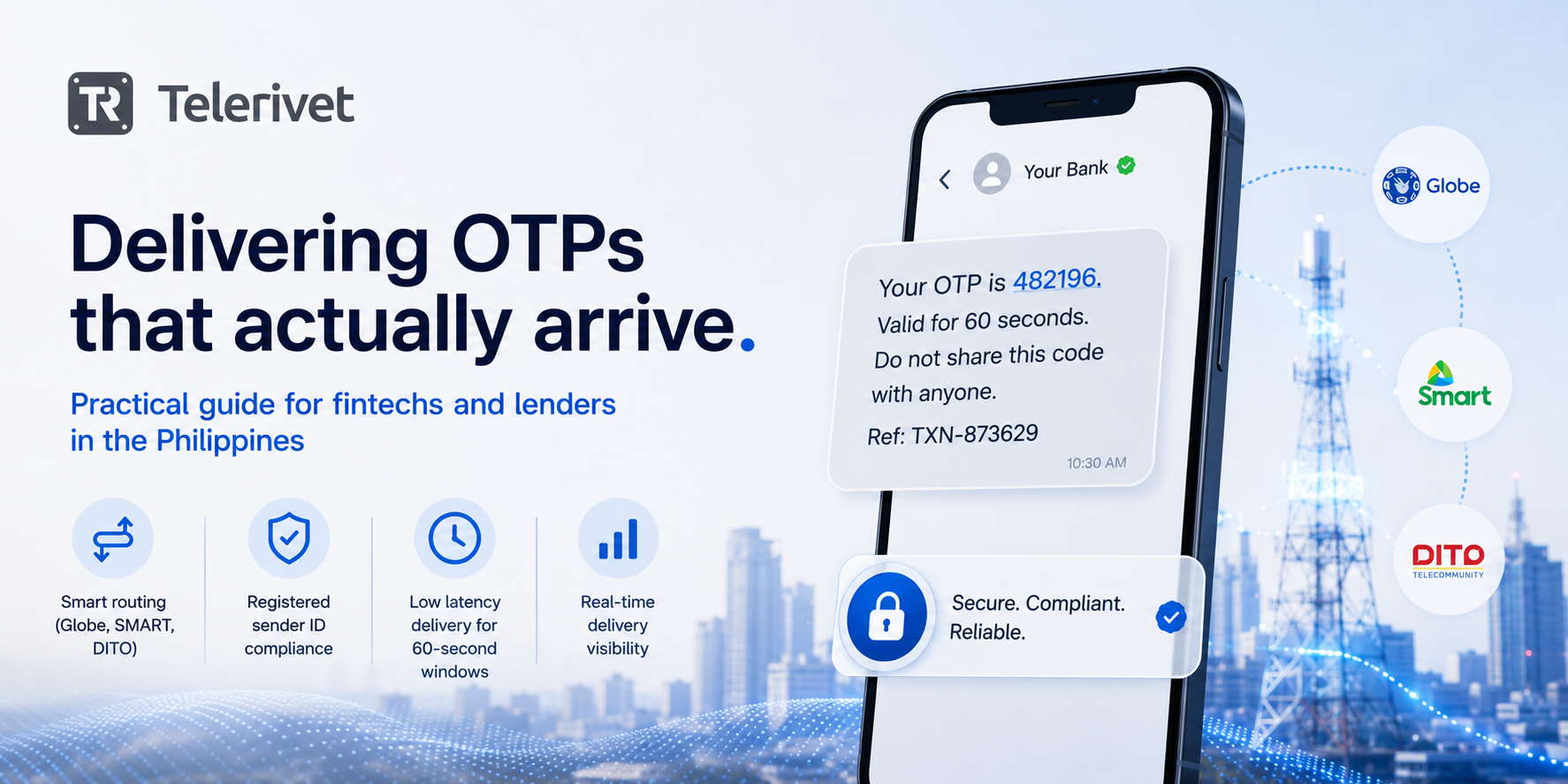
OTP and Transactional SMS in the Philippines: What Banks, Lenders, and Fintechs Need to Know
Jun 21, 2026
Transactional SMS in the Philippines refers to automated, triggered messages sent to an individual recipient as a direct result of an action they have taken: a login attempt, a transaction confirmation, a disbursement alert, or a payment notification, as distinct from promotional or marketing messages sent to a contact list. The distinction matters because transactional SMS is routed differently by Philippine telcos, priced differently, and regulated differently by the Bangko Sentral ng Pilipinas, especially with Circular 1213 in the picture now..
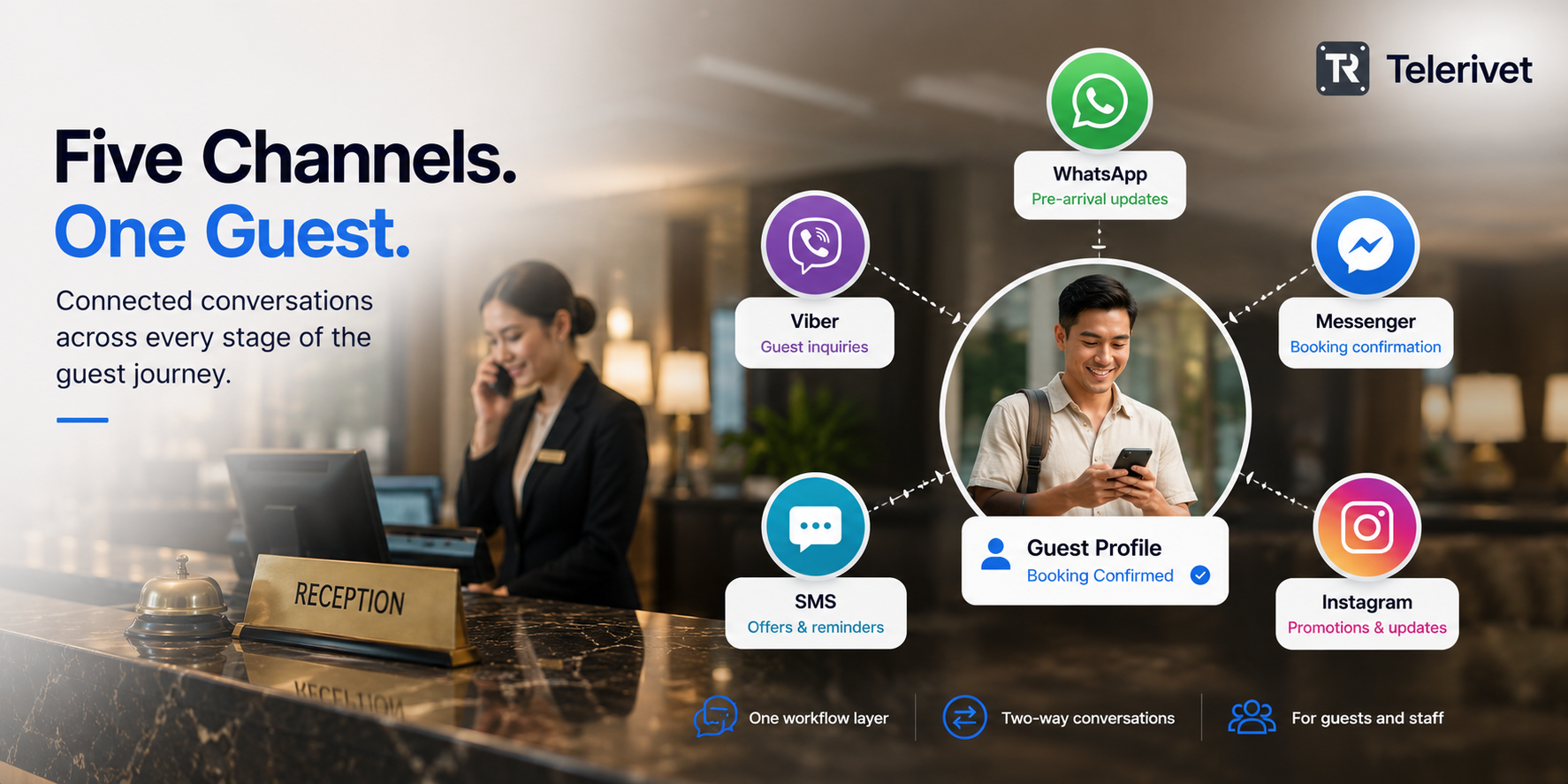
Your Guests Are on Five Channels. Your Workflows Are on None.
Jun 17, 2026
Hotel guest messaging refers to the automated and manual communication between a property and its guests across channels including WhatsApp, Viber, SMS, Instagram, Facebook Messenger. Effective hotel guest messaging connects these channels to a shared workflow layer so that booking events, modifications, and guest requests trigger coordinated communication across staff and guests simultaneously, rather than being handled manually on separate devices..
Business SMS in the UK: PECR, the B2B Exemption, and What the DUAA 2025 Changed
May 29, 2026
There is a compliance assumption embedded in most UK business SMS programs that the law does not support. It goes like this: we are messaging businesses, not consumers, so the stricter consent rules do not apply to us. For some recipients that is correct. For a meaningful portion of any commercial contact list, including sole traders, certain partnerships, and individuals at corporate addresses, it is wrong in ways that now carry penalties of up to £17.5 million.
Business SMS in the Netherlands: ACM, Mandatory Opt-In, and a Market Moving Toward Germany's Consent Standard
May 27, 2026
The Netherlands made a deliberate choice in 2021 that most EU markets have not made. Where most countries operating under the ePrivacy Directive chose to maintain a national do-not-call registry alongside opt-out rights, the Netherlands abolished its Bel-me-niet Register entirely and replaced its opt-out telemarketing model with a mandatory opt-in. For SMS marketing, explicit consent has long been the standard under GDPR and the Dutch Telecommunications Act. The registry is gone, and the obligation to document consent before sending applies regardless of channel.
Business SMS in Germany: UWG, the Double Opt-In Requirement, and Why a Single Message Can Trigger Legal Action
May 25, 2026
Every other market in this compliance series treats non-compliant marketing SMS as a regulatory matter: the regulator investigates, the regulator fines. Germany has an additional mechanism that most markets do not. Under the Gesetz gegen den unlauteren Wettbewerb, Germany's Act Against Unfair Competition, competitors can bring their own legal action against organizations sending marketing messages without valid consent. An unsolicited marketing SMS may trigger an Abmahnung, a formal cease-and-desist letter from a competing business, with associated legal costs and an injunction demand that must be resolved before the next campaign runs. Regulators are not the only enforcement risk. Competitors are.