Your SMS program is failing in the US in one of two ways, and often both simultaneously. The first is compliance failure: messages sent without proper consent, numbers not registered under 10DLC, campaigns that look identical to marketing even though they are not. The second is architectural failure: programs designed as marketing broadcasts trying to do the job of operational messaging, built on tools that cannot handle the verification, acknowledgment, and two-way logic that operational programs require.
North America
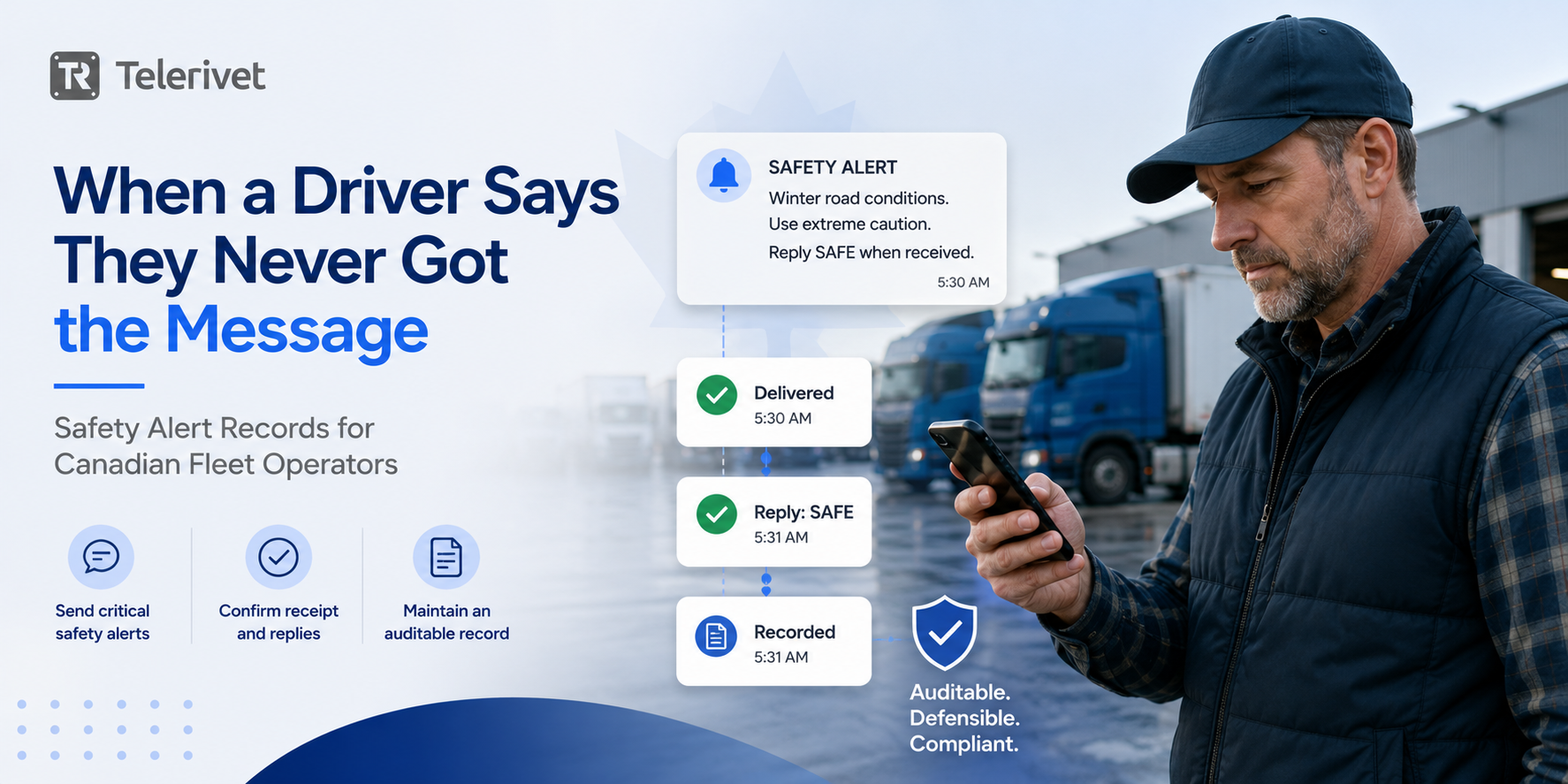
When a Driver Says They Never Got the Message: Safety Alert Records for Canadian Fleet Operators
Jul 2, 2026
It is 5:30 a.m. A dispatcher sends a route condition update to a group chat on their personal phone. Fifteen drivers are in that group. Some are already on the road. Some have not left the terminal. At least two have the chat on mute.
Business SMS in Mexico: IFT, REPEP, and Why Your Brand Name Will Not Appear
May 7, 2026
Most international teams configuring an SMS program for Mexico expect to register a sender name, just as they did in the UK, Australia, Nigeria, or Kenya. They go through the process, choose a branded sender ID, and get their first message out. The message arrives. The recipient sees a short code, not the brand name. In Mexico, this is not a deliverability problem. It is how the system works for everyone.
Business SMS in Canada: CASL, 10DLC Registration, and Why Unregistered Messages Disappear
Apr 2, 2026
Your SMS program is sending. Your platform dashboard shows messages delivered. And somewhere between your server and a Rogers or Bell subscriber's phone, a portion of that traffic is being filtered, throttled, or silently dropped because your number is unregistered A2P traffic on a domestic Canadian carrier.