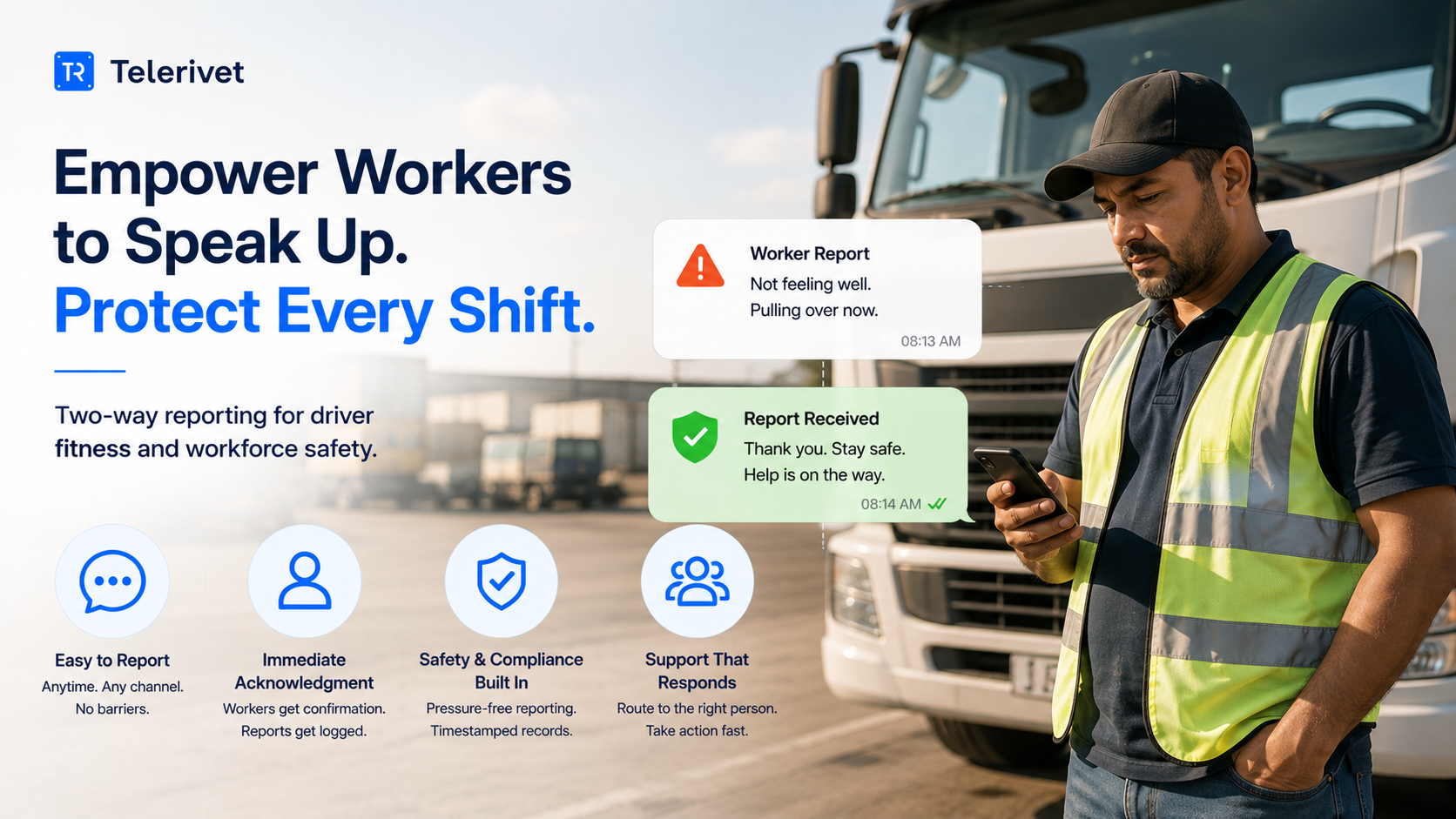
From August 1, 2026, Australian heavy vehicle drivers operate under an expanded legal duty. The NHVR's unfit to drive duty gives drivers of any heavy vehicle over 4.5 tonnes the legal standing to stop driving, and requires employers to support them in reporting fitness concerns without pressure or adverse consequences. It replaces a narrower rule that only covered fatigue, with one that covers physical illness, injury, medication side effects, and mental health.
Early Warning & Alerts
When a Third-Party App Knows About the Outage Before Your Customers Do
Jul 21, 2026
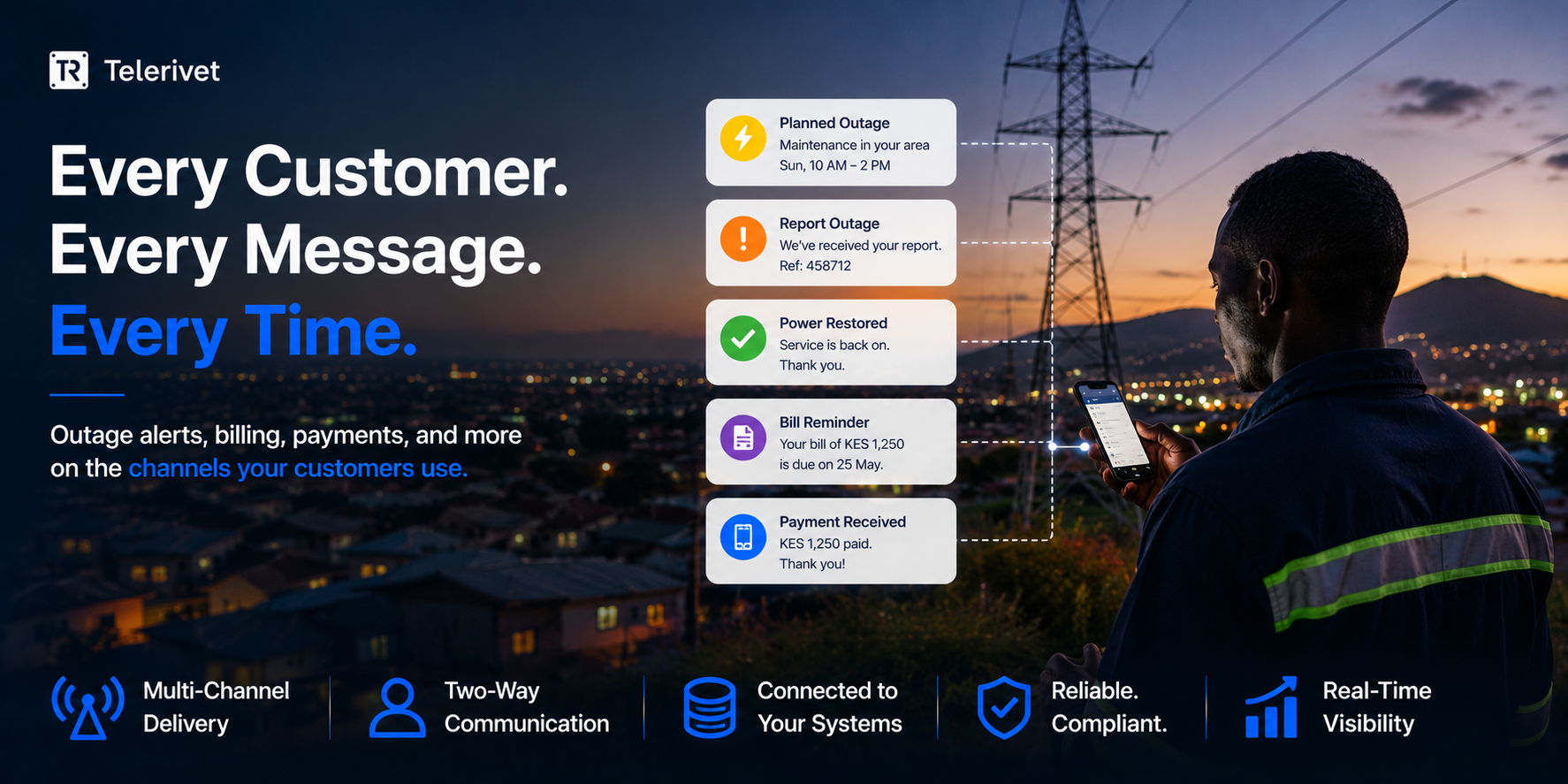
In Kenya, planned power interruptions are published as formal notices listing affected markets, schools, and villages by name, and customers are directed to the website, social media, or the newspaper to find them. The gap is real enough that independent apps exist purely to convert those notices into phone alerts. The utility holds the meter records and the phone numbers. Someone else does the notifying.

Delivered Is Not the Same as Received: The Case for Acknowledgment-Based Alerting
Jul 11, 2026
Every operations lead has lived this conversation. The alert went out. The dashboard shows delivered. And the driver, the field tech, the miner or the borrower says, with complete sincerity, that they never got the message. Both sides are telling the truth, because "delivered" and "received" describe two different events, and the gap between them is where incidents, missed payments, and failed audits live.