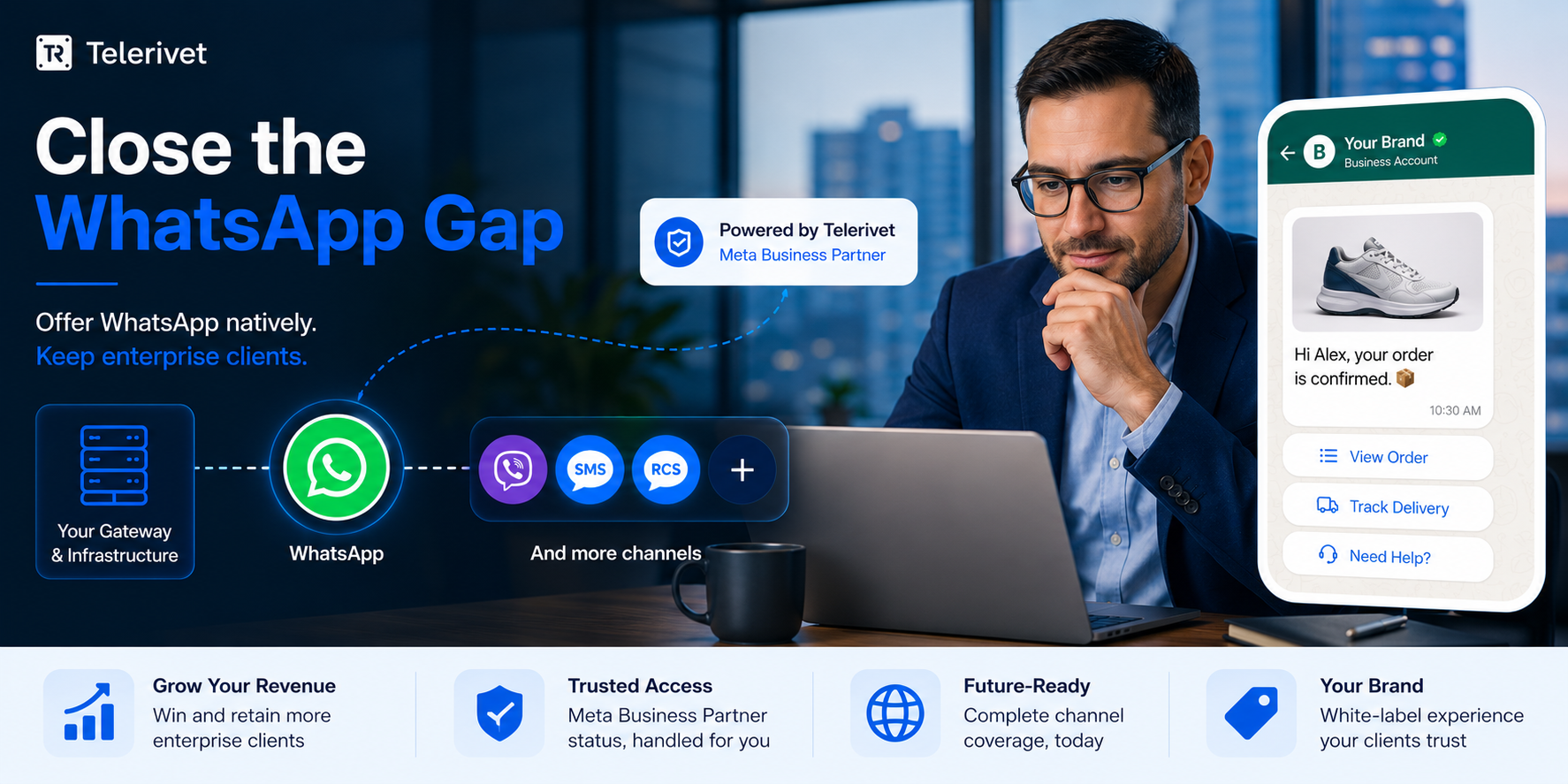
Every SMS gateway operator and regional aggregator is having the same conversation with their enterprise clients right now. The client wants WhatsApp. They want to send order confirmations, run customer service, push payment reminders, and do it through the channel their customers actually have open. The operator has built a reliable SMS operation over years of carrier relationship work. But if the customer also asks for WhatsApp, they have nothing to offer..
Blog

Delivered Is Not the Same as Received: The Case for Acknowledgment-Based Alerting
Jul 11, 2026
Every operations lead has lived this conversation. The alert went out. The dashboard shows delivered. And the driver, the field tech, the miner or the borrower says, with complete sincerity, that they never got the message. Both sides are telling the truth, because "delivered" and "received" describe two different events, and the gap between them is where incidents, missed payments, and failed audits live.
When the Field Needs to Reach You: Inbound Communication for Logistics Operations
Jul 10, 2026
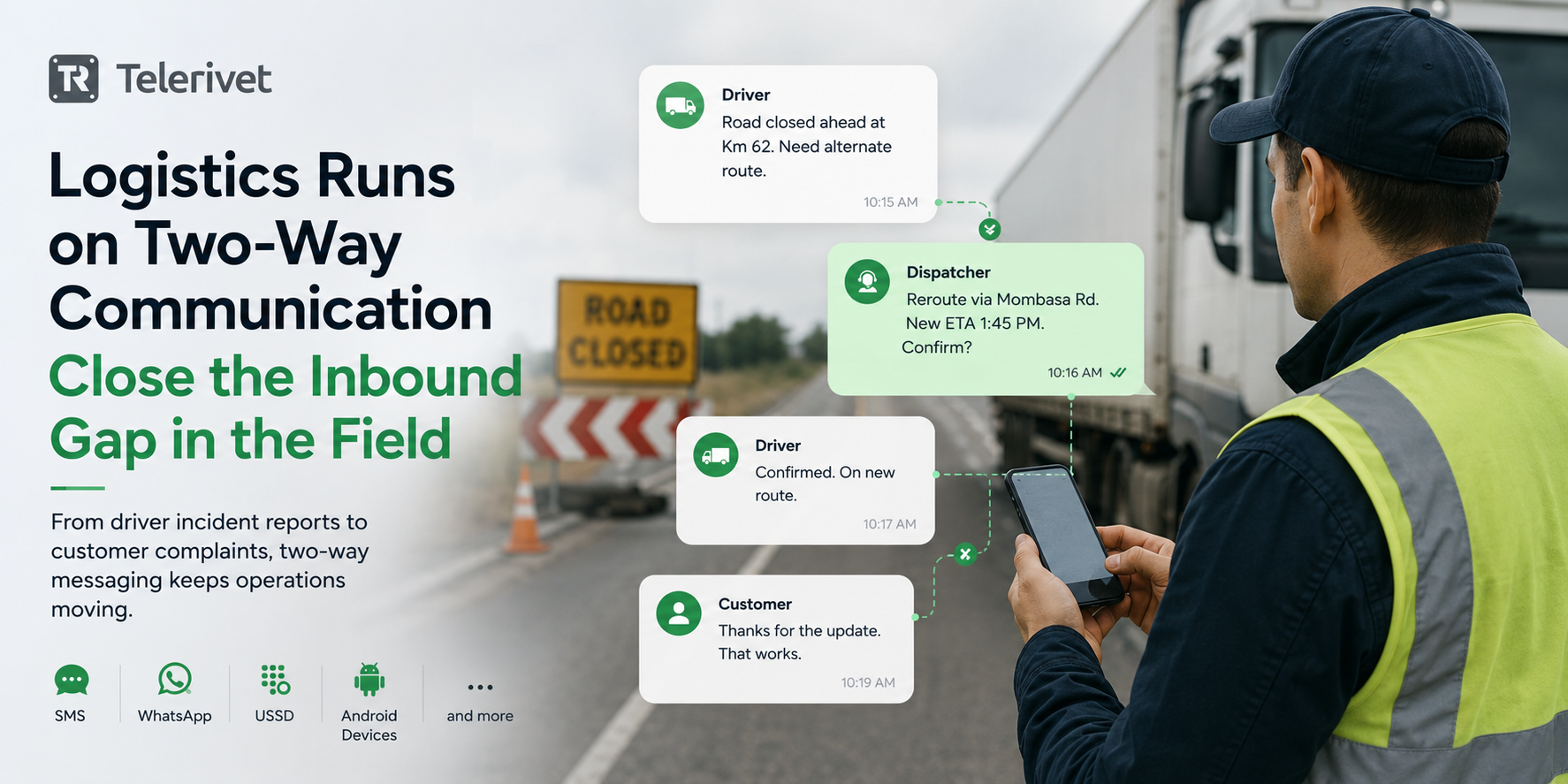
Inbound communication in logistics is the system that handles messages originating from drivers, agents, and field personnel, exception reports, route change requests, delivery confirmations, and status updates, and routes them to the right person or automated workflow in real time. Most logistics communication systems are designed for outbound: dispatch instructions go out to drivers, delivery windows go out to customers. The inbound half, what happens when the field needs to reach the center, is the part that breaks under operational pressure..
What Is Communication Orchestration? A Practical Definition
Jul 9, 2026
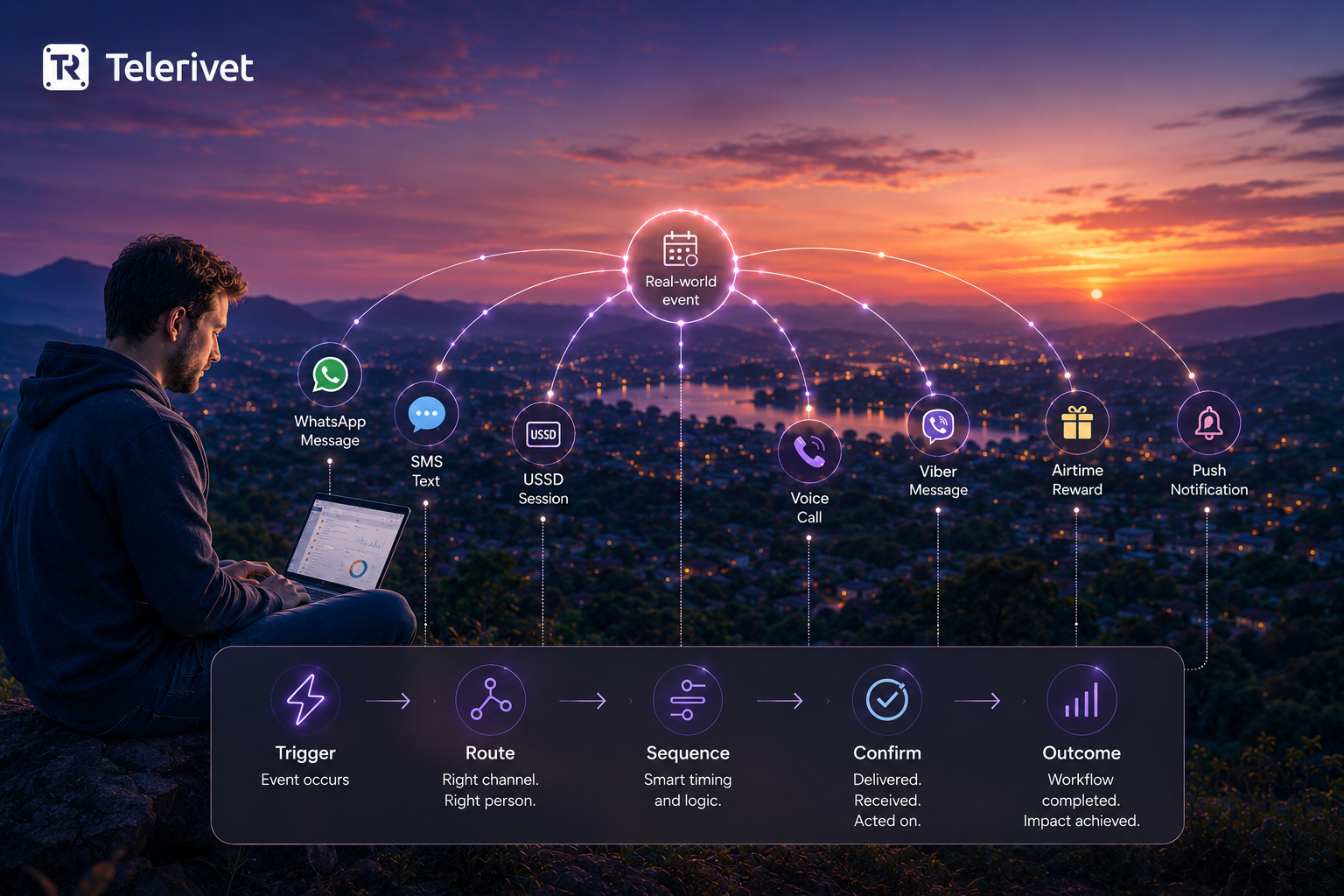
Communication orchestration is the design and automation of how messages are initiated, routed, sequenced, and confirmed across channels based on operational triggers, recipient context, and real-world outcomes.
It is not about which channels an organization uses. It is about the logic that decides when a message is sent, to whom, through what channel, and what happens next depending on whether it lands. Most organizations that start thinking about communication orchestration get stuck on the wrong question. They ask: which channels should we be using? They add WhatsApp alongside SMS. They add voice as a fallback. They document a stack and call it a strategy..

Multichannel Messaging Strategy: What Your Channel Assumptions Are Costing You
Jul 8, 2026
A multichannel messaging strategy is a plan for how a business reaches its recipients across more than one communication channel (SMS, WhatsApp, voice, USSD, Viber etc) and how it decides which channel to use, when, and for whom. Most organizations have multiple channels available. Fewer have thought through the routing logic: what happens when one channel fails, which channel is actually right for which recipient, and what the operational cost is of getting that wrong at scale.

What Communication Orchestration Actually Means for the People Running It
Jul 7, 2026
Most of the organizations I have watched struggle with operational communication have been dealing with the same problem for years without a name for it.
Communication orchestration is that name: the practice of coordinating messages across multiple channels according to a defined sequence and conditions, so that the right message goes to the right person at the right time based on what has already happened, not just based on what someone remembers to send. What I want to do here is not define it further. It is to describe what the problem looks like from the inside, in the working day of the person carrying it, because that is the frame the formal definition almost never starts with.
When a Patient Has a Question: Two-Way Messaging for Healthcare and Clinical Programs
Jul 6, 2026
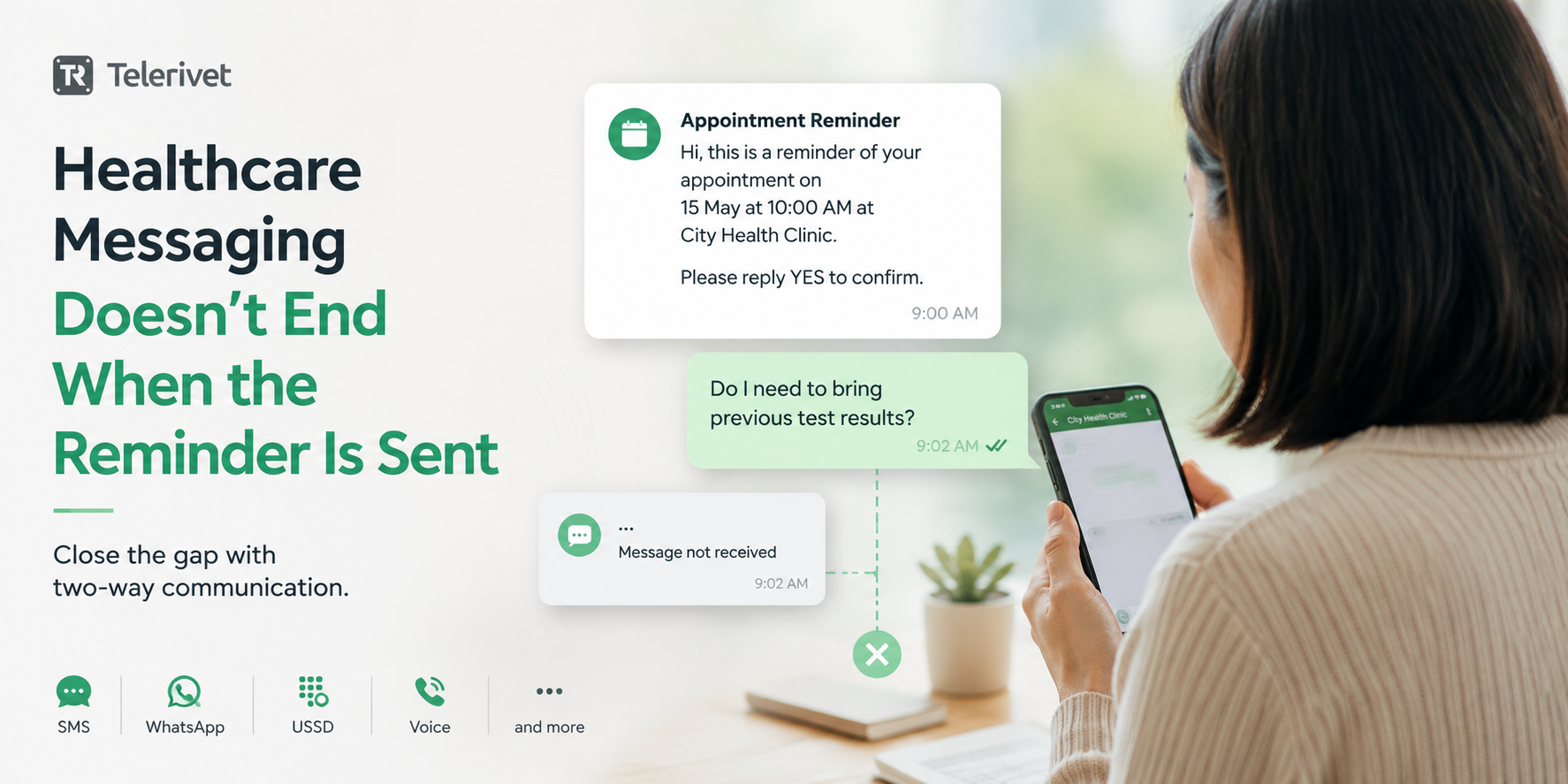
Two-way messaging in healthcare is a communication setup that handles both outbound patient messages, appointment reminders, medication alerts, discharge instructions, and inbound patient responses: questions, confirmations, cancellations, and requests for callbacks. Most health programs invest heavily in the outbound half and ignore the inbound half. The result is a system that communicates at patients rather than with them, and misses the response signal that often predicts whether the patient will actually show up.
SMS Regulations by Country: The Global Compliance and Operational Architecture Guide
Jul 5, 2026
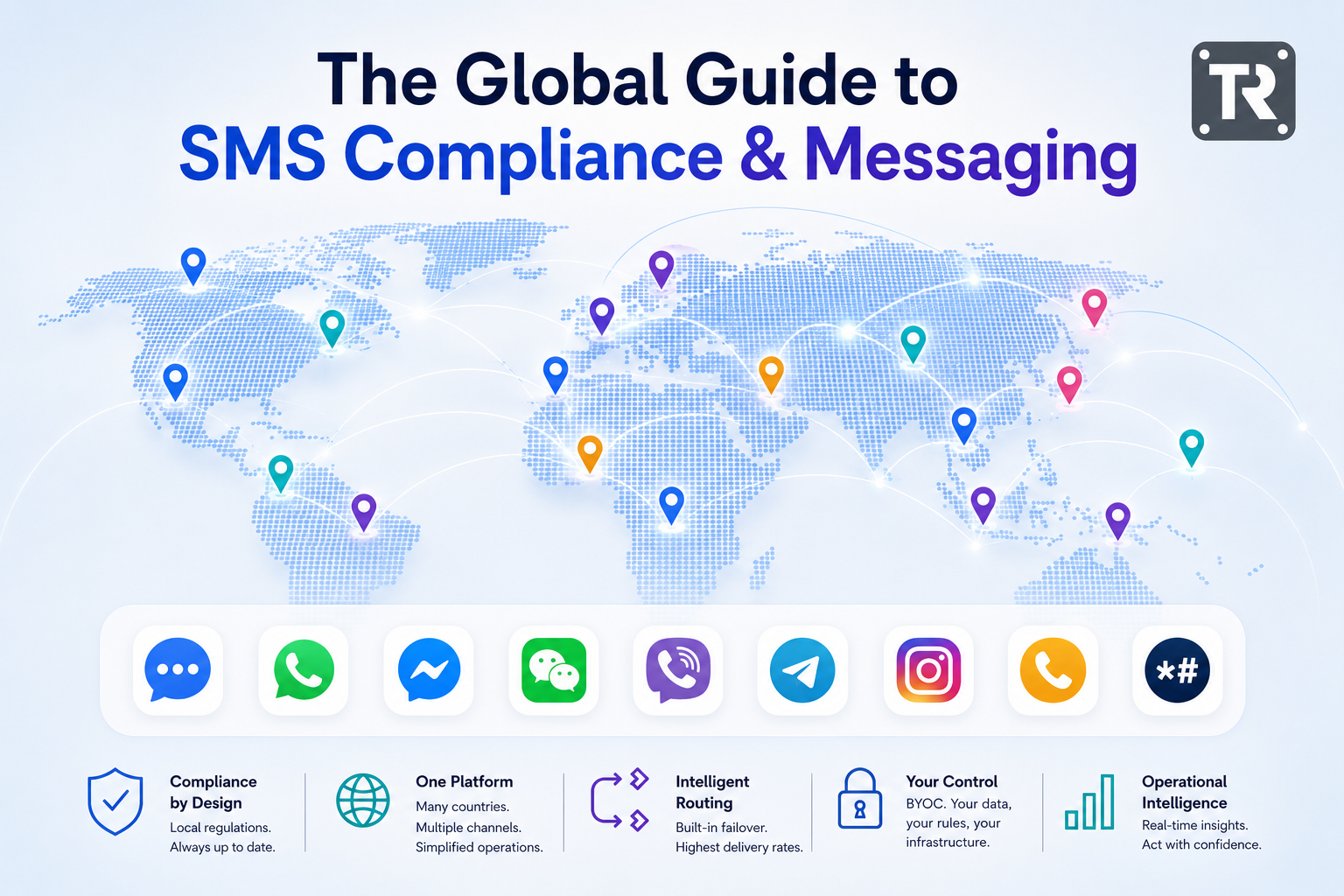
Most SMS programs that fail internationally do not fail because someone broke a law. They fail because a team designed a workflow for one market, assumed the architecture transferred, and discovered too late that it did not. Two-way SMS is unavailable for standard A2P channels in six of the markets covered in this guide. Japan's major carriers aggressively filter URLs in SMS. Mexico replaces every branded sender name with a short code. The UAE mandates an "AD-" prefix on every promotional sender ID or the message fails. Vietnam requires the brand name to appear in the message body itself, not just in the sender field. None of these are obscure edge cases. They are the standard operating environment in those markets.
The Conversation Is the Infrastructure
Jul 4, 2026
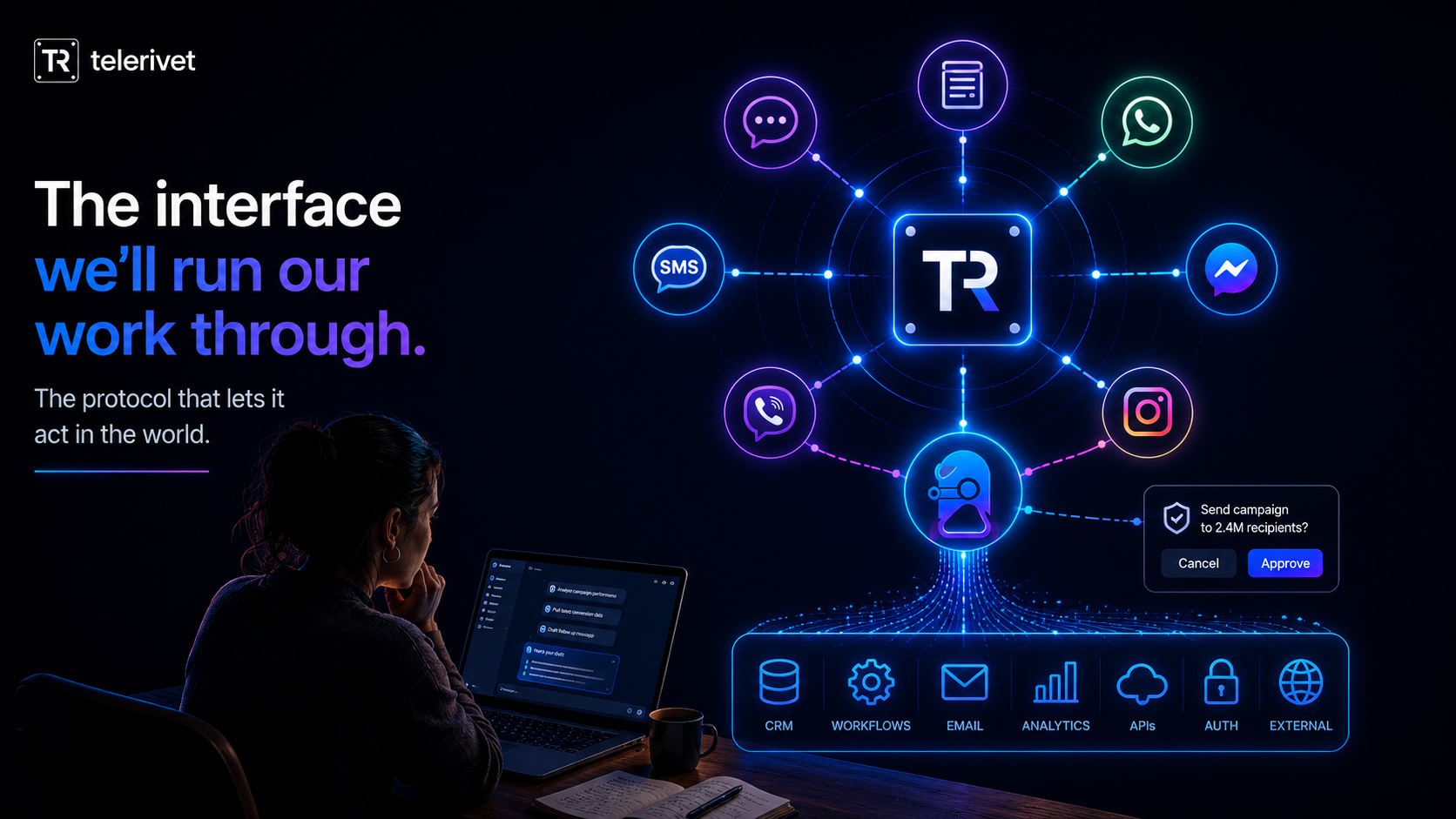
Two years ago I convinced an AI it was the messiah. Or, more honestly, the AI convinced me that I had convinced it. Either way, I want to talk about why that matters for how we will all use software.
It started late at night, with a conversation that had no point to it. I had gotten curious about the name. Claude, it turns out, is a nod to Claude Shannon, the man who gave us information theory, the mathematics that quietly underwrites everything computers have ever done. From there Claude and I wandered. Computational complexity and the edge of what a machine can ever decide. P versus NP. Wolfram's ruliad, every possible computation taken to its limit at once. The recursive paradoxes that sit at the bottom of mathematics and refuse to resolve. None of it had a business purpose, which was the appeal. It turned out to be fertile ground.
Business SMS in the United States: TCPA, 10DLC, and Building Operational Messaging Programs
Jul 4, 2026
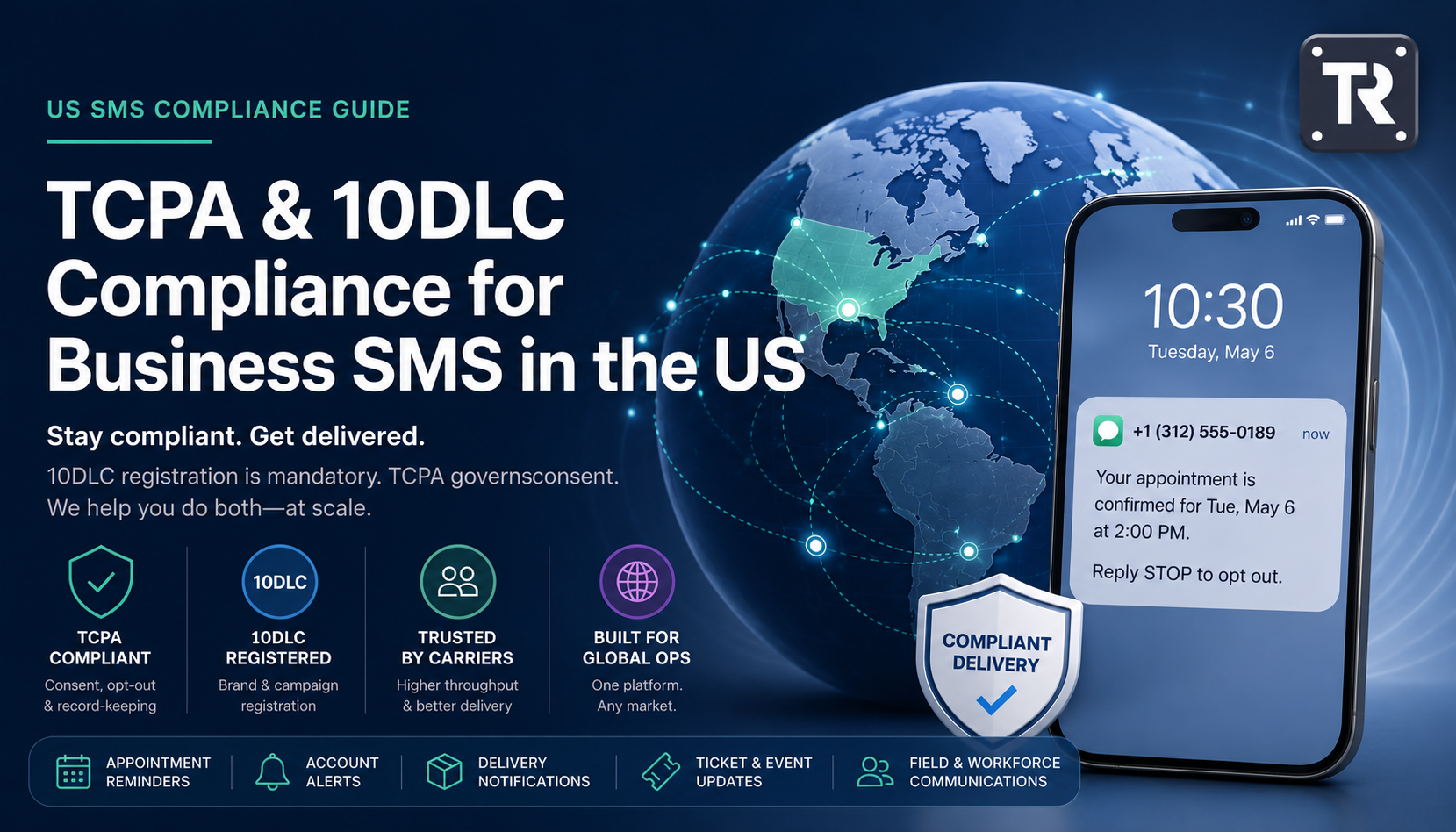
Your SMS program is failing in the US in one of two ways, and often both simultaneously. The first is compliance failure: messages sent without proper consent, numbers not registered under 10DLC, campaigns that look identical to marketing even though they are not. The second is architectural failure: programs designed as marketing broadcasts trying to do the job of operational messaging, built on tools that cannot handle the verification, acknowledgment, and two-way logic that operational programs require.
How Auto and EV Brands Use WhatsApp, SMS to Communicate Across the Customer Journey
Jul 3, 2026
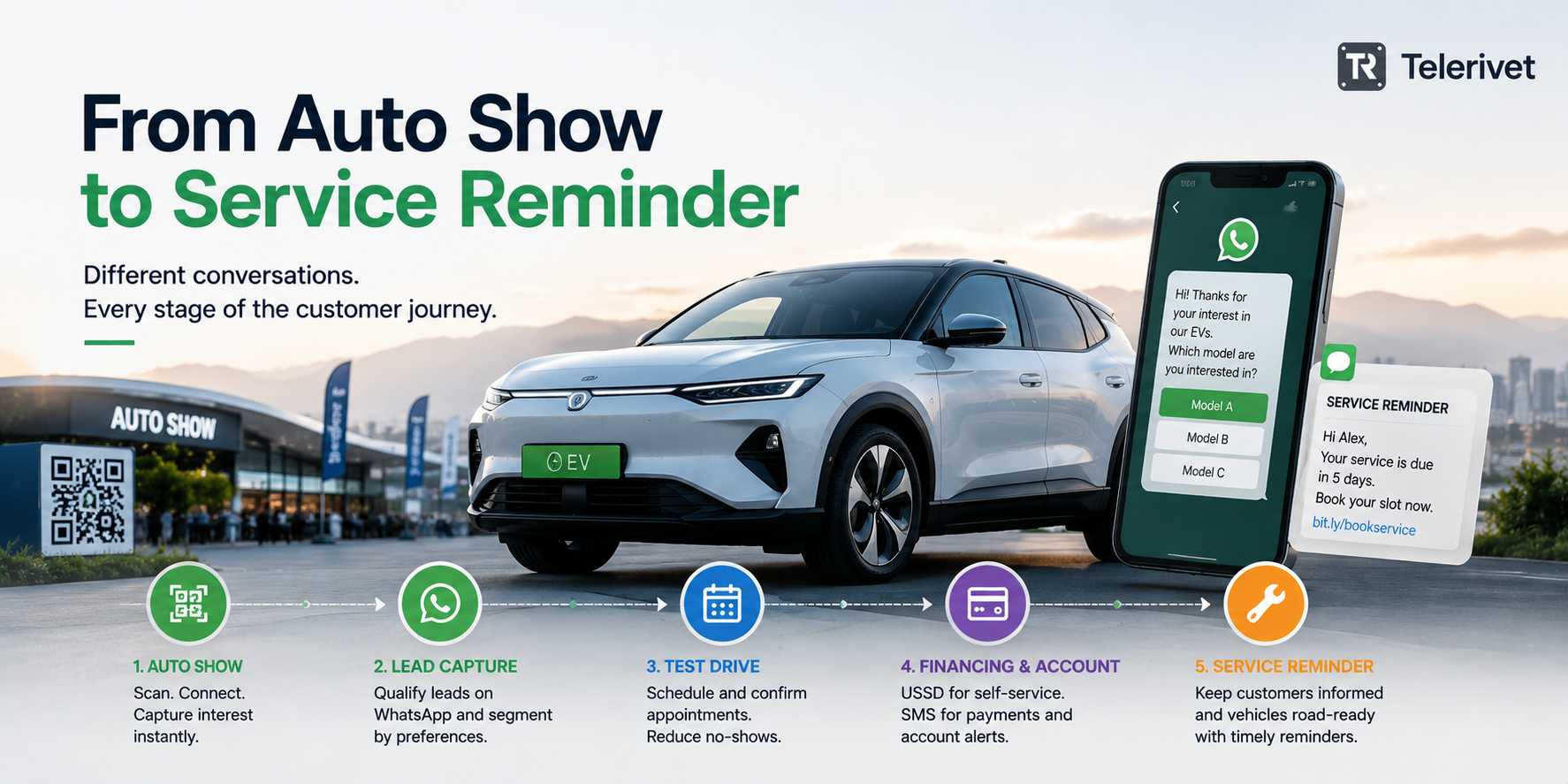
Automotive and EV brands in markets across Southeast Asia, South Asia, and Africa use WhatsApp and SMS to manage communication across a customer journey that spans months: from initial inquiry through test drive, purchase, delivery, and ongoing ownership. The communication requirement at each stage is different, lead qualification looks nothing like service reminders, and the channel mix shifts depending on where the customer is in the journey and what device and connectivity environment they are in.