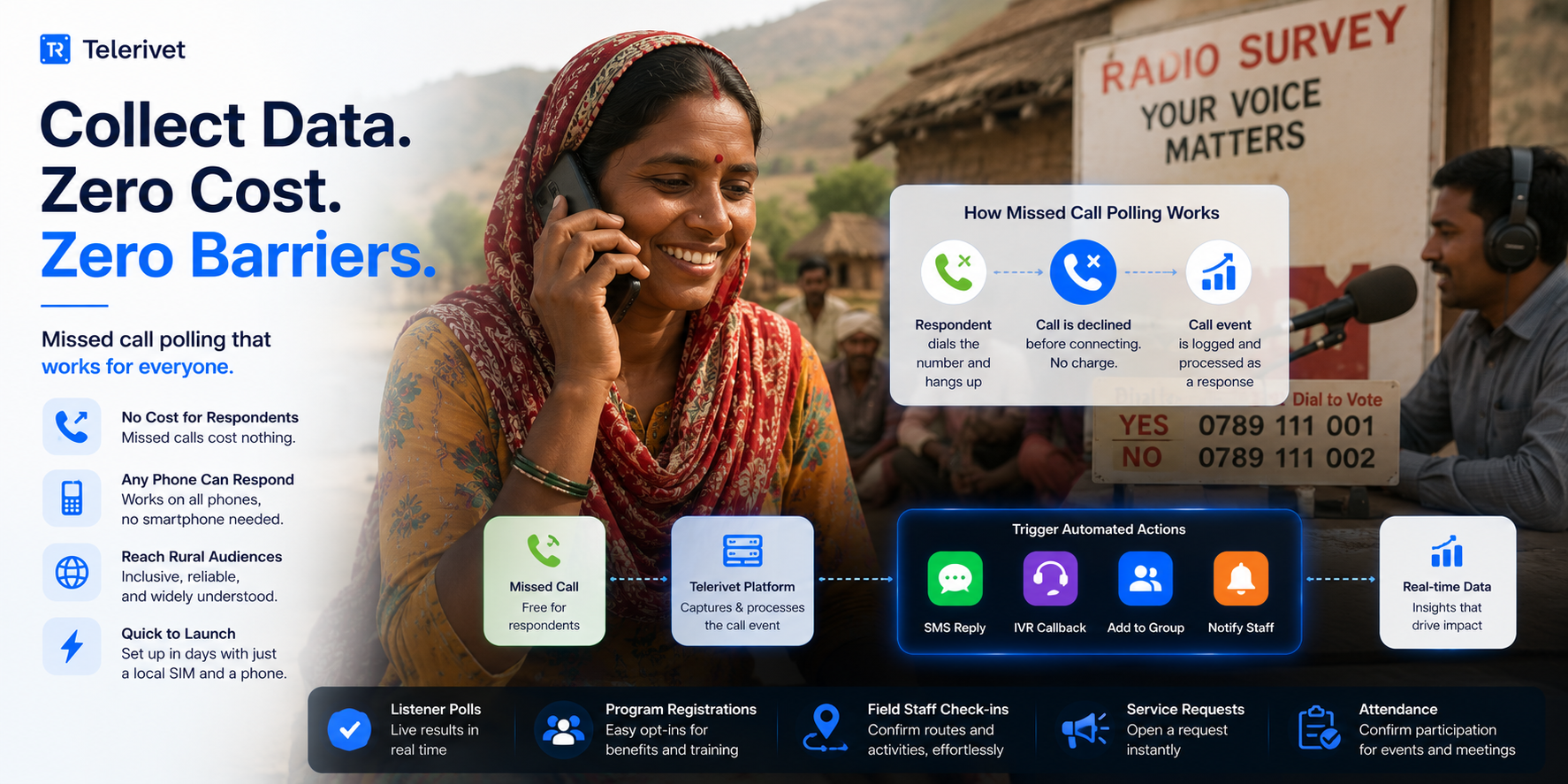
Every survey methodology has a hidden assumption built into it: that the person responding can afford to respond. For organizations collecting data from rural audiences across Sub-Saharan Africa, South Asia, and Southeast Asia, that assumption fails constantly. An SMS reply costs money. A data connection costs more. A survey that requires either one is not measuring what your audience thinks. It is measuring who can afford to tell you.
South Asia
Sending SMS in Pakistan: PTA Compliance, Four Carriers, and What Makes This Market Different
Jan 31, 2026
Pakistan's mobile market is one of the largest in South Asia and one of the least addressed in business messaging guides. With 193 million mobile subscribers, a population of 253 million of whom approximately 61% live in rural areas, and 116 million internet users as of early 2025, Pakistan is a market where SMS remains the most reliable channel for reaching audiences across both urban centers and rural communities where data connectivity is intermittent or unavailable. For development sector organizations, agricultural programs, financial services, and operational programs coordinating across geographically distributed teams, the case for building a Pakistan SMS program is straightforward. The compliance and carrier architecture that makes it work requires attention to four carriers that behave differently from each other, a national do-not-call registry that must be checked before promotional sends, and a data protection framework that is still developing.
Sending SMS in India: TRAI, DLT Registration, and the Template Scrubbing Layer
Jan 26, 2026
India's SMS compliance system is unlike every other market in this series. In Nigeria, Kenya, and Tanzania, the core requirement is registering a sender name with each operator. In Australia and the US, you register with a centralized authority or registry. India requires you to register three distinct things, your business entity, your sender header, and the exact text of every message you intend to send, before a single message can reach a recipient. Miss any one layer, or let a single character in your message body differ from the registered template, and the carrier's system drops the message silently. Your platform shows it as sent. It never arrives.
Sending SMS in Bangladesh: BTRC, Masking SMS, and Why Two-Way Requires a Different Architecture
Jan 23, 2026
Bangladesh gives its two SMS traffic categories names you will not find in any other market covered in this series. What most markets call an alphanumeric sender ID, Bangladesh calls masking SMS. What most markets call a numeric sender, Bangladesh calls non-masking SMS. The distinction is not just terminological. It determines whether your messages can reach NDNC-registered numbers, whether you can send outside business hours, which BTRC-licensed aggregator route is appropriate, and whether your brand name appears in the sender field at all. Getting the category wrong means either your messages reach the wrong numbers through the wrong route, or they fail to reach anyone reliably.