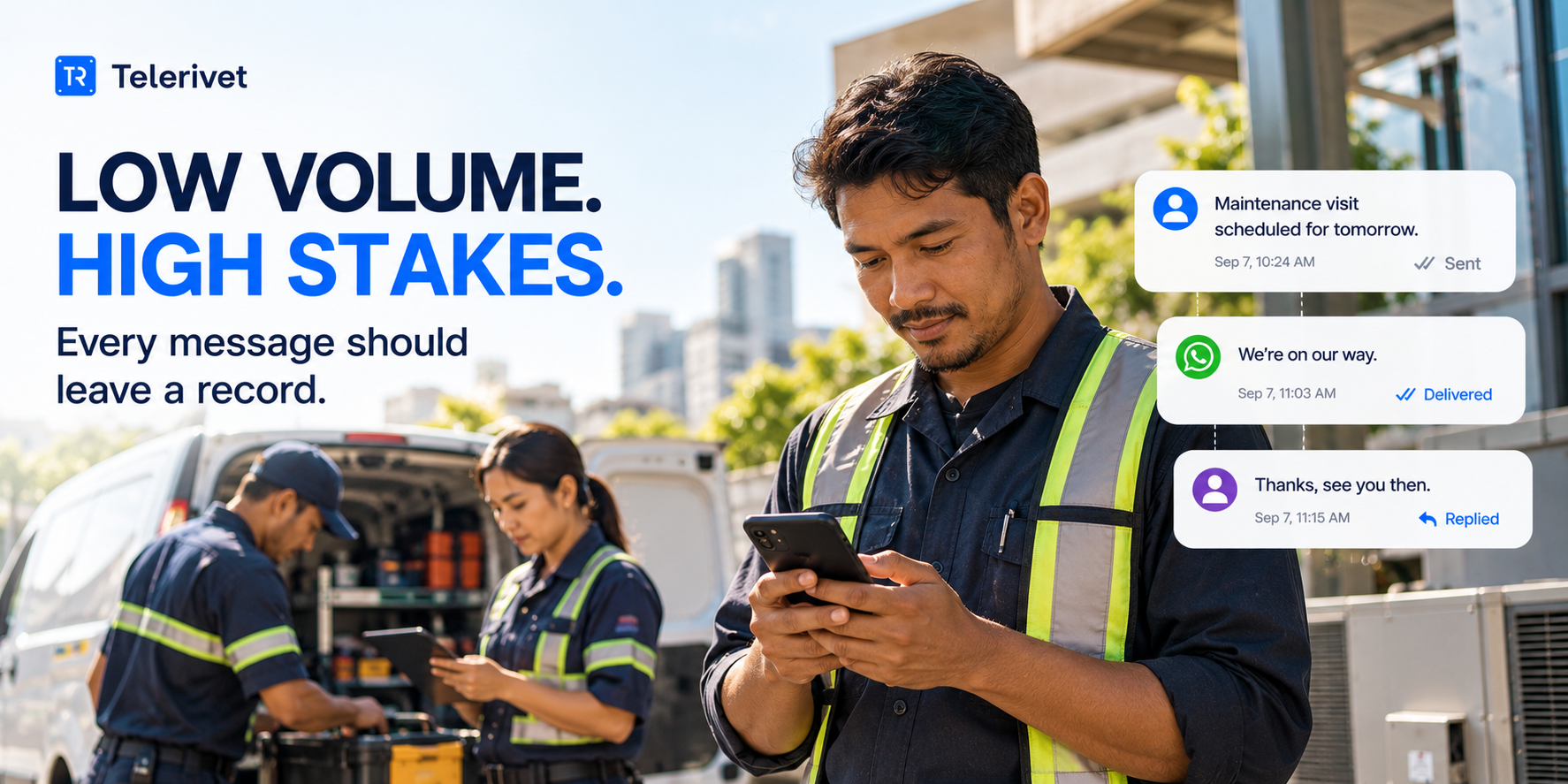
Over the past few months we have sat in on a run of conversations with operations heads at service firms, companies of twenty to a hundred people that maintain equipment, manage facilities, or run service contracts for larger clients. The stories are close to identical, and so is the objection that comes at the end: "We're too small for this."
Field Agent Dispatch & Confirmation
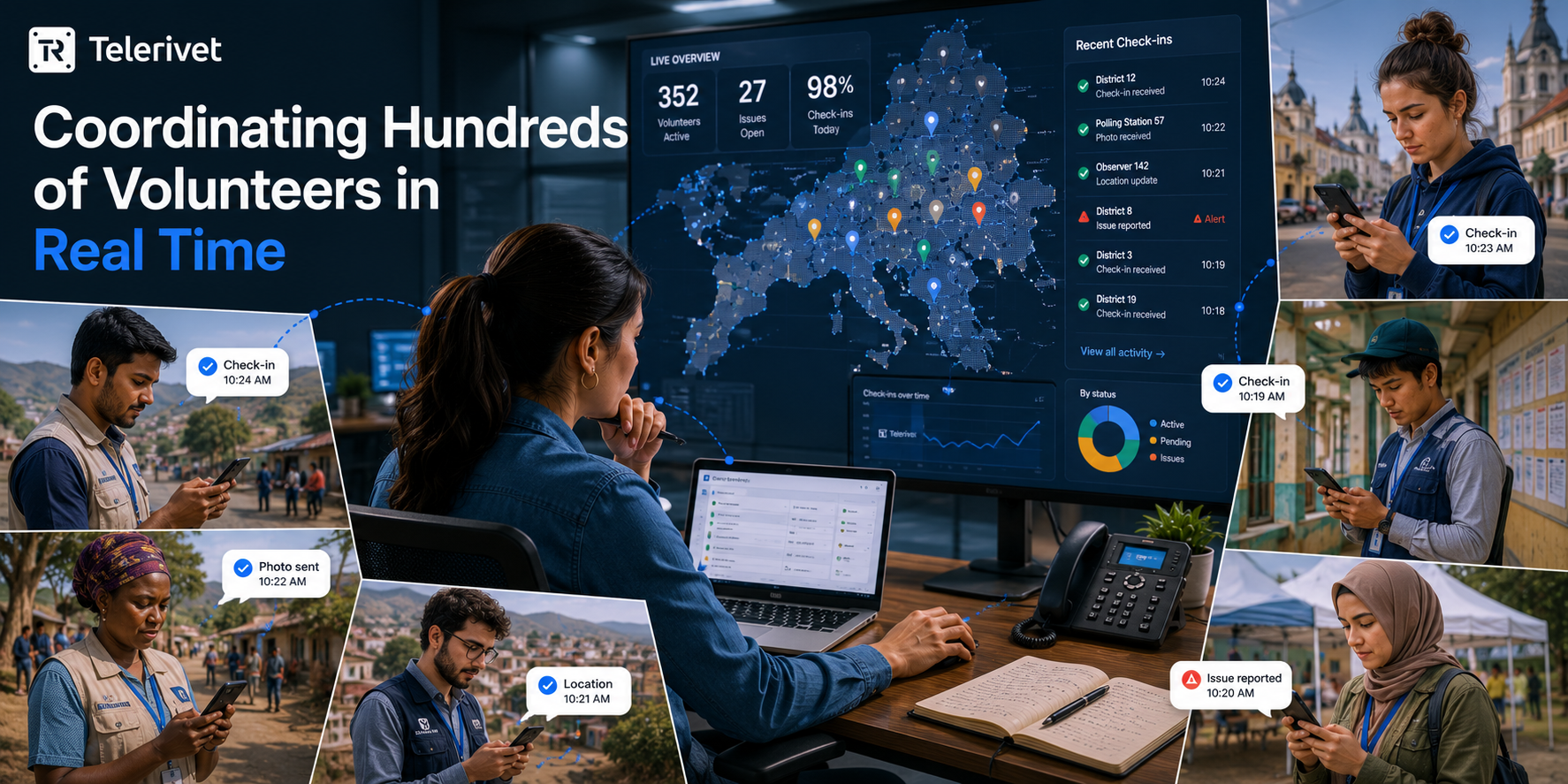
How Civic Observation Programs Coordinate Hundreds of Volunteers in Real Time
Aug 24, 2026
Civic observation field coordination is the real-time communication workflow that connects a central operations team with distributed volunteers across three phases: assignment dispatch before the window opens, structured status reporting during it, and escalation routing when anomalies arise. In most emerging markets, this workflow runs on SMS because SMS is the only channel that reaches every volunteer regardless of device type, data plan, or connectivity level.
Running a civic observation program is one of the more demanding field coordination problems in the public sector. You have hundreds or thousands of trained volunteers deployed across dispersed locations. The operational window is compressed and often unpredictable. Every check-in missed, every assignment unclear, every escalation that reaches the wrong person has consequences that compound quickly. And unlike most field programs, there is rarely a second window to fix what went wrong.

When the Work Happens Off the Grid: Coordinating Public Programs at Scale
Aug 17, 2026
Field coordination for public programs is the real-time exchange of instructions, status reports, and alerts between a central operations team and distributed agents or participants in the field. Across most of the world, this workflow runs on SMS because SMS is the only channel that works everywhere.
When I was a Peace Corps volunteer in Tanzania, I learned something that has shaped how I think about technology ever since. The most important work people were trying to accomplish didn't happen where the internet was. It happened in villages connected by dirt roads, in health posts with no reliable power, in community centers where a feature phone was the most sophisticated device in the room. The question was never whether people wanted to coordinate or communicate at scale. The question was what tools were actually usable in the conditions they were operating in.
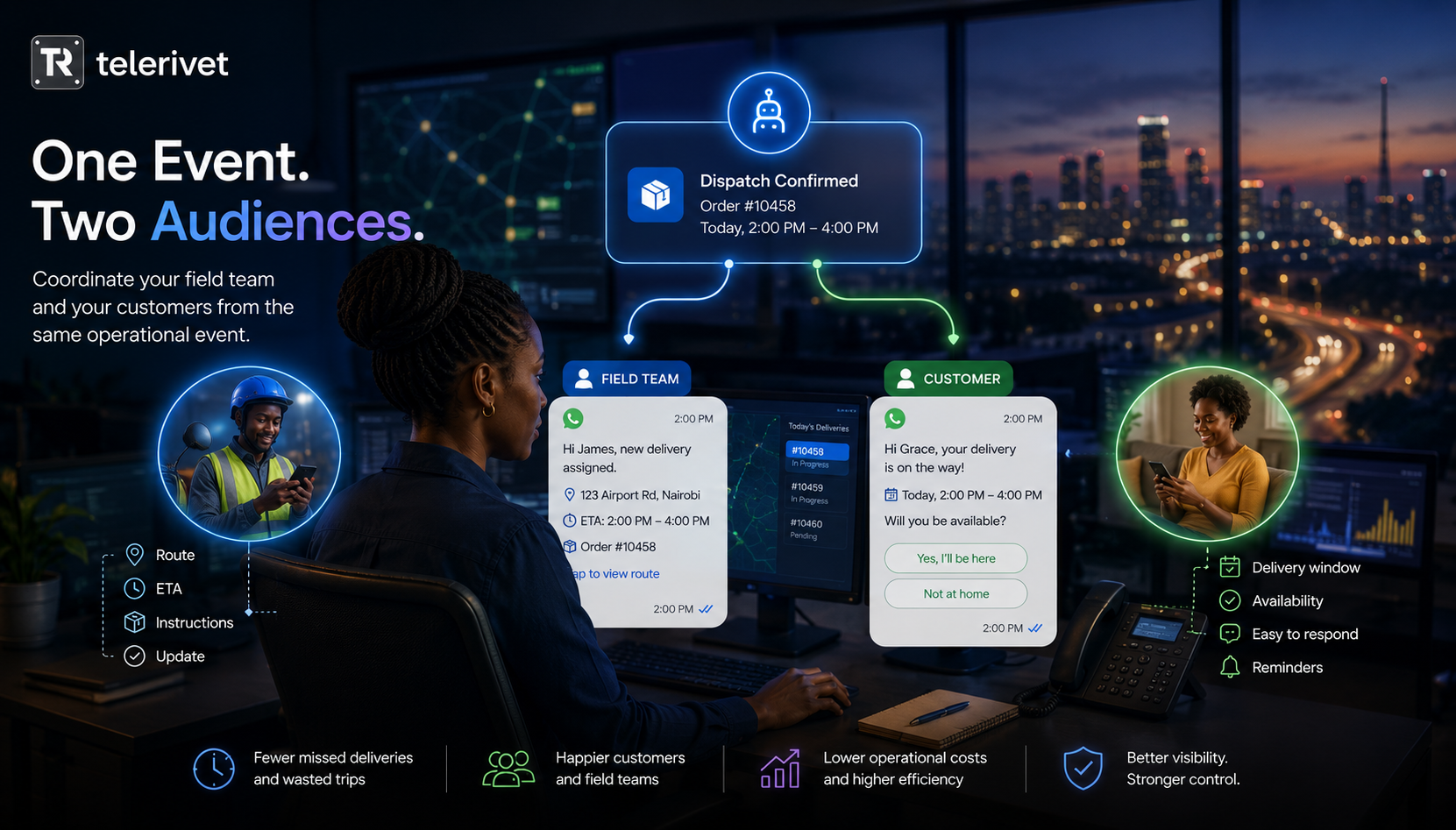
The Simultaneous Coordination Problem: Your Field Team and Your Customer Both Need a Message at the Same Time
Aug 11, 2026
Most organizations that run field operations have learned to communicate with their field teams. They send dispatch instructions. They receive delivery confirmations. They track location and status through some combination of messages, calls, and spreadsheet updates. That part, however imperfectly, tends to work.
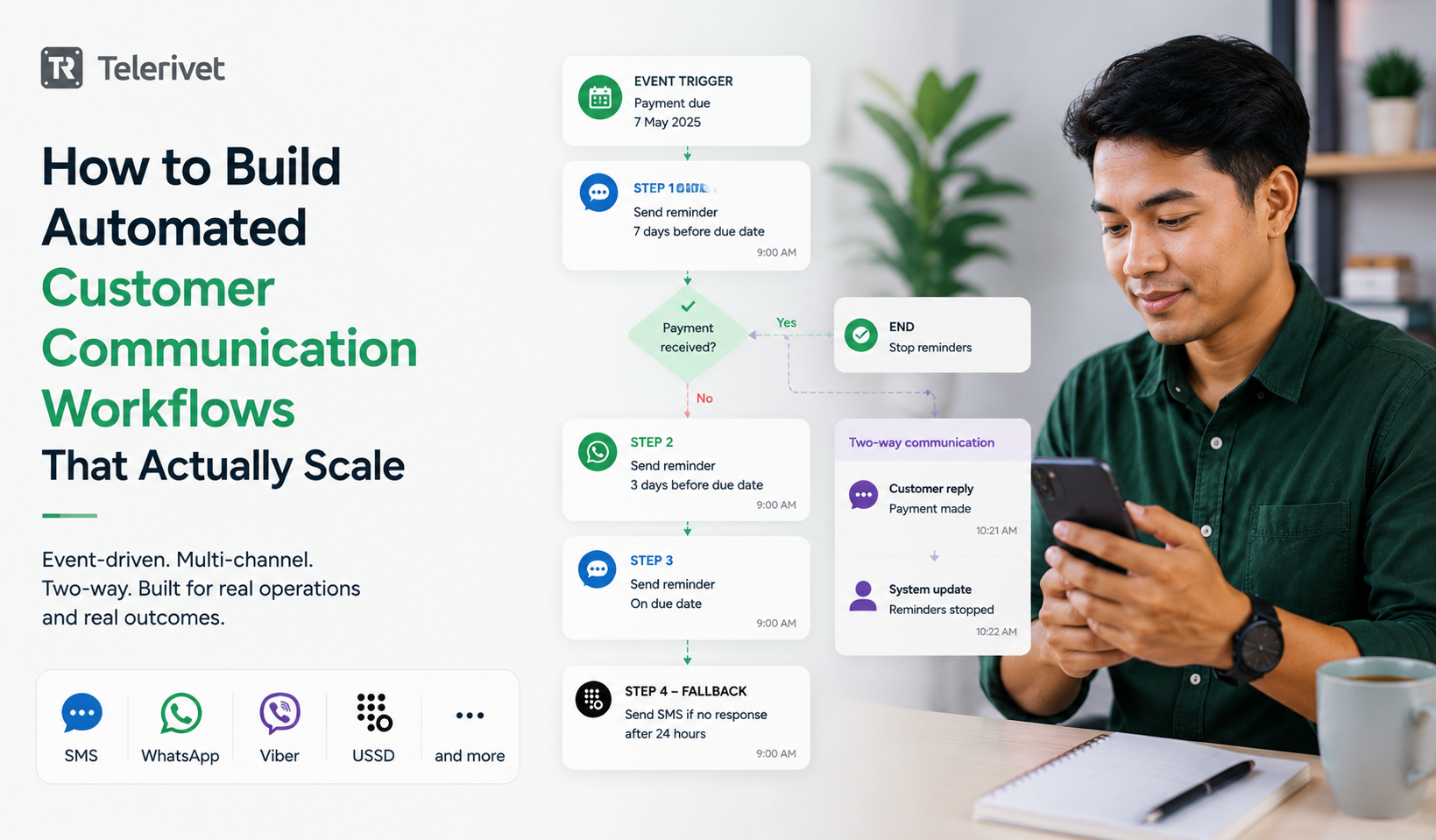
How to Build Automated Customer Communication Workflows That Actually Scale
Jul 16, 2026
An automated customer communication workflow is a set of triggered, conditional messaging rules that runs without manual intervention - sending the right message, to the right recipient, through the right channel, at the right moment, and adjusting based on what happens next. The word "automated" is the easy part. The hard part is "scale", building workflows that stay reliable and maintainable as recipient volume, market count, and message complexity grow.
A payment reminder sent three days late does not prevent a missed payment. An appointment confirmation that lands on the wrong channel does not reduce no-shows. A delivery notification triggered by the wrong system event is worse than no notification at all.The operational problem most organizations are actually solving is not whether to use SMS or WhatsApp. It is how to build communication workflows that run reliably, adapt to real-world conditions, and stay consistent as customer volume grows, without requiring a technical team to maintain them every week.
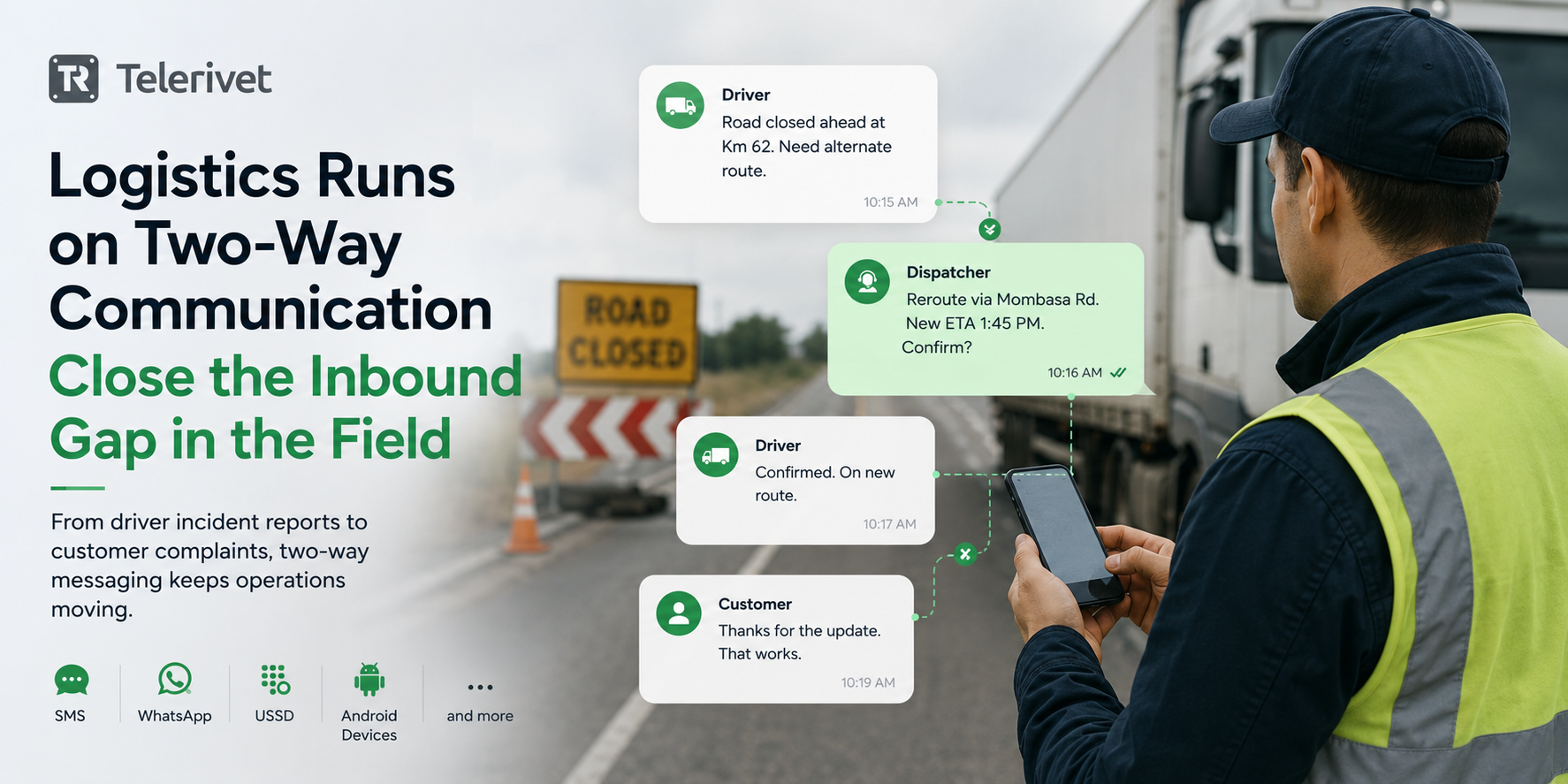
When the Field Needs to Reach You: Inbound Communication for Logistics Operations
Jul 10, 2026
Inbound communication in logistics is the system that handles messages originating from drivers, agents, and field personnel, exception reports, route change requests, delivery confirmations, and status updates, and routes them to the right person or automated workflow in real time. Most logistics communication systems are designed for outbound: dispatch instructions go out to drivers, delivery windows go out to customers. The inbound half, what happens when the field needs to reach the center, is the part that breaks under operational pressure..