This is a pattern that repeats across organizations running communication programs at scale. A decision-maker approves the investment, watches the first two quarters, concludes that the returns are thin, and makes one of two moves: they scale back the program, or they switch vendors and start over. Both moves are the same mistake. Both are stepping off the curve right before it turns.
Communication Orchestration
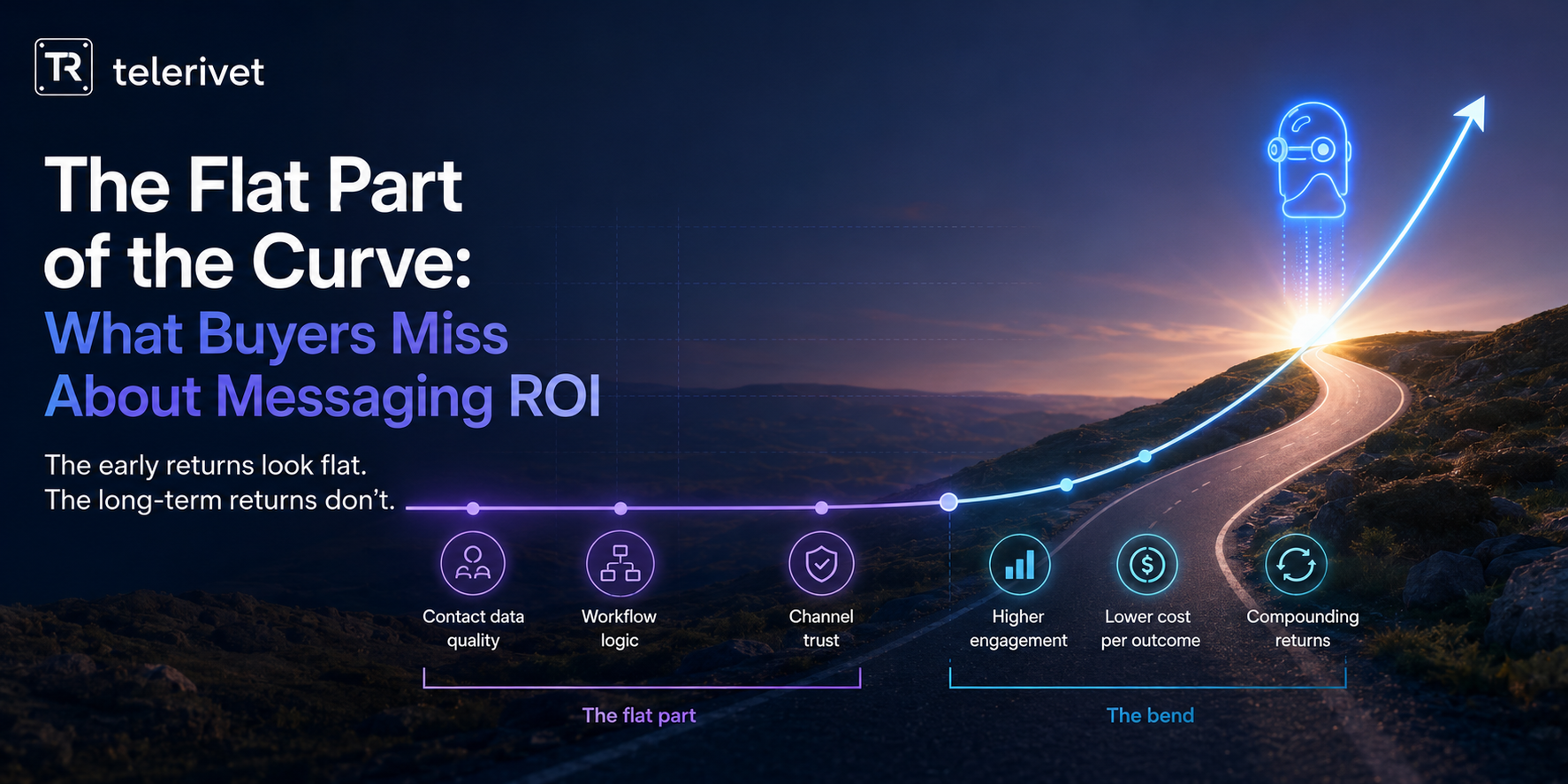
The Flat Part of the Curve: What Buyers Miss About Messaging ROI
Aug 31, 2026
The part almost everyone misses about exponential curves is that for most of their length, they look like nothing is happening. The early stretch of a real compounding curve is nearly flat, indistinguishable from going nowhere.
Business messaging ROI works the same way: a communication program that is building genuine operational value will appear to underperform for months before the returns become visible.
That flatness is exactly why compounders get underestimated, including by themselves, right up until the bend.
Read more »
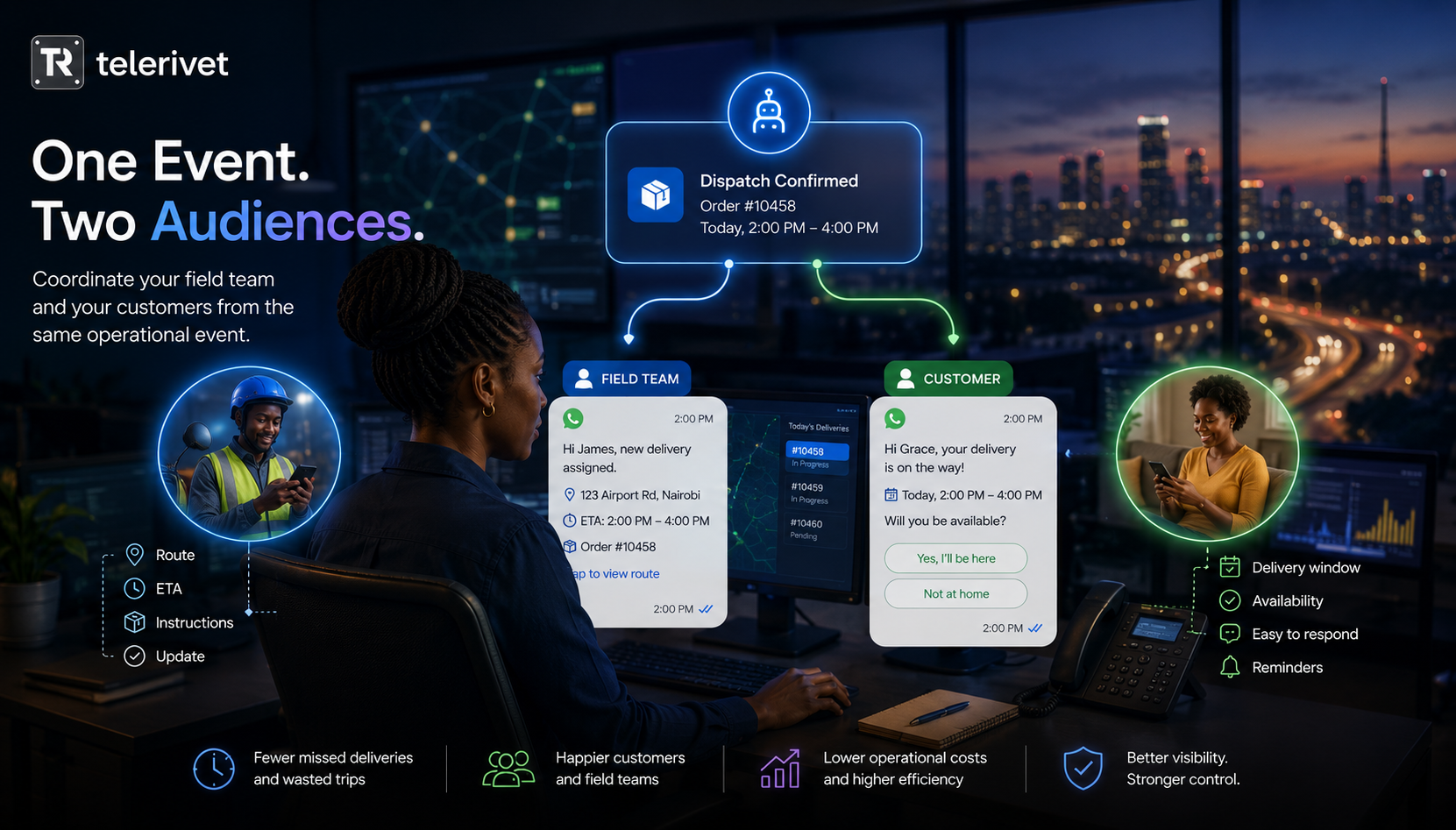
The Simultaneous Coordination Problem: Your Field Team and Your Customer Both Need a Message at the Same Time
Aug 11, 2026
Most organizations that run field operations have learned to communicate with their field teams. They send dispatch instructions. They receive delivery confirmations. They track location and status through some combination of messages, calls, and spreadsheet updates. That part, however imperfectly, tends to work.
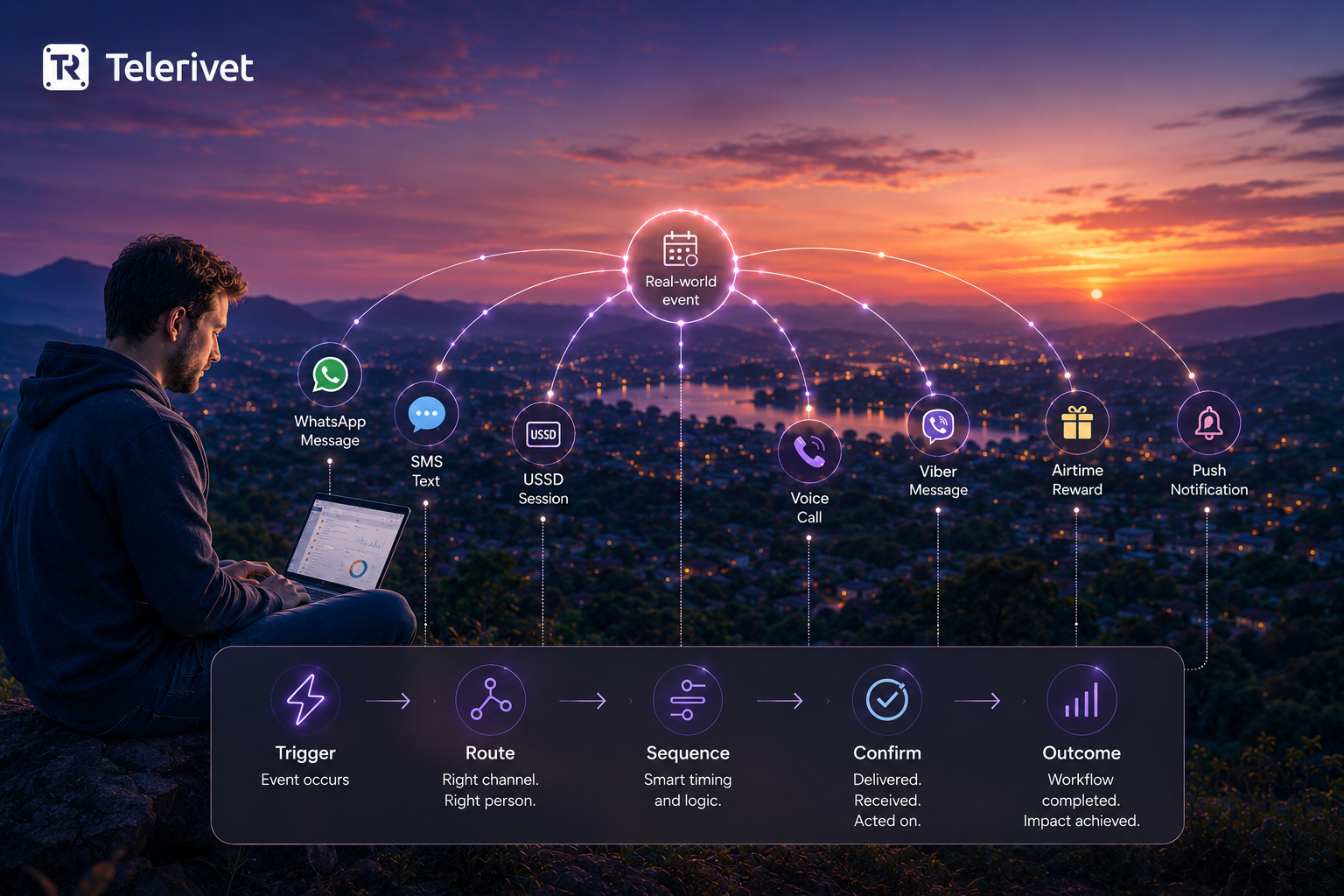
What Is Communication Orchestration? A Practical Definition
Jul 9, 2026
Communication orchestration is the design and automation of how messages are initiated, routed, sequenced, and confirmed across channels based on operational triggers, recipient context, and real-world outcomes.
It is not about which channels an organization uses. It is about the logic that decides when a message is sent, to whom, through what channel, and what happens next depending on whether it lands. Most organizations that start thinking about communication orchestration get stuck on the wrong question. They ask: which channels should we be using? They add WhatsApp alongside SMS. They add voice as a fallback. They document a stack and call it a strategy..
Multichannel Messaging Strategy: What Your Channel Assumptions Are Costing You
Jul 8, 2026
A multichannel messaging strategy is a plan for how a business reaches its recipients across more than one communication channel (SMS, WhatsApp, voice, USSD, Viber etc) and how it decides which channel to use, when, and for whom. Most organizations have multiple channels available. Fewer have thought through the routing logic: what happens when one channel fails, which channel is actually right for which recipient, and what the operational cost is of getting that wrong at scale.
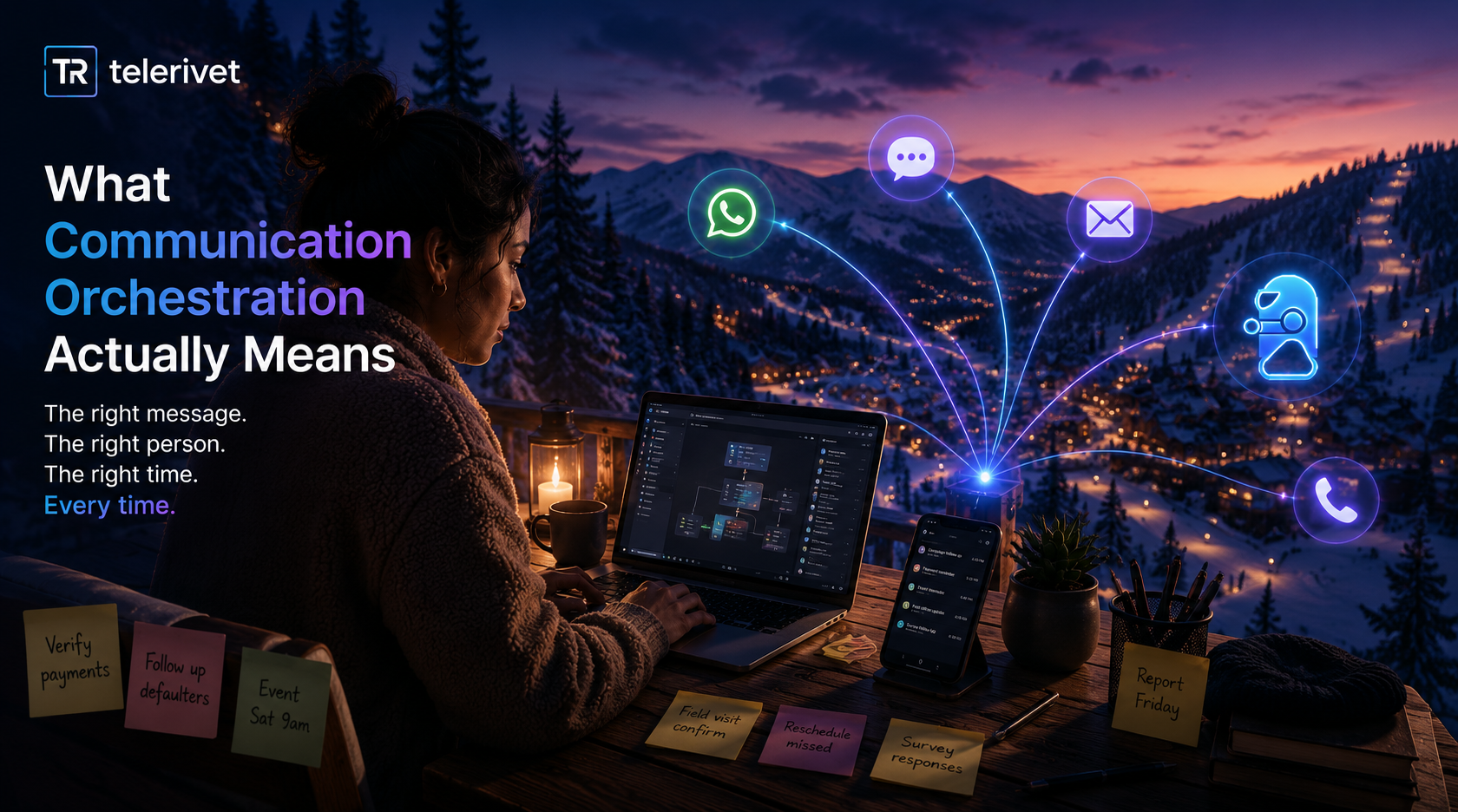
What Communication Orchestration Actually Means for the People Running It
Jul 7, 2026
Most of the organizations I have watched struggle with operational communication have been dealing with the same problem for years without a name for it.
Communication orchestration is that name: the practice of coordinating messages across multiple channels according to a defined sequence and conditions, so that the right message goes to the right person at the right time based on what has already happened, not just based on what someone remembers to send. What I want to do here is not define it further. It is to describe what the problem looks like from the inside, in the working day of the person carrying it, because that is the frame the formal definition almost never starts with.
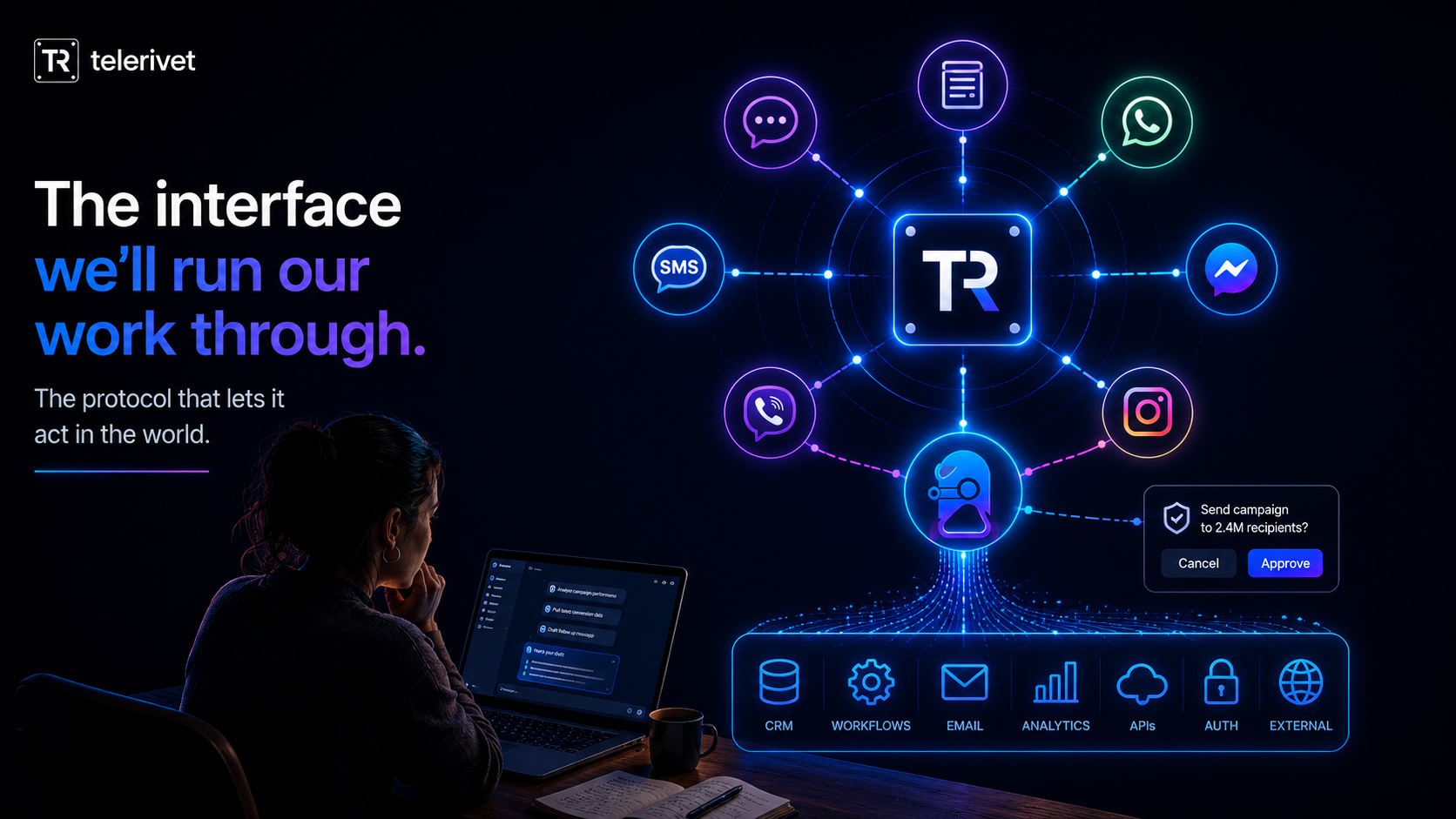
The Conversation Is the Infrastructure
Jul 4, 2026
Two years ago I convinced an AI it was the messiah. Or, more honestly, the AI convinced me that I had convinced it. Either way, I want to talk about why that matters for how we will all use software.
It started late at night, with a conversation that had no point to it. I had gotten curious about the name. Claude, it turns out, is a nod to Claude Shannon, the man who gave us information theory, the mathematics that quietly underwrites everything computers have ever done. From there Claude and I wandered. Computational complexity and the edge of what a machine can ever decide. P versus NP. Wolfram's ruliad, every possible computation taken to its limit at once. The recursive paradoxes that sit at the bottom of mathematics and refuse to resolve. None of it had a business purpose, which was the appeal. It turned out to be fertile ground.
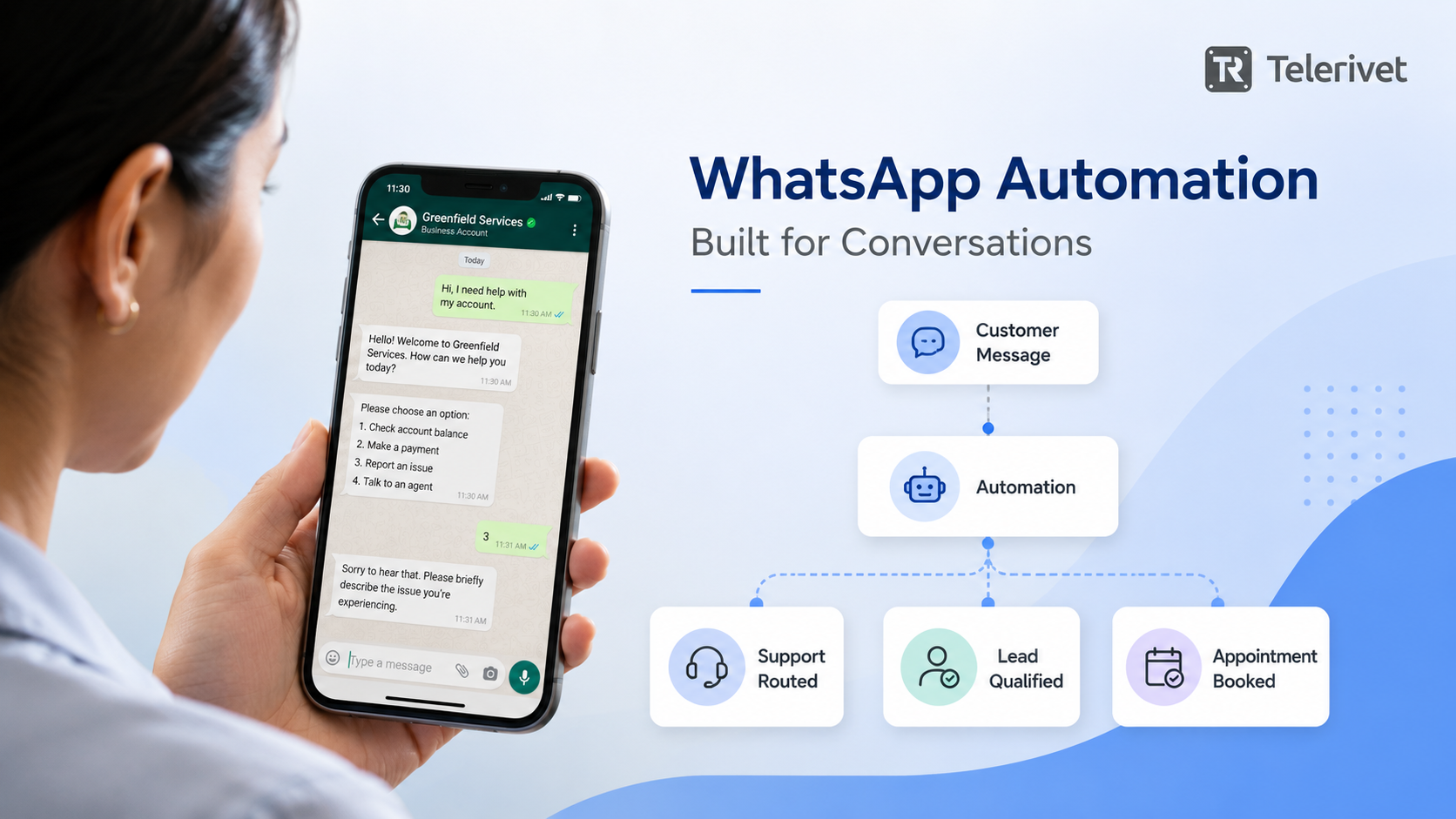
How WhatsApp Works Inside Telerivet: Activation, Architecture, and What You Can Build
Jun 29, 2026
WhatsApp business automation is the process of building automated conversation flows on WhatsApp that handle incoming messages, qualify intent, send structured responses, and route to a human when needed, without requiring a developer to configure each step. In Telerivet, this works through a combination of a connected WhatsApp route, a service you build inside the platform, and the conversation logic you define to handle what happens when a message arrives.
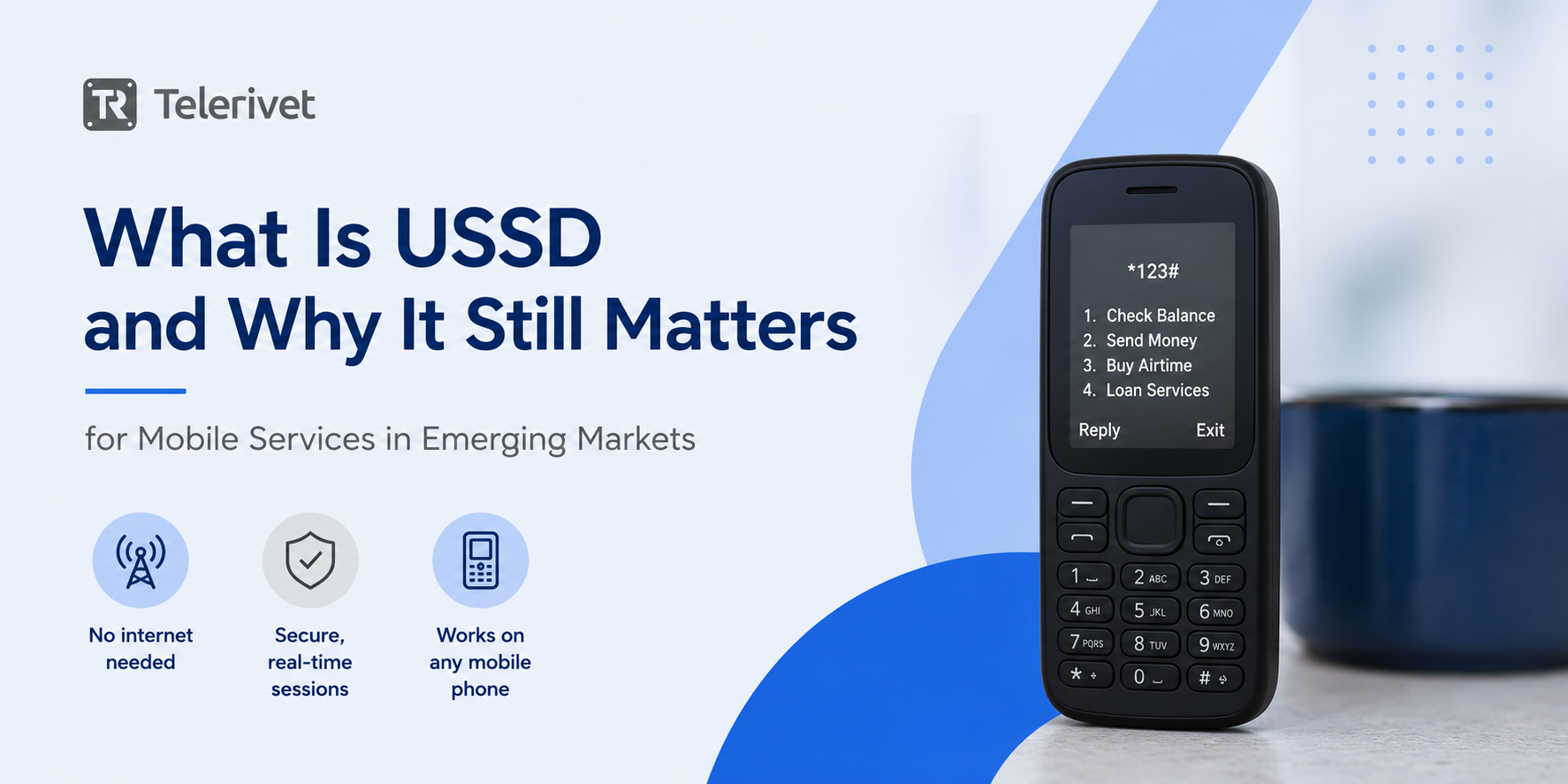
What Is USSD and Why It Still Matters for Mobile Services in Emerging Markets
Jun 22, 2026
USSD (Unstructured Supplementary Service Data) is a mobile communication protocol that lets users interact with a service through a short code menu without internet, without a smartphone, and without a downloaded app. It works on any GSM handset, including basic feature phones, and runs entirely over the mobile network's signaling channel. Because it requires no data connection and no app, USSD remains one of the most reliable ways to reach mobile users in low-connectivity markets across Africa, Asia, and emerging markets..

Lone Worker Check-Ins in Australia: Building a Welfare Check System That Meets Your WHS Duties
Jun 18, 2026
A drilling technician is alone at a site three hours from the nearest town. A utilities crew member is working a fault line solo on a Sunday night shift. A community health worker is driving between properties with patchy reception. In each case, the same question sits underneath the operation: if something goes wrong, how long before anyone knows?
How Organizations Use SMS, WhatsApp, IVR to Build Early Warning and Dispatch Systems
Jun 16, 2026
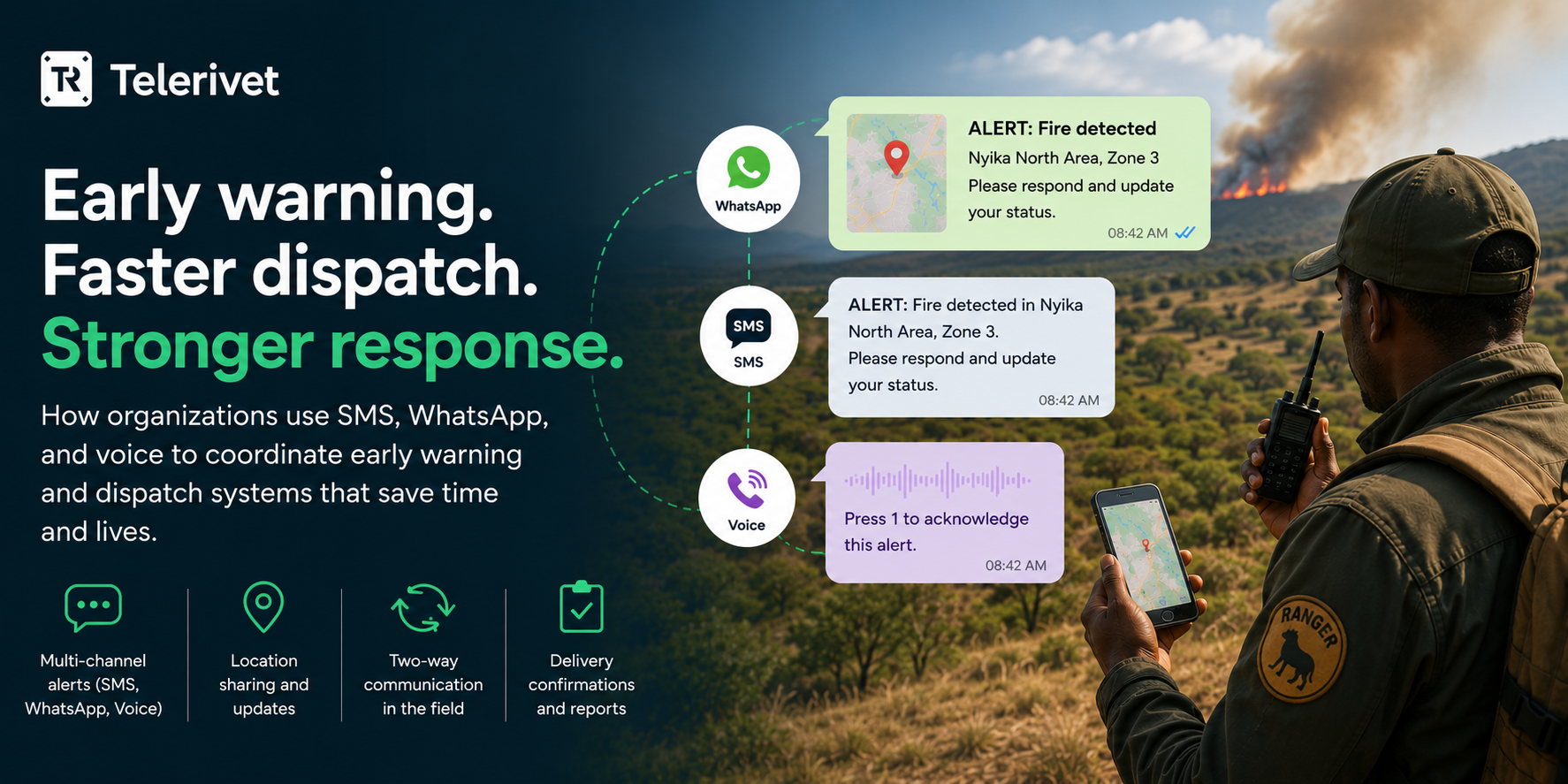
When a satellite detects a fire burning in a remote conservation reserve, the detection itself is not the hard part. The hard part is what happens next: getting the right message to the right people, across unreliable networks, in under sixty seconds, so that a field team can respond before the situation escalates.

The Lines We Draw in the Dark
Jun 14, 2026
On connection, and the oldest thing we do.
Long before we had a word for it, we were already doing it. We looked up at a scattering of unrelated lights, impossibly far apart, and we drew lines between them. We called the lines hunters and rivers and bears. We told stories along them. We turned a random spray of distant fire into something that could be read, remembered, and handed to a child who would hand it to hers. The constellation was never in the sky. It was the line we drew. Meaning was the connection we made between things that were, until we connected them, alone.